Fertilization part 6
Summary
TLDRThe video explains the process of sperm capacitation within the female reproductive tract, highlighting the roles of cervical mucus, reactive oxygen species (ROS), and key proteins like sialic acid-binding protein. It details how hormonal factors like progesterone and atrial natriuretic peptide aid in sperm motility and the acrosome reaction. The process culminates in sperm fusion with the egg, involving enzymes like acrosin and the zona pellucida. The script also covers in vitro capacitation, emphasizing the necessary medium conditions for successful fertilization, particularly in IVF procedures.
Takeaways
- 😀 Sperm capacitation occurs when sperm enters the cervix, where the mucus consistency changes depending on the menstrual cycle, aiding sperm motility during ovulation.
- 😀 Cervical mucus provides nutrients to sperm, helping maintain their viability and enabling them to continue traveling through the reproductive tract.
- 😀 Reactive oxygen species (ROS), produced by neutrophils in the cervix, play a key role in sperm capacitation by activating acrosome reaction and hyperactivating sperm motility, though excess ROS can damage abnormal sperm.
- 😀 ROS contribute to sperm death through apoptosis if they damage sperm DNA, particularly affecting sperm with low motility or morphological defects.
- 😀 Alpha-tocopherol (Vitamin E) in cervical fluid helps maintain sperm viability and contributes to successful capacitation.
- 😀 Sperm undergo further capacitation in the uterus, where sialic acid-binding proteins on sperm membranes interact with calcium ions, triggering changes that prepare the sperm for fertilization.
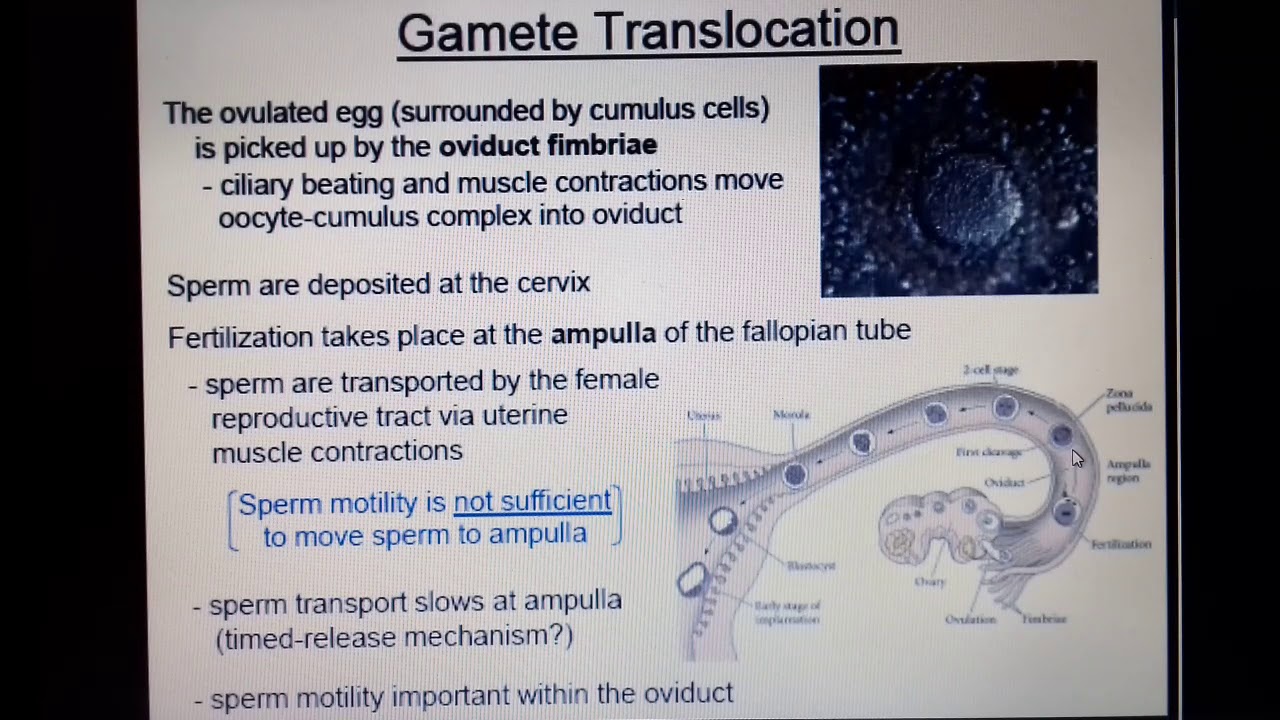
- 😀 In the fallopian tubes, sperm require hyperactivated motility to navigate through viscous fluid and penetrate the cumulus cells and corona radiata surrounding the egg.
- 😀 Progesterone, produced by cumulus cells in the fallopian tubes, not only directs sperm towards the egg but also activates sperm motility, essential for fertilization.
- 😀 Atrial natriuretic peptide, found in the fallopian tubes, enhances the acrosome reaction, which is necessary for sperm to penetrate the egg's zona pellucida.
- 😀 The acrosome reaction, triggered by interactions with the zona pellucida, involves the release of enzymes like hyaluronidase and corona-penetrating enzyme, which help sperm penetrate the egg's protective layers.
Q & A
What is the role of cervical mucus in sperm capacitation?
-Cervical mucus plays a key role in sperm capacitation by changing its consistency during the menstrual cycle. Around ovulation, increased estrogen levels make the mucus thinner and more fluid, facilitating sperm movement toward the reproductive tract.
How does reactive oxygen species (ROS) affect sperm during capacitation?
-ROS, generated by neutrophils in the cervical mucus, can stimulate sperm capacitation when present in controlled amounts. However, excess ROS can damage sperm DNA and mitochondria, leading to reduced motility or apoptosis of abnormal sperm.
What role does alpha-tocopherol (Vitamin E) play in sperm viability?
-Alpha-tocopherol (Vitamin E) helps maintain sperm viability by protecting sperm cells from oxidative damage. It supports the sperm's ability to survive and continue its journey through the female reproductive system.
What happens to sperm when it encounters sialic acid-binding proteins in the uterus?
-Sialic acid-binding proteins on the sperm membrane are involved in triggering calcium ion influx when they bind with receptors on the sperm. This process increases sperm motility and triggers acrosomal reaction during capacitation.
What triggers sperm hyperactivation, and why is it necessary?
-Hyperactivation of sperm motility is triggered by the presence of progesterone in the fallopian tube, produced by cumulus cells. It is necessary for sperm to penetrate the zona pellucida and overcome the viscosity of fluids in the fallopian tube.
What is the role of atrial natriuretic peptide (ANP) in sperm capacitation?
-Atrial natriuretic peptide (ANP), produced by cumulus cells, stimulates the acrosomal reaction by influencing sperm behavior, helping them to prepare for fertilizing the egg by breaking through the zona pellucida.
What is the acrosomal reaction, and how does it help sperm fertilize the egg?
-The acrosomal reaction is a process where enzymes from the sperm's acrosome are released to break down the zona pellucida of the egg. This allows sperm to penetrate the egg’s outer layers and ultimately fuse with its membrane.
How does calcium ion influx contribute to sperm motility and fertilization?
-Calcium ion influx into the sperm activates several processes, including hyperactivation of sperm motility and the acrosomal reaction. These changes are essential for sperm to navigate through the female reproductive tract and successfully fertilize the egg.
What is the role of glycoproteins in sperm-egg interaction?
-Glycoproteins on the sperm membrane interact with components of the zona pellucida, such as N-acetylglucosamine. These interactions are crucial for triggering the acrosomal reaction, allowing sperm to penetrate the egg's protective layers.
How does in vitro capacitation differ from in vivo capacitation, and what medium is used for it?
-In vitro capacitation requires a specific medium that supports sperm function, such as one containing lactate, pyruvate, glucose, and bicarbonate. This medium mimics the conditions of the female reproductive tract, allowing sperm to undergo capacitation outside the body, as seen in assisted reproductive technologies like IVF.
Outlines

此内容仅限付费用户访问。 请升级后访问。
立即升级Mindmap

此内容仅限付费用户访问。 请升级后访问。
立即升级Keywords

此内容仅限付费用户访问。 请升级后访问。
立即升级Highlights

此内容仅限付费用户访问。 请升级后访问。
立即升级Transcripts

此内容仅限付费用户访问。 请升级后访问。
立即升级

5.0 / 5 (0 votes)

