Jazirah Arab: Tinjauan Geografis dan Pengaruhnya pada Politik dan Mata pencaharian
Summary
TLDRThis video lecture explores the geographical and historical significance of the Arabian Peninsula (Jazirah Arab), focusing on its impact on political, social, and economic structures before and during early Islam. It highlights the region's autonomy due to its isolation, lack of large rivers, and harsh desert climate. The lecture also discusses the cultural and ethnic diversity within the Arab population, including the major tribal groups, and the economic reliance on trade. Key cities like Makkah and Medina, along with trade routes to regions like Sham and Yemen, played central roles in shaping the region's history and the early Islamic community.
Takeaways
- 😀 The geographical factors play a crucial role in shaping human history and social behavior, as they influence how people live and interact in different environments.
- 😀 The Arabian Peninsula, or Jazirah Arab, covers about 3 million square kilometers, making it significantly larger than Indonesia, which spans 1.9 million square kilometers.
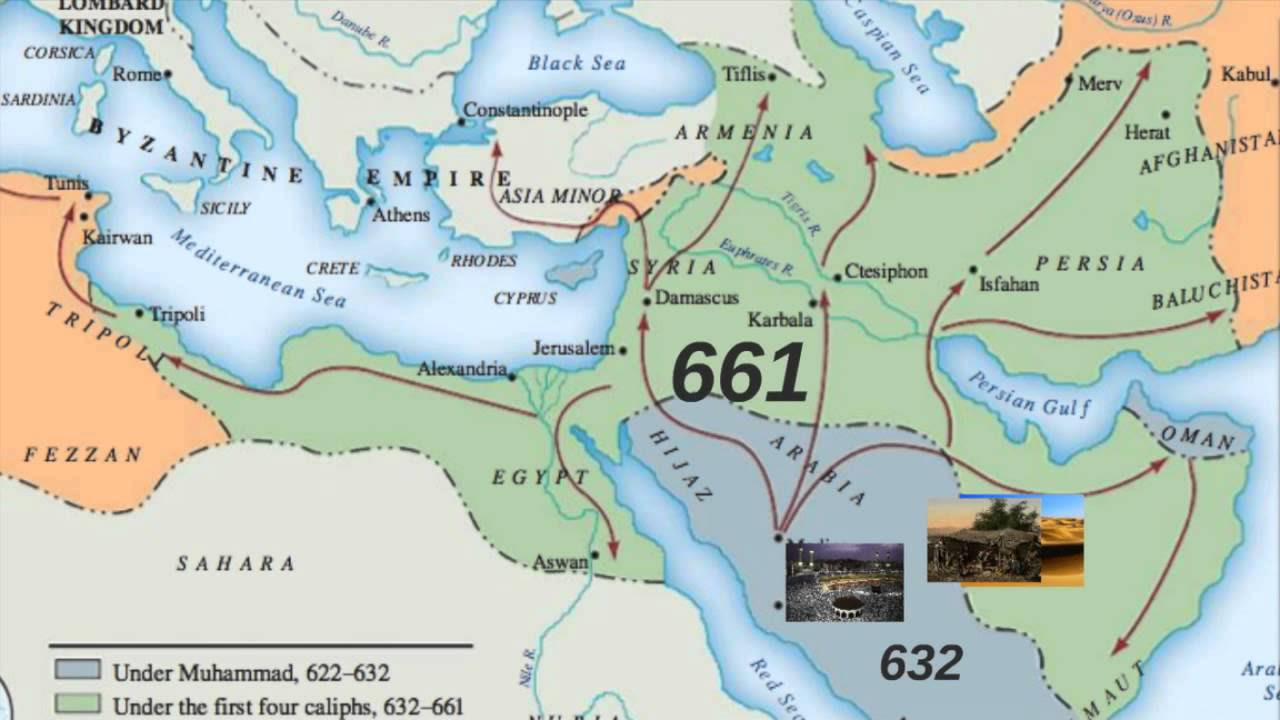
- 😀 Jazirah Arab is bordered by the Persian Gulf to the east, the Red Sea to the west, the Arabian Sea to the southeast, and is debated to be bordered by either the Amanus mountains or Syria to the north.
- 😀 Mesopotamia, the cradle of human civilization, lies to the north of Jazirah Arab but is not considered part of it. It was historically a contested region between Persia and Rome.
- 😀 The region of Jazirah Arab, while vast, lacks significant rivers like the Tigris and Euphrates, relying instead on smaller streams, which has contributed to its arid and less fertile landscape.
- 😀 Major cities in Jazirah Arab include Makkah, which was a central trading hub, and Madinah (formerly Yatsrib), a journey of approximately 14 days and 413 km from Makkah.
- 😀 The Arab tribes were geographically isolated, allowing them to maintain political autonomy, as their harsh environment made it unappealing for larger empires like Persia and Rome to annex the region.
- 😀 The economy of Jazirah Arab was largely based on trade, especially with Syria to the north and Yemen to the south, as well as interaction with the African region of Habasha (Ethiopia/Sudan).
- 😀 Makkah, the heart of Jazirah Arab, had long-standing trade relationships, exporting goods like dates and receiving imports such as slaves and perfumes, particularly from Habasha.
- 😀 The political structure of Jazirah Arab before Islam was based on tribal systems, with no unified state like the Roman or Persian empires. Authority was vested in the tribes rather than centralized governments.
Q & A
What is the significance of geography in shaping the history of the Arabian Peninsula?
-Geography plays a critical role in shaping the history of the Arabian Peninsula, as it determines the social behavior of its inhabitants. According to the theory from the Annales school of thought, geographical factors, such as living in mountains, coastal areas, or deserts, deeply influence social structures and political histories.
How large is the Arabian Peninsula compared to Indonesia?
-The Arabian Peninsula spans around 3 million square kilometers, which is significantly larger than Indonesia. The combined landmass of Indonesia from Sabang to Merauke is approximately 1.9 million square kilometers.
What are the main geographical borders of the Arabian Peninsula?
-The Arabian Peninsula is bordered by the Persian Gulf to the east, the Red Sea to the west, the Arabian Sea to the southeast, and mountain ranges to the north. It also shares borders with Africa via the Red Sea.
What are the two main differing opinions about the northern boundary of the Arabian Peninsula?
-One opinion suggests that the northern boundary of the Arabian Peninsula lies south of the Amanus Mountains in Turkey. Another view places the northern boundary at the southern edge of the Levant (Syam). The latter excludes regions like Syam and Iraq from being considered part of the Arabian Peninsula.
Why is Mesopotamia not considered part of the Arabian Peninsula?
-Mesopotamia, located between the Tigris and Euphrates rivers, is not considered part of the Arabian Peninsula because it lies beyond its geographical boundaries and historically was a part of the Persian Empire, not the Arab tribes.
What was the role of the Byzantine Empire and the Persian Empire in relation to the Arabian Peninsula?
-The Arabian Peninsula was bordered by the Byzantine Empire to the northwest (modern-day Turkey) and the Persian Empire to the northeast (modern-day Iran). Both empires were powerful but did not fully control or focus on the Arabian Peninsula due to its inhospitable geography.
How far was the journey from Makkah to Yathrib (Madinah) before the Islamic era?
-The journey from Makkah to Yathrib (Madinah) before the Islamic era was approximately 14 days by transport, covering a distance of around 413 kilometers (roughly the distance from Yogyakarta to Jakarta in Indonesia).
How did the people of Makkah engage in trade, and what regions were they connected with?
-The people of Makkah were primarily involved in trade, with their trading routes extending to Syria in the north and Yemen in the south. Makkah served as a major trading hub, facilitating commerce between the East and the West.
What impact did geography have on the political structure of the Arabian Peninsula?
-The geographical conditions, such as the lack of large rivers and the presence of vast deserts, isolated the Arabian Peninsula from larger empires like Persia and Rome. This allowed the region to maintain political independence and develop a unique political structure based on tribal autonomy.
What is the main economic activity in Makkah, and how did geography influence it?
-Due to the harsh and arid geography, agriculture was not a viable economic activity in Makkah. Instead, trade became the dominant economic activity, with the people of Makkah trading goods like perfumes and agricultural products, particularly to Syria and Yemen.
Outlines

此内容仅限付费用户访问。 请升级后访问。
立即升级Mindmap

此内容仅限付费用户访问。 请升级后访问。
立即升级Keywords

此内容仅限付费用户访问。 请升级后访问。
立即升级Highlights

此内容仅限付费用户访问。 请升级后访问。
立即升级Transcripts

此内容仅限付费用户访问。 请升级后访问。
立即升级浏览更多相关视频


5.0 / 5 (0 votes)

