Metabolisme Enzim kelompok 2 kelas Gizi C
Summary
TLDRThe video by Vita Sofyani explains enzymes and their crucial role in metabolism. Enzymes are biological catalysts that speed up chemical reactions in living organisms without being consumed. They work specifically on certain substrates and can be reused, with their activity influenced by factors like temperature, pH, substrate and enzyme concentration, and inhibitors. The video also covers enzyme structure, mechanisms, and theories of action. Additionally, it introduces metabolism, highlighting its two main types: anabolism, which builds complex molecules using energy, and catabolism, which breaks down molecules to release energy. Enzymes regulate and accelerate these metabolic processes, making them essential for life.
Takeaways
- 🧬 Enzymes are biological catalysts made of proteins that speed up chemical reactions in living organisms without being consumed in the process.
- 🔑 Enzymes are specific to particular substrates and can be reused multiple times in reactions.
- ⚙️ The structure of an enzyme includes an apoenzyme (protein part) and a cofactor (non-protein part); together they form a holoenzyme.
- 🧩 Two main theories explain enzyme activity: the Lock and Key theory and the Induced Fit theory, describing how enzymes interact with substrates.
- 🌡️ Temperature affects enzyme activity; moderate increases speed up reactions, but excessive heat can denature enzymes and reduce their functionality.
- 🧪 Each enzyme has an optimal pH; deviations from this optimal pH can change enzyme structure and decrease activity.
- 📈 Substrate concentration influences reaction rate, increasing it up to a maximum point where all enzymes are fully active.
- 🔬 Enzyme concentration also affects reaction speed, as more enzymes allow more substrates to be processed simultaneously.
- ⛔ Inhibitors are substances that slow down or stop enzyme activity, impacting overall reaction rates.
- ⚡ Metabolism is the sum of all chemical reactions in cells that sustain life, and it includes both catabolism (breaking down molecules to release energy) and anabolism (building complex molecules, requiring energy).
- 🧠 Enzymes play a crucial role in metabolism by regulating and accelerating reactions, such as amylase breaking down carbohydrates, protease breaking down proteins, and lipase breaking down fats.
- 🌱 Enzymes and metabolism are deeply interconnected, and together they support essential life processes in all living organisms.
Q & A
What is the definition of an enzyme?
-An enzyme is a protein compound that acts as a biological catalyst, speeding up chemical reactions in living organisms without being consumed in the process.
What are the key properties of enzymes?
-The key properties of enzymes include specificity (working on specific substrates), being reusable, being influenced by temperature and pH, and accelerating chemical reactions.
What are the structural components of an enzyme?
-An enzyme consists of two main parts: the apoenzyme (protein part) and the cofactor (non-protein part). When these two parts combine, they form the holoenzyme.
What is the Lock and Key theory of enzyme action?
-The Lock and Key theory suggests that the substrate fits perfectly into the enzyme's active site, much like a key fits into a lock, ensuring specificity in the reaction.
What is the Induced Fit theory of enzyme action?
-The Induced Fit theory proposes that the enzyme's active site adjusts its shape to accommodate the substrate, enhancing the reaction process.
What factors affect enzyme activity?
-Enzyme activity is influenced by several factors, including temperature, pH, substrate concentration, enzyme concentration, and the presence of inhibitors.
How does temperature affect enzyme activity?
-As temperature increases, enzyme activity typically speeds up. However, if the temperature is too high, the enzyme may denature (lose its shape) and become ineffective.
What is the role of pH in enzyme activity?
-Each enzyme has an optimal pH at which it functions best. If the pH is too acidic or too basic, the enzyme’s structure may change, leading to decreased activity.
What is the difference between anabolic and catabolic metabolism?
-Anabolism refers to the process of building complex molecules from simpler ones, requiring energy, while catabolism involves breaking down complex molecules into simpler ones, releasing energy.
How do enzymes contribute to metabolism?
-Enzymes are essential in metabolism as they regulate and speed up chemical reactions in the body. Without enzymes, metabolic reactions would occur too slowly to sustain life.
Outlines

此内容仅限付费用户访问。 请升级后访问。
立即升级Mindmap

此内容仅限付费用户访问。 请升级后访问。
立即升级Keywords

此内容仅限付费用户访问。 请升级后访问。
立即升级Highlights

此内容仅限付费用户访问。 请升级后访问。
立即升级Transcripts

此内容仅限付费用户访问。 请升级后访问。
立即升级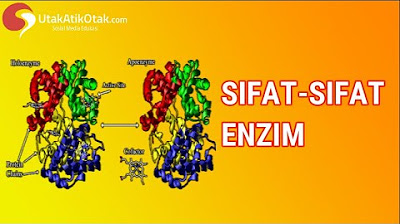



5.0 / 5 (0 votes)

