WHAT TIME IS IT? - Mengungkapkan Waktu Jam Dalam Bahasa Inggris
Summary
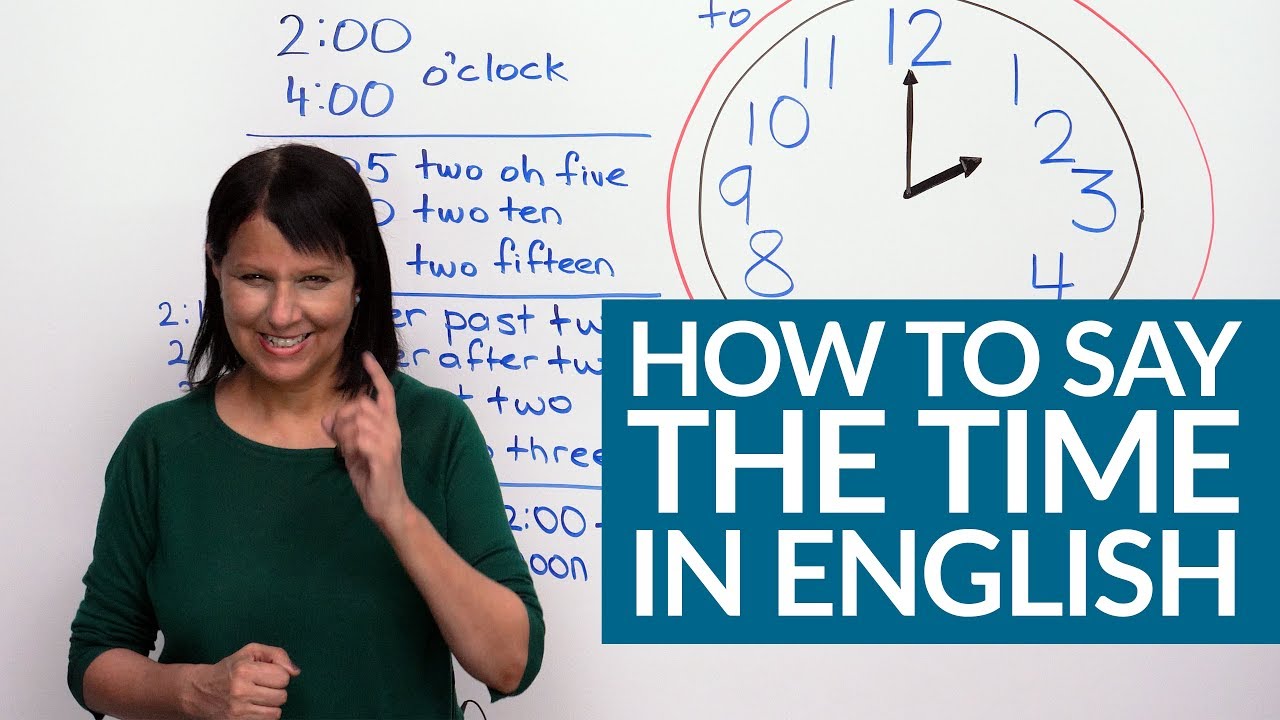
TLDRThis video lesson teaches viewers how to ask and tell time in English using a clock. It explains the basic question "What time is it?" and how to answer using "It is..." followed by the correct time expression. The lesson introduces the roles of the short hand (hours) and long hand (minutes) on a clock and reviews the hour numbers from one to twelve. It also demonstrates how to express time using "o'clock," "past," and "to," including common minute markers like five, ten, quarter, twenty, and half. Through clear examples and clock illustrations, the video helps learners understand and practice reading and expressing time accurately in English.
Takeaways
- 😀 The video teaches how to express time in English, focusing on reading and stating the time on a clock.
- 😀 To ask the time, the phrase 'What time is it?' is commonly used.
- 😀 To state the time, the phrase 'It is' is followed by the hour, and optionally 'o'clock' (e.g., 'It is one o'clock').
- 😀 The short hand on the clock represents the hour, and the long hand represents the minutes.
- 😀 When the long hand points to 12, it’s simply stated as 'It is [hour] o'clock'.
- 😀 For example, if the short hand points to 8 and the long hand points to 12, you would say 'It is eight o'clock'.
- 😀 If the long hand points to numbers other than 12 (like 3 or 6), the minutes are specified first, followed by the hour.
- 😀 When the long hand points to 3, it's referred to as 'quarter past' (e.g., 'It’s quarter past one').
- 😀 If the long hand points to 6, it's referred to as 'half past' (e.g., 'It’s half past two').
- 😀 If the long hand points to 9, it's referred to as 'quarter to' (e.g., 'It’s quarter to seven').
- 😀 The video demonstrates different times on the clock using numbers and their corresponding expressions for minutes and hours.
Q & A
What is the main topic of the video?
-The video teaches how to ask and tell the time in English.
Which phrases are introduced for asking and telling the time?
-For asking the time, the video introduces 'What time is it?', and for telling the time, it introduces 'It is...'.
How does the video explain the use of the hour hand?
-The video explains that the short hand (hour hand) shows the hours from 1 to 12 and is used together with the long hand (minute hand) to tell the time.
What should you say when the minute hand points to 12?
-When the minute hand points to 12, you first say 'It is' and then the hour, followed by 'o'clock'. For example, 'It is eight o'clock.'
How do you express times when the minute hand points to other numbers besides 12?
-For minutes past the hour (like 1 to 30 minutes), you say the minutes first and then the hour. For example, 'quarter past one.' For minutes approaching the next hour (31 to 59 minutes), you use 'to' the next hour, like 'quarter to seven.'
What examples does the video give for expressing 'quarter past'?
-An example given is when the short hand points to 1 and the long hand points to 3, it is 'quarter past one.'
How are 5, 10, 20, 25, and 35 minutes explained?
-The video explains that minutes like 5, 10, 20, and 25 past the hour are stated as 'five past', 'ten past', etc. Minutes before the next hour are expressed as 'twenty-five to', 'ten to', etc.
What method is suggested to combine hour and minute hands to read time?
-The video suggests first identifying the hour from the short hand, then identifying the minutes from the long hand, and combining them using the correct phrasing like 'past' or 'to'.
How does the video recommend practicing English time expressions?
-The video encourages viewers to observe clock images and practice stating the time aloud using the English phrases introduced.
What visual aids are used to help explain the time?
-The video uses images of clocks showing different times to demonstrate how to say the time correctly in English.
Why is it important to know both 'past' and 'to' when telling time?
-Knowing 'past' and 'to' allows you to correctly express minutes after the hour and minutes before the next hour, making your time-telling more precise.
What is the final advice given at the end of the video?
-The final advice is to practice English time expressions regularly to improve fluency and understanding.
Outlines

此内容仅限付费用户访问。 请升级后访问。
立即升级Mindmap

此内容仅限付费用户访问。 请升级后访问。
立即升级Keywords

此内容仅限付费用户访问。 请升级后访问。
立即升级Highlights

此内容仅限付费用户访问。 请升级后访问。
立即升级Transcripts

此内容仅限付费用户访问。 请升级后访问。
立即升级浏览更多相关视频
How to say the time in English

TIME IN ENGLISH | What time is it?

Telling the time in English

Telling the Time O'clock quarter half past to | Belajar Jam Bahasa Inggris

TELLING THE TIME : BAHASA INGGRIS KELAS 7 SMP

Job Interview in English 🎯 English Conversation Practice | Job interview questions and answers
5.0 / 5 (0 votes)

