LEMBAGA JASA KEUANGAN | Bank, OJK, LJKBB | EKONOMI KELAS 10
Summary
TLDRThis presentation covers the essential aspects of financial institutions in Indonesia, including the roles of banks and non-bank financial institutions. It explains the functions and types of banks, including central banks, commercial banks, and Islamic banks. The video also explores the services provided by banks such as loans, savings, and foreign exchange, along with the role of the OJK (Financial Services Authority) in overseeing these sectors. Furthermore, it delves into non-bank financial entities like insurance companies, pension funds, and leasing companies, highlighting their impact on the financial system.
Takeaways
- 🏦 Financial institutions (Lembaga Jasa Keuangan) provide financial services by collecting funds from the public and distributing them as loans or investments.
- 💡 The main functions of financial institutions include facilitating transactions, providing financial information, offering guarantees, and ensuring liquidity.
- 🏛️ Banks are defined under Indonesian law as institutions that collect public funds in the form of deposits and redistribute them to the community.
- 🏦 Banks are classified by activities into central banks, commercial banks, Islamic banks, and rural credit banks, each serving distinct roles.
- 📊 Banks can also be categorized by legal form (PT, firm, individual enterprise, cooperative) and by ownership (government, private, mixed, regional).
- 💳 Bank products include passive credits (savings, deposits, giro) and active credits (loans, credit accounts), as well as various banking services like foreign exchange, transfers, and ATMs.
- 🛡️ The Financial Services Authority (OJK) is an independent government body responsible for regulating and supervising all financial services sectors, ensuring transparency, accountability, and consumer protection.
- 🏢 Non-bank financial institutions (LJKBB) perform similar functions to banks but support capital markets, insurance, pensions, and other non-bank financial services.
- 📈 Examples of non-bank financial institutions include insurance companies, pension funds, pawnshops, cooperatives, financing companies, capital markets, and venture capital firms.
- 🔍 Each non-bank institution serves specific purposes, such as risk management (insurance), retirement funding (pension funds), credit facilitation (pawnshops and financing), and investment opportunities (capital markets and venture capital).
- 💼 Overall, the financial ecosystem in Indonesia is structured to provide diverse services while ensuring regulatory oversight through OJK, promoting stability, growth, and consumer protection.
Q & A
What is the primary function of a financial institution?
-The primary function of a financial institution is to provide financial services, including collecting funds from the public and distributing them as loans or investments. This helps facilitate economic growth and stability.
What are the key functions of financial institutions?
-Financial institutions have several key functions, including facilitating the exchange of goods and services through money and credit, providing financial knowledge and information, ensuring guarantees for their clients, and offering liquidity in times of financial need.
How does a bank differ from other types of financial institutions?
-A bank primarily focuses on collecting deposits and providing loans, acting as an intermediary for financial transactions. In contrast, non-bank financial institutions, such as insurance companies or pension funds, offer specialized services like risk management or retirement savings.
What is the role of OJK (Financial Services Authority) in Indonesia?
-OJK regulates and supervises the financial services sector in Indonesia. It aims to ensure the stability of the financial system, protect consumers, and promote transparency and accountability within financial institutions.
What is the difference between active and passive banking products?
-Active banking products refer to loans and credits issued by the bank to customers, such as personal loans or mortgages. Passive banking products involve funds collected from the public, like savings accounts, deposits, and certificates of deposit.
What is the function of an insurance company within non-bank financial institutions?
-Insurance companies protect individuals and businesses from financial losses due to risks. They collect premiums and provide financial compensation in case of loss, illness, accidents, or other risks, such as health insurance or life insurance.
Can you explain the concept of a pension fund?
-Pension funds manage and invest the retirement savings of employees, ensuring that individuals receive regular payments after retirement. These funds are typically contributed by employers and employees and are managed by specialized pension companies.
What is the role of cooperatives in Indonesia's financial sector?
-Cooperatives serve as community-based financial institutions that collect savings from members and provide loans or other financial services. They typically operate on a smaller scale and offer favorable terms compared to banks.
How do leasing companies contribute to the financial sector?
-Leasing companies provide financing for the purchase of assets like cars, machinery, and property. They allow individuals and businesses to use items through rental agreements, with the option of ownership after completing the payment.
What is the difference between a commercial bank and a sharia bank?
-A commercial bank operates on conventional financial principles, while a sharia bank follows Islamic law (Sharia), which prohibits interest (riba) and promotes ethical investments. Sharia banks engage in profit-sharing agreements instead of interest-based transactions.
Outlines

此内容仅限付费用户访问。 请升级后访问。
立即升级Mindmap

此内容仅限付费用户访问。 请升级后访问。
立即升级Keywords

此内容仅限付费用户访问。 请升级后访问。
立即升级Highlights

此内容仅限付费用户访问。 请升级后访问。
立即升级Transcripts

此内容仅限付费用户访问。 请升级后访问。
立即升级浏览更多相关视频

Lembaga Keuangan Bank & Non-Bank

Kuliah Bank dan Lembaga Keuangan - Ep.01 Lembaga Keuangan

Lembaga Keuangan Bank dan Lembaga Keuangan Non-Bank

IPS kelas 9 bab 2 bag. 2 kurikulum merdeka Lembaga Keuangan Perkembangan Ekonomi Digital
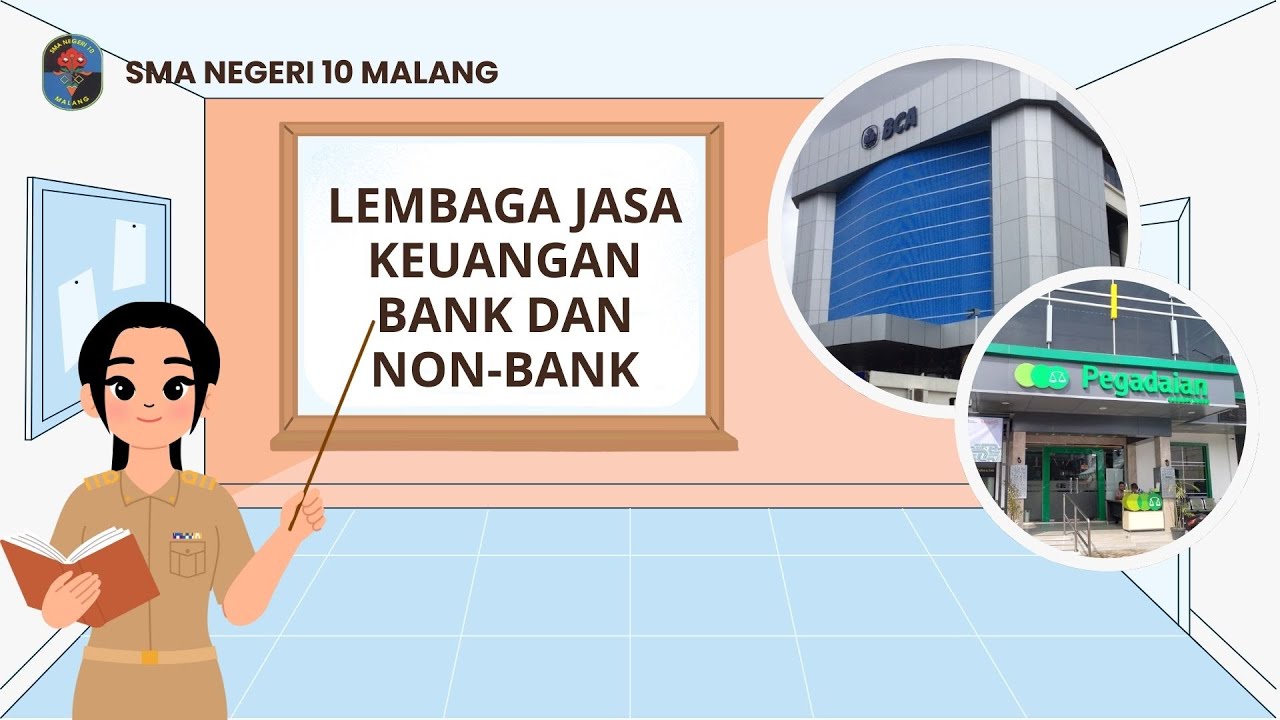
LEMBAGA JASA KEUANGAN BANK DAN NON-BANK MATERI EKONOMI KELAS X FASE E

IPS kelas 9 Tema 2 Sub Bab A Lembaga Keuangan KURIKULUM MERDEKA
5.0 / 5 (0 votes)

