How To Find Your 1st Bug Bounty (100% Guaranteed)
Summary
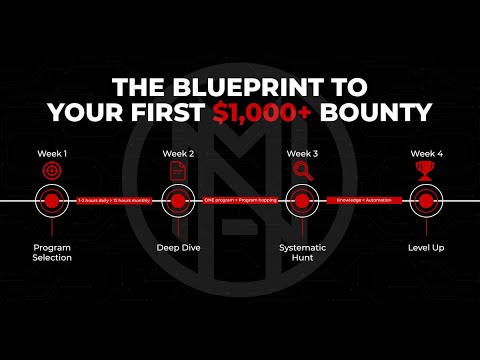
TLDRIn 2025, succeeding in bug bounty hunting is about focusing on the right strategy. Instead of following outdated advice, one student earned $7,650 in just 150 days by honing pattern recognition in security vulnerabilities, primarily through Vulnerability Disclosure Programs (VDPs) with little competition. By spending two months studying, followed by deep diving into one target at a time, he learned how to find bugs that automated scanners missed. His success came from consistent work, understanding business logic, and producing clear, well-documented reports. The key to success lies in strategic hunting, starting with less-known programs and scaling up.
Takeaways
- 😀 Ignore the traditional advice of focusing solely on OWASP Top 10 and jumping into popular programs like HackerOne right away.
- 😀 The best programs on HackerOne are often already saturated, making it difficult for newcomers to find bugs.
- 😀 Focus on Vulnerability Disclosure Programs (VDPs), which have less competition and offer a unique opportunity to find vulnerabilities.
- 😀 The key to success is pattern recognition, understanding where vulnerabilities typically appear in applications rather than memorizing exploits.
- 😀 Spend time deeply learning the attack surface of a single application instead of spreading yourself too thin across multiple programs.
- 😀 Consistent, focused work on a single target for two weeks can be more effective than jumping between different programs.
- 😀 A well-documented bug report, detailing how to reproduce the vulnerability and its business impact, is more valuable than a poorly documented critical bug.
- 😀 In 2025, the bug bounty field is oversaturated, and competing against automation and elite researchers is a common struggle for newcomers.
- 😀 Start with VDPs and lesser-known programs to build experience and confidence before moving to higher-paying programs.
- 😀 Self-hosted or self-managed bug bounty programs are often less competitive, and finding these requires more effort, but provides an edge.
Q & A
Why does the traditional advice for bug hunting (learning OWASP Top 10 and testing on major platforms) often lead to failure?
-The traditional advice is outdated because programs on platforms like HackerOne are heavily saturated with experienced hunters using automation tools. The low-hanging fruit bugs were picked years ago, leaving beginners with little to find and resulting in wasted time.
What strategy did the student who earned $7,600 in 150 days use?
-The student focused on Vulnerability Disclosure Programs (VDPs) for the first two months, avoiding saturated public bug bounty programs. After gaining experience on VDPs, he transitioned to paid programs, which helped him earn money and build skills.
What are Vulnerability Disclosure Programs (VDPs), and why are they effective for beginners?
-VDPs are programs where companies accept vulnerability reports without necessarily offering financial rewards. They are effective for beginners because they have less competition, allowing hunters to find bugs without competing against more experienced researchers or automation.
Why did the student focus on Bosch's VDP specifically?
-Bosch's VDP was not featured on major bug bounty platforms, which meant less competition. The student’s initial success led Bosch to invite him to their Bugcrowd program, where he continued finding vulnerabilities.
What is the main focus when studying security in the approach used by the student?
-The student focused on pattern recognition, learning to identify common vulnerabilities in specific contexts rather than memorizing technical details about each vulnerability type. This approach helped him efficiently find bugs in real applications.
How did the student’s daily routine help him achieve success in bug hunting?
-The student’s daily routine involved two hours of studying and two to three hours of focused bug hunting on a single target. This consistency and deep focus on one program at a time helped him identify vulnerabilities that automated scans often missed.
Why is focusing on one bug bounty program at a time more effective than spreading oneself thin across many?
-Focusing on one program at a time allows hunters to deeply understand the business logic, attack surface, and key features of the application. This in-depth understanding increases the chances of finding vulnerabilities that are missed by automated tools.
What makes a bug report valuable in bug bounty programs?
-A well-documented bug report that clearly explains how to reproduce the vulnerability, the business impact, and potential fixes is highly valuable. It allows the development team to quickly address the issue. A well-documented medium-severity bug can get rewarded faster than a poorly documented critical bug.
What is the current state of bug bounty programs in 2025, and how should beginners approach them?
-In 2025, bug bounty programs are oversaturated with skilled hunters. Beginners should start with VDPs and less visible programs, build confidence, and gain experience before transitioning to higher-paying public programs.
What are self-hosted bug bounty programs, and how can they benefit hunters?
-Self-hosted or self-managed programs are bug bounty programs run internally by companies rather than through platforms like HackerOne. These programs typically have less visibility and competition, giving hunters an edge if they can find and target them.
Outlines

此内容仅限付费用户访问。 请升级后访问。
立即升级Mindmap

此内容仅限付费用户访问。 请升级后访问。
立即升级Keywords

此内容仅限付费用户访问。 请升级后访问。
立即升级Highlights

此内容仅限付费用户访问。 请升级后访问。
立即升级Transcripts

此内容仅限付费用户访问。 请升级后访问。
立即升级浏览更多相关视频




5.0 / 5 (0 votes)

