HOW TO CONDUCT AN EXPERIMENTAL RESEARCH IN PSYCHOLOGY
Summary
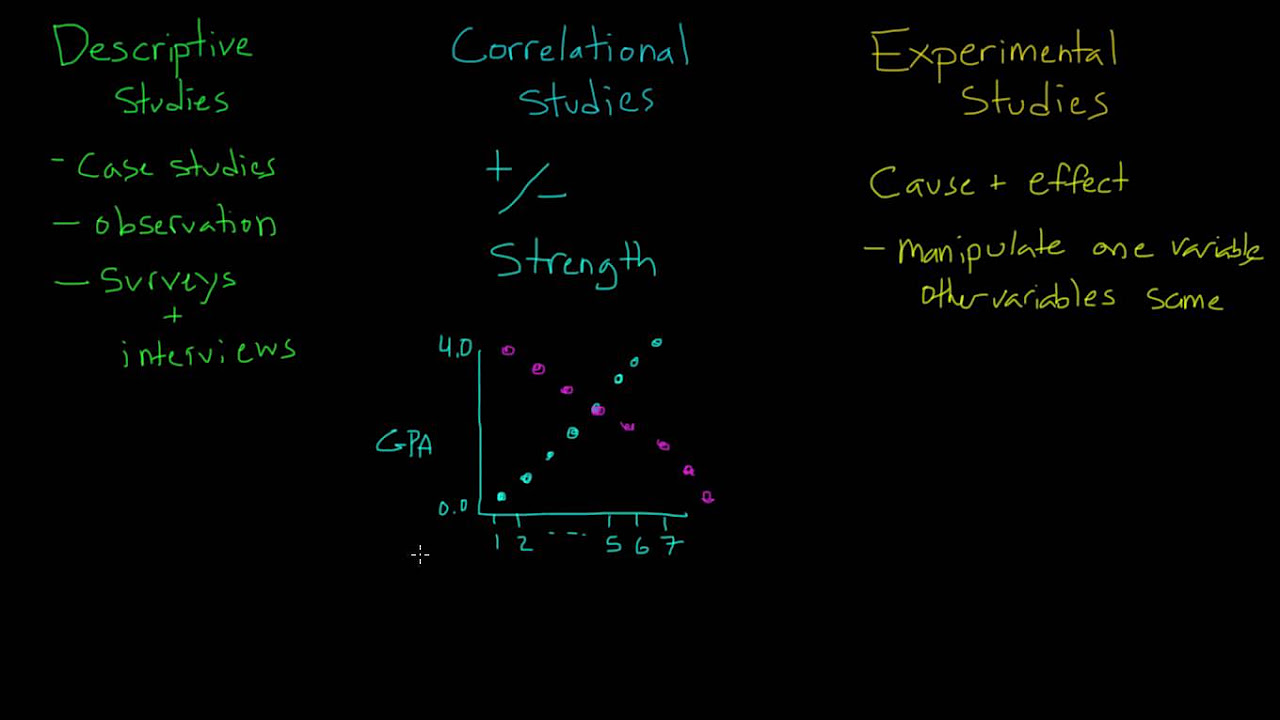
TLDRIn this video, we explore the experimental method in psychology, explaining how experiments are conducted to establish cause-and-effect relationships by manipulating variables. Key concepts like independent and dependent variables, along with experimental and control groups, are discussed. The video also covers the importance of controlling extraneous variables and highlights challenges such as low external validity and ethical concerns. Through an example of a sleep deprivation study, viewers learn how researchers manipulate variables to observe their impact, providing insight into how scientific experiments are designed to understand human behavior.
Takeaways
- 😀 Experiments in psychology aim to establish cause-and-effect relationships by manipulating variables.
- 😀 In an experiment, the 'cause' is the independent variable, and the 'effect' is the dependent variable.
- 😀 A variable is any factor or event that changes and can be measured. For example, the attributes of smartphones and rooms are variables.
- 😀 The independent variable is manipulated by the researcher to observe its impact on the dependent variable.
- 😀 In a sleep deprivation study, the independent variable could be the amount of sleep participants get, and the dependent variable could be their performance on a driving test.
- 😀 The dependent variable represents the outcome the researcher wants to explain, and it is expected to change as a result of the independent variable's manipulation.
- 😀 Independent and dependent variables are interdependent, meaning one cannot be defined without the other.
- 😀 There are often other variables in an experiment, called extraneous variables, that may influence the dependent variable but are not the focus of the study.
- 😀 Experimental groups are exposed to the independent variable, while control groups are not. Both groups are otherwise treated the same.
- 😀 To ensure accurate results, researchers must control for extraneous variables that could influence the dependent variable, such as gender, anxiety, or environmental factors.
- 😀 Laboratory experiments may have low external validity, meaning they may not always apply well to real-world situations or be generalizable.
Q & A
What is the main goal of an experiment in psychology?
-The main goal of an experiment in psychology is to establish a cause-effect relationship by manipulating variables and observing how changes in one factor affect another, while keeping other factors constant.
What is the difference between the 'cause' and 'effect' in an experiment?
-In an experiment, the 'cause' refers to the independent variable that is manipulated or changed by the researcher, while the 'effect' refers to the dependent variable, which is the behavior or phenomenon that changes as a result of the manipulation.
What is a variable in the context of an experiment?
-A variable is any stimulus or event that can take on different values or change and can be measured. An object itself is not a variable, but its attributes, such as size, shape, or intelligence, can be variables.
What is the role of independent and dependent variables in an experiment?
-The independent variable is manipulated by the researcher to observe its effect on the dependent variable. The dependent variable represents the phenomenon the researcher wishes to explain, and its changes are expected to result from changes in the independent variable.
Can you explain the concept of a control group in an experiment?
-A control group is a comparison group in an experiment that is treated in the same way as the experimental group, except that the independent variable is not manipulated in the control group. It helps to compare the effects of the manipulation in the experimental group.
How does the control group differ from the experimental group?
-In an experimental group, participants are exposed to the independent variable manipulation, while in a control group, the independent variable is absent. This allows researchers to compare the outcomes and determine the effect of the manipulated variable.
What are extraneous variables, and why must they be controlled?
-Extraneous variables are factors that are not of interest to the researcher but could influence the dependent variable. These variables must be controlled to ensure that the researcher can isolate the cause-effect relationship between the independent and dependent variables.
What are the three types of extraneous variables mentioned in the script?
-The three types of extraneous variables are organismic variables (e.g., intelligence or personality), situational or environmental variables (e.g., noise, temperature), and sequential variables (e.g., testing order, fatigue).
What is external validity, and how can it be a limitation of laboratory experiments?
-External validity refers to the extent to which the results of an experiment can be generalized to real-world situations. Laboratory experiments often have low external validity because they are highly controlled and may not reflect real-life conditions.
What ethical considerations might prevent certain experiments from being conducted?
-Some experiments, such as those investigating the effects of nutritional deficiency on intelligence, may be ethically problematic because they involve causing harm to participants, such as starvation, which is morally unacceptable.
Outlines

此内容仅限付费用户访问。 请升级后访问。
立即升级Mindmap

此内容仅限付费用户访问。 请升级后访问。
立即升级Keywords

此内容仅限付费用户访问。 请升级后访问。
立即升级Highlights

此内容仅限付费用户访问。 请升级后访问。
立即升级Transcripts

此内容仅限付费用户访问。 请升级后访问。
立即升级



5.0 / 5 (0 votes)

