GST under RCM on Commercial Property Rent from Unregistered to Registered Person || CA. Bimal Jain
Summary
TLDRThe script discusses the implications of GST for landlords renting out commercial properties. It explains that if the landlord's aggregate turnover is less than 20 lakh rupees, they do not need to register for GST. However, for registered recipients, GST under the forward charge method is applicable. A significant change was introduced on July 18, 2022, where residential property rent by an unregistered person to a registered recipient became subject to reverse charge GST. Now, the same rule applies to commercial properties, requiring the registered recipient to discharge the GST under reverse charge.
Takeaways
- 😀 Landlords renting out commercial property are required to charge GST under the forward charge method if they are registered under GST.
- 😀 If a landlord's aggregate turnover is less than ₹20 lakh, they do not need to register for GST and are not required to charge GST.
- 😀 A registered recipient renting a commercial property from an unregistered landlord does not have to pay GST if the landlord is unregistered.
- 😀 The rules for reverse charge for residential property rentals were introduced on 18th July 2022, making the registered recipient responsible for GST payments.
- 😀 The reverse charge mechanism (RCM) for renting residential property applies when an unregistered landlord rents out to a registered recipient.
- 😀 From 18th July 2022, renting of residential properties by unregistered persons to registered recipients became liable for GST under reverse charge.
- 😀 Now, a similar reverse charge mechanism is being extended to commercial property rentals by unregistered landlords to registered recipients.
- 😀 When a registered recipient rents a commercial property from an unregistered supplier, the recipient will discharge the GST under reverse charge.
- 😀 The reverse charge rule for residential property rentals was a precedent for the new rule being applied to commercial rentals.
- 😀 The change in GST rules reflects an effort to maintain parity in the treatment of residential and commercial property rentals for tax purposes.
Q & A
What is the forward charge method in GST for renting commercial property?
-The forward charge method in GST means that the supplier (landlord) charges GST to the recipient (tenant) on the rental amount for the commercial property. The landlord is responsible for collecting and remitting GST.
Do landlords with an aggregate turnover less than 20 lakh rupees need to register for GST?
-No, if the landlord's aggregate turnover is less than 20 lakh rupees, they are not required to register for GST, and hence, they are not obligated to charge GST on the rental income.
What happens if a landlord is unregistered but rents out commercial property to a registered recipient?
-If the landlord is unregistered, they do not charge GST on the rent. However, the registered recipient will have to discharge the GST under the reverse charge mechanism.
What is the reverse charge mechanism in GST?
-The reverse charge mechanism means that the recipient of the goods or services (in this case, the tenant) is responsible for paying GST directly to the government, instead of the supplier (the landlord).
When was the reverse charge mechanism for renting residential property introduced?
-The reverse charge mechanism for renting residential property by an unregistered supplier to a registered recipient was introduced on 18th July 2022.
How has the GST treatment for renting commercial properties changed since 18th July 2022?
-From 18th July 2022, the reverse charge mechanism has been extended to commercial properties as well. Unregistered landlords renting out commercial properties to registered recipients must have the recipient discharge the GST under reverse charge.
Is the reverse charge mechanism applicable only to residential properties?
-Initially, the reverse charge mechanism applied only to residential properties. However, since 18th July 2022, it has been extended to commercial properties as well.
If the landlord is unregistered, does the tenant still pay GST on the commercial rental?
-Yes, even if the landlord is unregistered, the registered tenant is required to pay GST under the reverse charge mechanism, since the landlord is not charging GST.
How does the GST treatment for residential and commercial properties compare after 18th July 2022?
-After 18th July 2022, both residential and commercial properties follow a similar GST treatment. For both, if the landlord is unregistered, the registered tenant is required to pay GST under the reverse charge mechanism.
What is the significance of the change made on 18th July 2022 regarding GST on rented property?
-The change made on 18th July 2022 extended the reverse charge mechanism to commercial properties, ensuring that registered recipients discharge GST, even if the landlord is unregistered, similar to the treatment of residential property.
Outlines

此内容仅限付费用户访问。 请升级后访问。
立即升级Mindmap

此内容仅限付费用户访问。 请升级后访问。
立即升级Keywords

此内容仅限付费用户访问。 请升级后访问。
立即升级Highlights

此内容仅限付费用户访问。 请升级后访问。
立即升级Transcripts

此内容仅限付费用户访问。 请升级后访问。
立即升级浏览更多相关视频
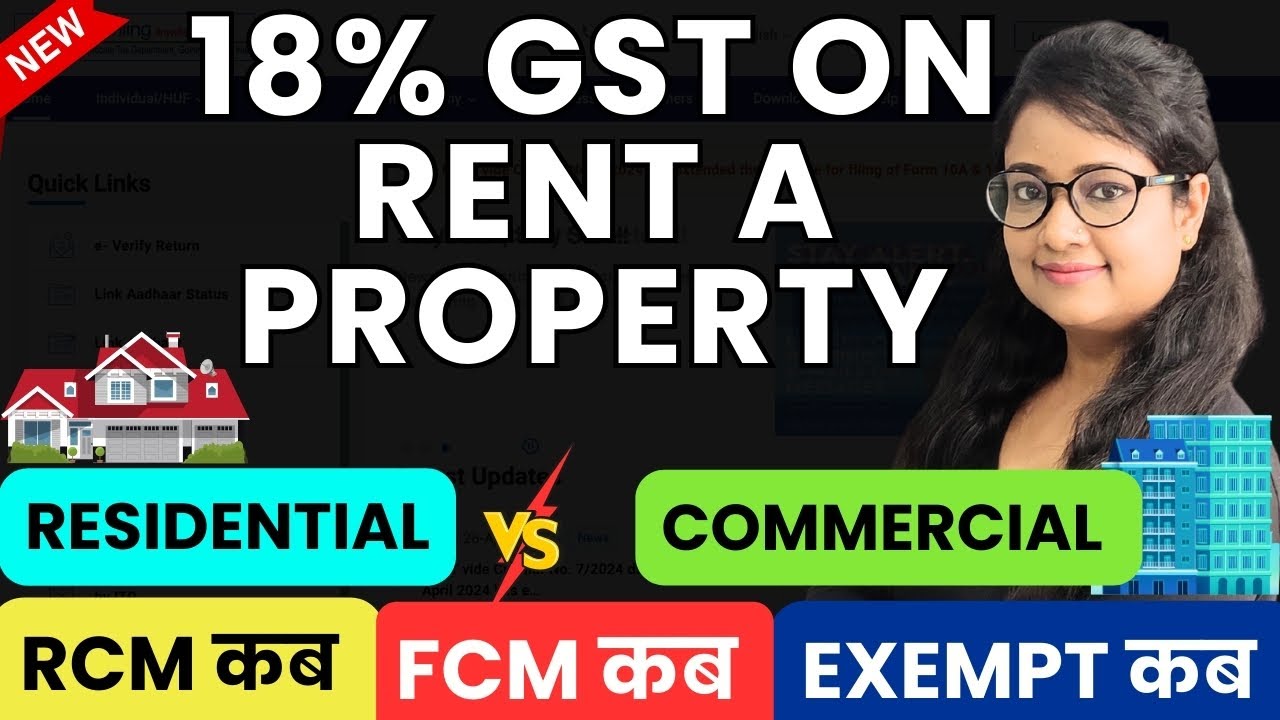
GST on Rent of Property - RCM, FCM or Exempt? GST on Renting commercial property, 18% GST on Rent

How To Make Money On Airbnb WITHOUT Renting or Owning in 2025!

GST-ITC on Construction of Buildings for Renting: Apex Court Judgement in Safari Retreats Case

Analyses of RCM Liability on Renting of Any Property by unregistered person to registered person

Real Estate में GST कितना लगता है | Real Estate में GST कैसे लगता है | GST on Real Estate Business |

Revision Of CA / CS / CMA Intermediate GST || Reverse Charge Mechanism (RCM) || Ch. 7 ||
5.0 / 5 (0 votes)

