#5 Bahan Genetik DNA dan RNA
Summary
TLDRIn this lecture, Professor Muhammad Cahyadi introduces the fundamentals of genetics, focusing on prokaryotic and eukaryotic cells, DNA and RNA structure, and gene expression. Students learn about cell functions, organelles, and the organization of genetic material, highlighting differences between simple prokaryotic cells and complex eukaryotic cells. The lecture explains DNA’s double-helix structure, base pairing rules, and historical experiments establishing DNA as the carrier of genetic information. RNA structure and its role in protein synthesis are discussed. Additionally, the lecture touches on the size and complexity of DNA across organisms, providing a foundation for understanding genetic applications in animal science.
Takeaways
- 🧬 The lecture introduces genetics, focusing on DNA, RNA, gene expression, and their applications in animal science.
- 🔬 Cells are the smallest units of life and perform essential activities such as energy conversion, metabolism, and reproduction.
- ⚙️ Cell functions vary depending on cell type, with specialized roles such as sperm, ovum, and fat cells.
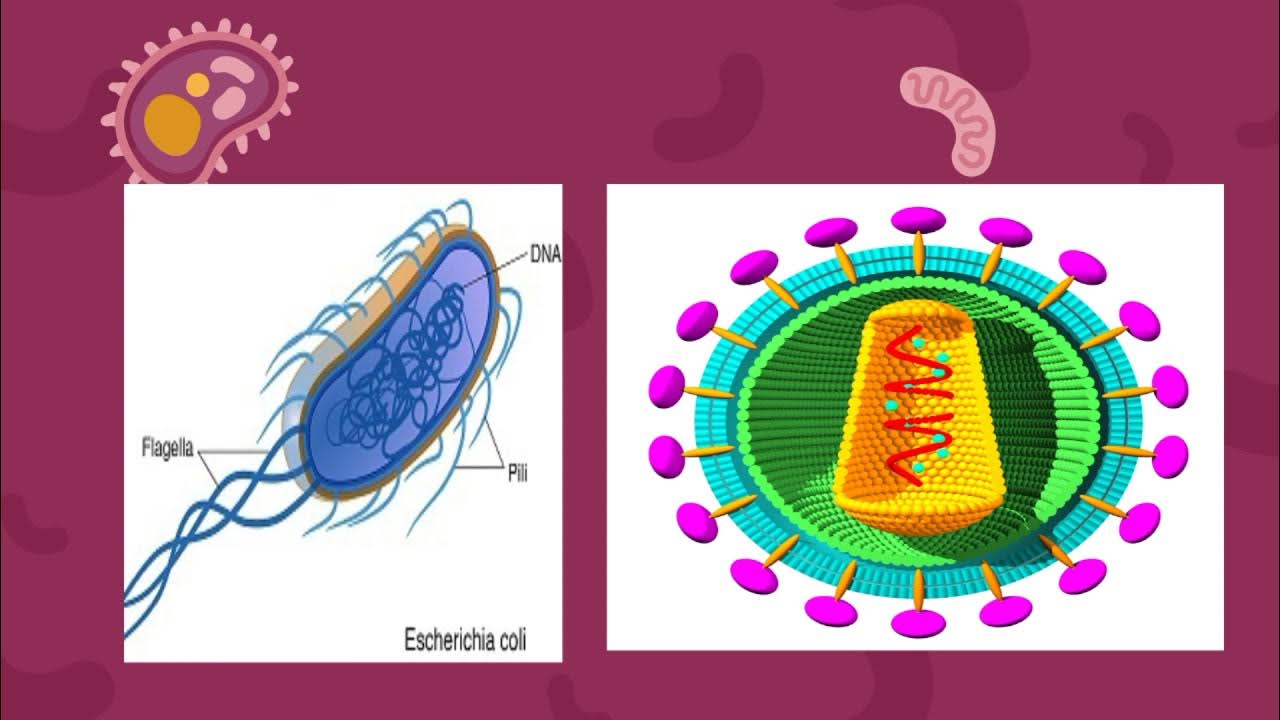
- 🦠 Prokaryotic cells are simpler, lack a nucleus, and store genetic material in a nucleoid and plasmids.
- 🧫 Eukaryotic cells are more complex, containing membrane-bound organelles including a true nucleus where DNA is stored.
- 🧵 Genetic material in eukaryotes is organized into chromosomes, composed of chromatin and nucleosomes wrapped around histone proteins.
- 🧪 DNA (deoxyribonucleic acid) is made of nucleotides consisting of phosphate, deoxyribose sugar, and nitrogenous bases.
- 🔗 DNA base pairing follows specific rules: adenine pairs with thymine (2 bonds) and guanine pairs with cytosine (3 bonds), affecting DNA stability.
- 🧾 RNA differs from DNA by having ribose sugar and uracil instead of thymine, and plays key roles in gene expression.
- 📚 DNA was established as the genetic material through experiments beginning with Frederick Griffith in 1928 and later studies.
- 🧬 DNA forms a double helix structure made of two polynucleotide strands connected by complementary base pairing.
- 📏 The complexity of organisms correlates with DNA quantity, chromosome number, and genome size.
- 🧍 Humans have 23 pairs of chromosomes, including autosomes and sex chromosomes (gonosomes).
- 📐 DNA length and base pair count increase significantly in more complex organisms, reaching millions of base pairs in humans.
- 🌱 Genetic concepts discussed form the foundation for further topics like gene expression and applications in livestock science.
Q & A
What are the main topics covered in this lecture on genetics?
-The lecture covers prokaryotic and eukaryotic cells, DNA and RNA structure and function, gene expression, and applications of genetics in animal husbandry.
What are the three main activities of living cells mentioned in the lecture?
-The three main activities are: 1) obtaining and converting energy from the environment, 2) carrying out metabolism (anabolism and catabolism), and 3) reproduction to maintain cell existence.
How do prokaryotic and eukaryotic cells differ in terms of their genetic material?
-Prokaryotic cells have their genetic material in the nucleoid without a membrane and may have plasmids, while eukaryotic cells have a nucleus containing DNA organized into chromosomes wrapped with histone proteins.
What is the structural composition of DNA?
-DNA is composed of long chains of nucleotides, each containing a deoxyribose sugar, a phosphate group, and a nitrogenous base. The bases include purines (adenine and guanine) and pyrimidines (cytosine and thymine), which pair specifically (A-T, G-C).
How does RNA differ from DNA in terms of structure?
-RNA contains the sugar ribose (with an oxygen at the 2' position), uses uracil instead of thymine as a pyrimidine base, and is typically single-stranded, unlike DNA which is double-stranded.
What is the significance of base pairing in DNA?
-Base pairing ensures the stable double-helix structure of DNA, facilitates accurate replication, and determines the strength of the DNA strand; G-C pairs are stronger due to three hydrogen bonds, while A-T pairs have two.
What are plasmids and where are they found?
-Plasmids are circular, extrachromosomal DNA molecules found in prokaryotic cells. They carry additional genetic information and are separate from the main chromosomal DNA in the nucleoid.
How does chromosome number and DNA content vary among organisms?
-Prokaryotes like bacteria have very few DNA content and a single chromosome, while higher eukaryotes such as chickens, mice, and humans have multiple chromosome pairs and much larger DNA content, reflecting increased complexity.
What role do histone proteins play in DNA organization in eukaryotic cells?
-Histone proteins wrap DNA into nucleosomes, forming chromatin. This packaging allows the long DNA molecules to fit inside the nucleus and helps regulate gene expression.
Who first demonstrated that DNA is the genetic material and when?
-Frederick Griffith first demonstrated in 1928 that DNA could transform genetic traits, and later experiments in 1944 confirmed DNA as the genetic material rather than proteins.
What is the importance of DNA organization in prokaryotic versus eukaryotic cells?
-In prokaryotes, DNA organization is simple, allowing for fast replication and minimal cellular machinery. In eukaryotes, DNA is more complexly organized into chromosomes and nucleosomes to manage larger genomes and regulate gene expression.
What is the relevance of this genetics knowledge to animal husbandry?
-Understanding genetics enables better breeding programs, disease resistance management, and the application of biotechnologies to improve livestock quality and productivity.
Outlines

此内容仅限付费用户访问。 请升级后访问。
立即升级Mindmap

此内容仅限付费用户访问。 请升级后访问。
立即升级Keywords

此内容仅限付费用户访问。 请升级后访问。
立即升级Highlights

此内容仅限付费用户访问。 请升级后访问。
立即升级Transcripts

此内容仅限付费用户访问。 请升级后访问。
立即升级浏览更多相关视频

#6 Organisasi Genom
Mikrobiologi | Genetika Mikroorganisme

Ekspresi Gen Sel Eukariotik

GENETIKA MIKROORGANISME. OH JADI INI BEDA ANTARA DNA DAN RNA YA?
Tahapan dan Mekanisme Transkripsi DNA | Transkripsi DNA, Tahapan Awal Ekspresi Gen

TRANSCRIPTION CHEZ LES EUCARYOTES | ACIDES NUCLEIQUES Partie 3 | Biochimie Facile
5.0 / 5 (0 votes)

