MOOC Video Pengayaan Agenda 1 Wasbang 1
Summary
TLDRThis video lesson for CPNS participants explores Indonesian national insight, focusing on the definition, hierarchy, and citizen compliance with laws, based on Law No. 12 of 2011. It explains how laws are drafted, approved, and enacted, detailing the hierarchy from the 1945 Constitution to regional regulations. The lesson emphasizes the difference between mere obedience and conscious compliance, highlighting that respecting laws ensures fairness, fulfills rights and obligations, and maintains social order. Viewers are encouraged to internalize these principles, understanding that legal adherence is both a civic duty and a reflection of national awareness and responsibility.
Takeaways
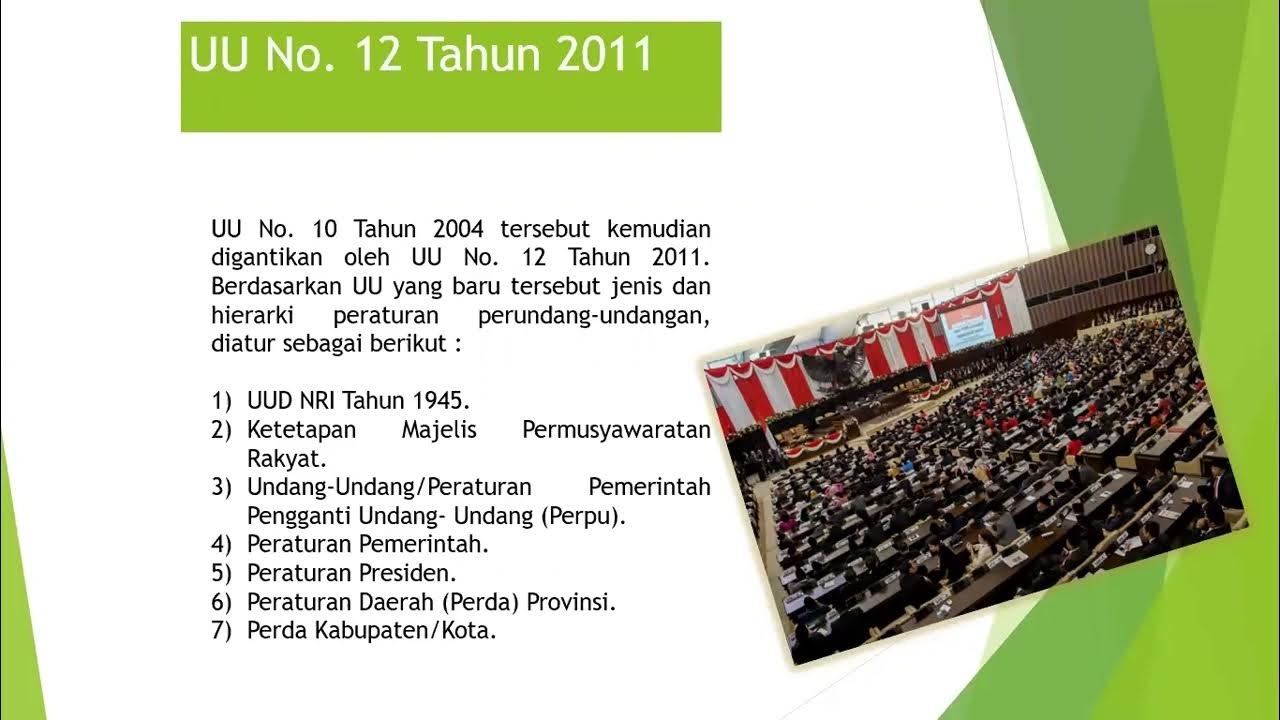
- 😀 The session focuses on understanding the types and hierarchy of laws and citizen compliance based on Law No. 12 of 2011.
- 📜 Legislation is defined as written rules containing legal norms that are generally binding and created by authorized state institutions or officials.
- 🏛️ The process of forming a law involves drafting by the government, discussion and prioritization by the DPR (House of Representatives), and approval in a plenary session.
- 📚 Law No. 12 of 2011 replaced Law No. 10 of 2004 and outlines the structure of legal regulations in Indonesia.
- 🗂️ The hierarchy of regulations in Indonesia is: 1) Constitution (UUD 1945), 2) MPR decrees, 3) Laws/Perppu, 4) Government regulations, 5) Presidential regulations, 6) Provincial regulations, 7) Regional regulations for cities or districts.
- ⚖️ Citizens should obey laws out of awareness, not just fear of sanctions, recognizing that laws are formed through democratic processes.
- 💡 Obedience means following rules, while compliance stems from internal awareness and respect for the law.
- 🤝 Proper citizen compliance involves balancing personal rights with the rights and obligations of others.
- 🔎 Awareness and adherence to laws contribute to legal enforcement and maintaining public order.
- 🌟 The ultimate purpose of obedience is to preserve societal obligations, ensure fairness, and uphold justice for all members of the community.
- 📝 Ketaatan (obedience), kesadaran (awareness), and kepatuhan (compliance) are interconnected concepts that guide responsible citizenship.
Q & A
What is the definition of a regulation according to the transcript?
-A regulation is a written rule containing legal norms that are generally binding and established by a state institution or an authorized official through procedures specified in the law.
How is a draft law (RUU) processed before becoming a law in Indonesia?
-The government, through relevant ministries or institutions, drafts the RUU. It is then reviewed by the DPR, prioritized in the National Legislation Program, discussed in hearings, and after reaching consensus in a plenary session, it is jointly enacted by the government and DPR.
What is the hierarchy of regulations in Indonesia?
-The hierarchy is: 1) The 1945 Constitution (UUD 1945), 2) Decrees of the People’s Consultative Assembly (TAP MPR), 3) Laws (UU) or Government Regulations in Lieu of Law (Perpu), 4) Government Regulations (PP), 5) Presidential Regulations (Perpres), 6) Provincial Regulations, 7) Regional Regulations at the Regency/City level.
What is the difference between a Perwal and a Perda?
-A Perwal (mayor regulation) is not the same as a Perda (regional regulation). A Perda is a formal regional regulation at the provincial or city/regency level, while a Perwal is specific to mayoral authority and cannot replace formal regional laws.
What does 'obedience' mean in the context of citizen behavior?
-Obedience refers to following regulations because they are legally binding, often based on awareness that the rules are created through legitimate mechanisms and agreements by representatives and government officials.
How does 'compliance' differ from 'obedience'?
-Compliance comes from personal awareness and conscience, not merely following rules because of legal obligation. It reflects internalized understanding of rights, duties, and moral responsibility in society.
Why is awareness important for citizens when following laws?
-Awareness ensures that citizens comply not just out of fear of sanctions, but as part of understanding their rights and duties and respecting the rights of others, which strengthens social harmony and justice.
What is the purpose of citizens’ obedience to the law?
-The purpose is to maintain societal order, uphold justice, and ensure that citizens fulfill their obligations while respecting the rights of others.
Which law governs the general provisions for Indonesian regulations mentioned in the transcript?
-Law Number 12 of 2011, which replaced Law Number 10 of 2004, governs the general provisions for Indonesian regulations.
How are the laws and regulations binding to citizens according to the transcript?
-Laws and regulations are generally binding on all citizens once established through proper legislative procedures, meaning everyone is required to follow and respect them.
What role does the DPR (House of Representatives) play in creating a law?
-The DPR reviews the draft law, prioritizes it in the legislative program, participates in hearings and debates, and gives approval in a plenary session before it becomes law with government consent.
What are the key benefits of citizens following regulations?
-Key benefits include maintaining societal order, protecting collective obligations, ensuring fairness, and fostering trust and cooperation within the community.
Outlines

This section is available to paid users only. Please upgrade to access this part.
Upgrade NowMindmap

This section is available to paid users only. Please upgrade to access this part.
Upgrade NowKeywords

This section is available to paid users only. Please upgrade to access this part.
Upgrade NowHighlights

This section is available to paid users only. Please upgrade to access this part.
Upgrade NowTranscripts

This section is available to paid users only. Please upgrade to access this part.
Upgrade NowBrowse More Related Video
[MOOC] Video Pengayaan Agenda 1 - Wasbang 1

Sistem Konstitusi [2]

Materi Pendidikan Pancasila Kelas 10 BAB 2 || D. Produk dan Hierarki Peraturan Perundang-undangan

[MOOC] Video Pengayaan Materi Agenda 1 - Overview

SOAL TWK CPNS 2024! SOAL PENDEK TAPI BIKIN PUSING!
VIDEO MODUL 3 HUBUNGAN PANCASILA DENGAN UNDANG UNDANG DASAR 1945
5.0 / 5 (0 votes)
