IOT SECURITY PROJECT : 3 LEVELS OF HACK & FINAL PATCH #IOT SMART LIGHT HACK
Summary
TLDRIn this video, Karen demonstrates a project focused on IoT security, showcasing various hacking attempts on smart devices and the implementation of a secure patch. Using smart LEDs, multiple nodes, and a Raspberry Pi, she walks viewers through attacks including IP scanning, packet capture with TCP dump, and packet replay. The demonstration highlights vulnerabilities in unsecured IoT devices and shows how encryption and CSRF tokens can prevent unauthorized access. The final patch on the Raspberry Pi successfully secures the device, preventing hackers from controlling it. Karen concludes by emphasizing the importance of IoT security and invites viewers to like, subscribe, and comment.
Takeaways
- 😀 The video demonstrates a project on IoT security created during a previous hackathon.
- 😀 The project uses smart LEDs to simulate IoT devices, which could be replaced with sensors or actuators connected to a microcontroller.
- 😀 Three NodeMCU devices and one Raspberry Pi are used, each with specific IP addresses, all connected to the same Wi-Fi network as the attacker.
- 😀 The demo shows the attacker hacking the devices one by one, with the last Raspberry Pi device being resistant to hacking.
- 😀 The attacker uses tools like TCP dump, Netcat, and Hydra to intercept and manipulate packets, turning LEDs on and off without authentication.
- 😀 The demo highlights multiple levels of attacks on IoT devices, including sniffing credentials and replaying packets.
- 😀 The project also demonstrates capturing packets using Fiddler, showing vulnerabilities in devices without proper encryption.
- 😀 A low-level encryption approach can prevent attackers from easily obtaining passwords, though packet replay attacks remain possible.
- 😀 The final secure patch uses a Raspberry Pi with CSRF tokens and session management to prevent replay attacks and unauthorized access.
- 😀 The video emphasizes the importance of encryption, token-based authentication, and secure session handling in IoT security.
Q & A
What is the main focus of Karen's project demonstrated in the video?
-The project focuses on IoT security, demonstrating different levels of attacks on IoT devices and implementing a final secure patch to prevent hacking.
Which devices were used in the demo for demonstrating IoT security?
-The demo used smart LEDs connected to a microcontroller, three NodeMCUs, and one Raspberry Pi, all connected to the same Wi-Fi network.
How did the attacker initially gain control over the IoT devices?
-The attacker was connected to the same Wi-Fi network and obtained the IP addresses of the devices, which allowed them to turn the smart LEDs on and off without authentication.
What tool did the attacker use to capture network packets during the demo?
-The attacker used TCPdump to capture packets transmitted between the IoT devices and the network.
How was the vulnerability exploited on the first devices?
-The devices had no authentication, so the attacker could directly control the smart LEDs and later obtain usernames and passwords from network packets using tools like TCPdump and Fiddler.
What method was used to prevent the attacker from hacking the final device?
-The final device, a Raspberry Pi, implemented a secure patch using session tokens (like CSRF tokens) and encryption, preventing packet replay and unauthorized access.
What was demonstrated with the TCPdump and netcat tools?
-TCPdump was used to capture the network traffic, and netcat was used to exploit the captured packets to control the smart LED devices.
What is the role of encryption in this IoT security project?
-Encryption was applied to protect sensitive data such as passwords. Lower-level encryption prevented attackers from reading passwords directly from captured packets.
What is a packet replay attack, and how was it shown in the demo?
-A packet replay attack occurs when an attacker resends captured packets to perform unauthorized actions. In the demo, the attacker tried to replay packets to control devices, but the final patch prevented this.
Why was the final Raspberry Pi device considered the most secure module?
-Because it implemented a secure patch with session validation, token-based authentication, and encrypted communication, making it impossible for the attacker to gain control or replay packets.
What are some tools mentioned in the demo that were used for network security testing?
-The demo mentioned TCPdump, netcat, Hydra, and Fiddler as tools to capture packets, analyze traffic, and attempt unauthorized access.
What is the key takeaway from Karen's IoT security project demo?
-The demo illustrates the vulnerabilities in IoT devices without proper security measures and shows how implementing encryption, session tokens, and secure patches can effectively prevent attacks.
Outlines

This section is available to paid users only. Please upgrade to access this part.
Upgrade NowMindmap

This section is available to paid users only. Please upgrade to access this part.
Upgrade NowKeywords

This section is available to paid users only. Please upgrade to access this part.
Upgrade NowHighlights

This section is available to paid users only. Please upgrade to access this part.
Upgrade NowTranscripts

This section is available to paid users only. Please upgrade to access this part.
Upgrade NowBrowse More Related Video

Top 5 security checklist for IoT devices | Cyber security awareness training | Security Quotient

The Future of IoT Security

PEMANFAATAN IOT DAN BIG DATA DALAM KEHIDUPAN SEHARI-HARI

Materi VI Keamanan Dalam IoT

Inovasi Smart City Berbasis Internet of Things
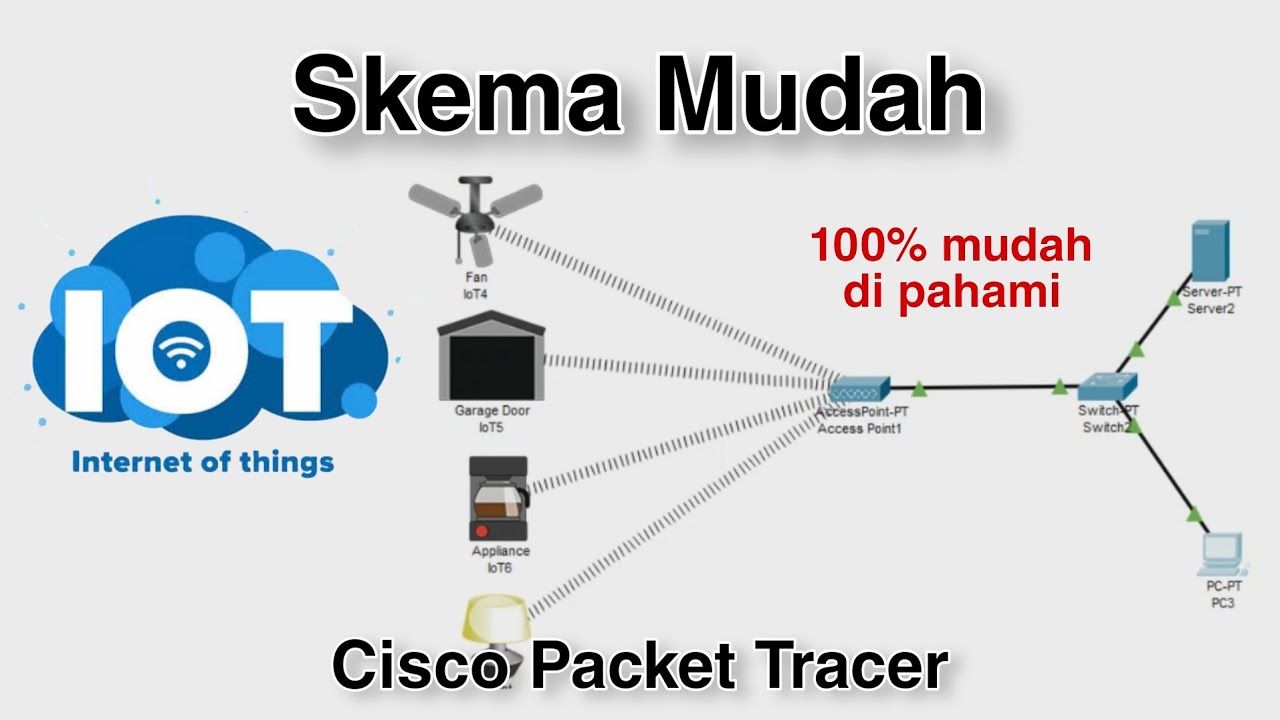
Konfigurasi IoT Perangkat Smart Home - Internet of Things | Cisco Packet Tracer
5.0 / 5 (0 votes)
