PHP Operators Part 2 - Full PHP 8 Tutorial
Summary
TLDRThis video provides a comprehensive overview of various PHP operators, including error control, increment/decrement, logical, bitwise, and array operators. It explains how to use these operators effectively with practical examples, highlighting the importance of proper error handling and operator precedence. The video emphasizes avoiding the error control operator for better debugging and shows how logical operators support short-circuiting to optimize performance. Additionally, bitwise operators and array manipulation techniques are explored, offering real-world applications like encryption and flag storage. Understanding these concepts is essential for writing clean, efficient PHP code.
Takeaways
- 😀 The error control operator (@) suppresses errors in an expression, but it's generally not recommended unless absolutely necessary, as it can hide issues in your application.
- 😀 The increment and decrement operators (++, --) can be used in both pre and post forms to adjust numeric values, but they only affect numbers (not strings, arrays, etc.).
- 😀 Pre-increment/decrement operators modify the value before it is used, while post-increment/decrement operators modify the value after it's been used in an expression.
- 😀 Logical operators (AND, OR, NOT) allow you to combine multiple conditions, but their behavior depends on operand evaluations, including short-circuiting and operator precedence.
- 😀 The 'AND' operator evaluates to true only if both operands are true, while 'OR' evaluates to true if at least one operand is true.
- 😀 The 'NOT' operator negates the boolean value of an operand, converting false to true and vice versa.
- 😀 PHP supports short-circuiting for logical operators, meaning that if an expression is already determined (e.g., the first operand of an OR is true), the rest of the expression may not be evaluated.
- 😀 Bitwise operators (AND, OR, XOR, NOT, shifts) work at the binary level, modifying individual bits in numbers. They can be used in tasks like encryption or storing flags.
- 😀 Array operators in PHP allow you to combine or compare arrays using union, equality, and strict comparison. For arrays with the same keys, union only appends non-duplicate elements.
- 😀 PHP’s comparison operators check for equality or inequality of arrays based on key-value pairs and can distinguish between loose and strict comparisons, including data type checks.
Q & A
What is the purpose of the error control operator (@) in PHP?
-The error control operator (@) is used to suppress errors generated by an expression. However, it is not recommended for regular use because it hides issues instead of fixing them.
How do pre-increment and post-increment operators differ in PHP?
-Pre-increment (++$x) increases the value before returning it, while post-increment ($x++) returns the current value first and then increments it.
Can increment and decrement operators be applied to all PHP data types?
-No, they primarily affect numbers and strings. Incrementing null results in 1, but decrementing null has no effect. Boolean true increments to 1, but decrementing has no effect. Arrays, resources, and objects are not affected.
What is the difference between logical operators && and 'and' in PHP?
-Both perform logical AND operations, but '&&' has higher precedence than the assignment operator, while 'and' has lower precedence. This difference affects how expressions are evaluated, especially when combined with assignments.
What does short-circuiting mean in the context of logical operators?
-Short-circuiting means PHP may skip evaluating the second operand if the first operand already determines the outcome. For example, in an OR operation, if the first value is true, the second value is not evaluated.
How do bitwise operators work in PHP?
-Bitwise operators manipulate individual bits of integers. Examples include AND (&), OR (|), XOR (^), NOT (~), left shift (<<), and right shift (>>). They can be used for flags, encryption, and permissions.
What is the difference between the union operator (+) for arrays and regular addition?
-For arrays, the union operator (+) combines two arrays without overwriting values in the first array for matching keys. Regular addition (+) sums numeric values instead.
How does strict comparison (===) differ from loose comparison (==) for arrays?
-Strict comparison checks that both key-value pairs and their data types match and that they are in the same order. Loose comparison only checks that key-value pairs are equal, ignoring data type differences and order.
When might the execution operator (backticks) be used in PHP?
-The execution operator allows PHP to execute shell commands and capture their output. It is rarely used and requires shell_exec to be enabled on the server.
Why is it generally discouraged to use the error control operator (@)?
-Using '@' silences errors without addressing the underlying problem. This can make debugging difficult and hide issues in the application, leading to unexpected behavior.
How does shifting bits to the left (<<) or right (>>) affect a number?
-Shifting bits left (<<) multiplies the number by 2 for each shift, while shifting bits right (>>) divides the number by 2 for each shift. It effectively moves the binary representation of the number left or right.
What happens when you increment a string in PHP?
-Incrementing a string increases its characters according to PHP's internal rules. For example, 'abc'++ becomes 'abd'. Decrementing a string has no effect.
Outlines

This section is available to paid users only. Please upgrade to access this part.
Upgrade NowMindmap

This section is available to paid users only. Please upgrade to access this part.
Upgrade NowKeywords

This section is available to paid users only. Please upgrade to access this part.
Upgrade NowHighlights

This section is available to paid users only. Please upgrade to access this part.
Upgrade NowTranscripts

This section is available to paid users only. Please upgrade to access this part.
Upgrade NowBrowse More Related Video
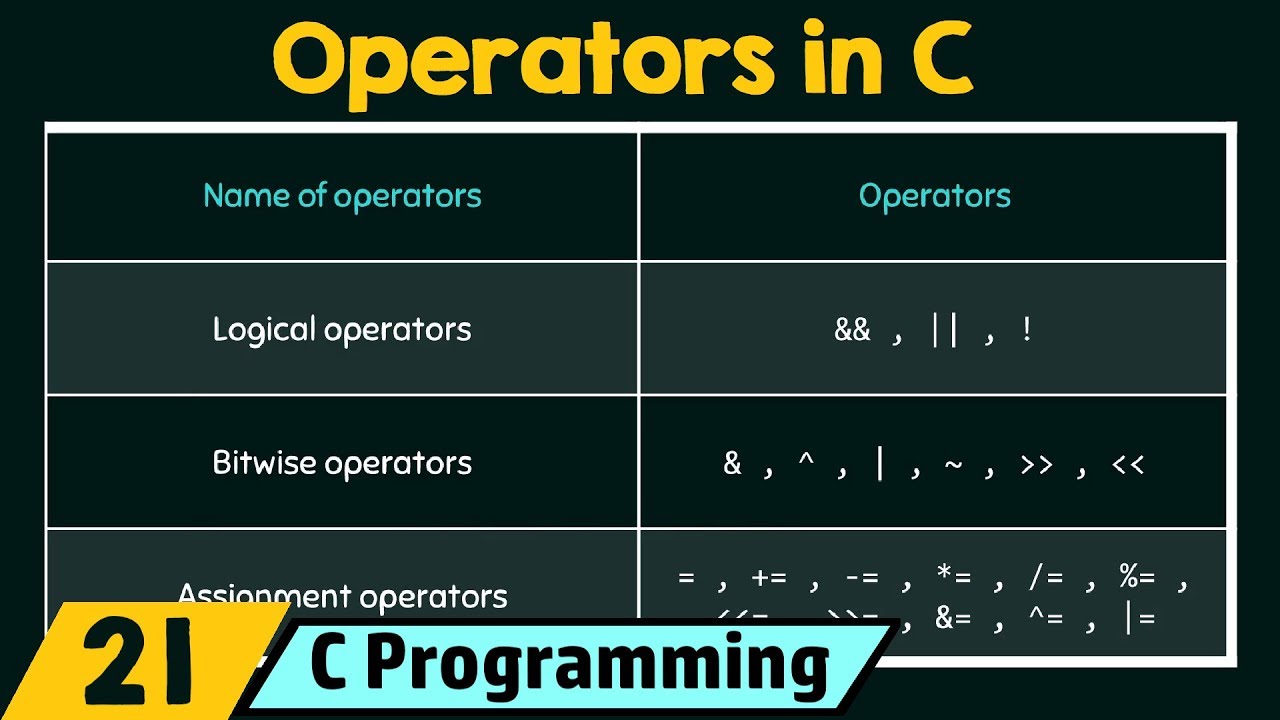
Introduction to Operators in C

#2 Tipe Data, Variabel, dan Operator

[ENG SUB] [Null Safety] Pemrograman Dasar Dart 04. Mathematical Operators
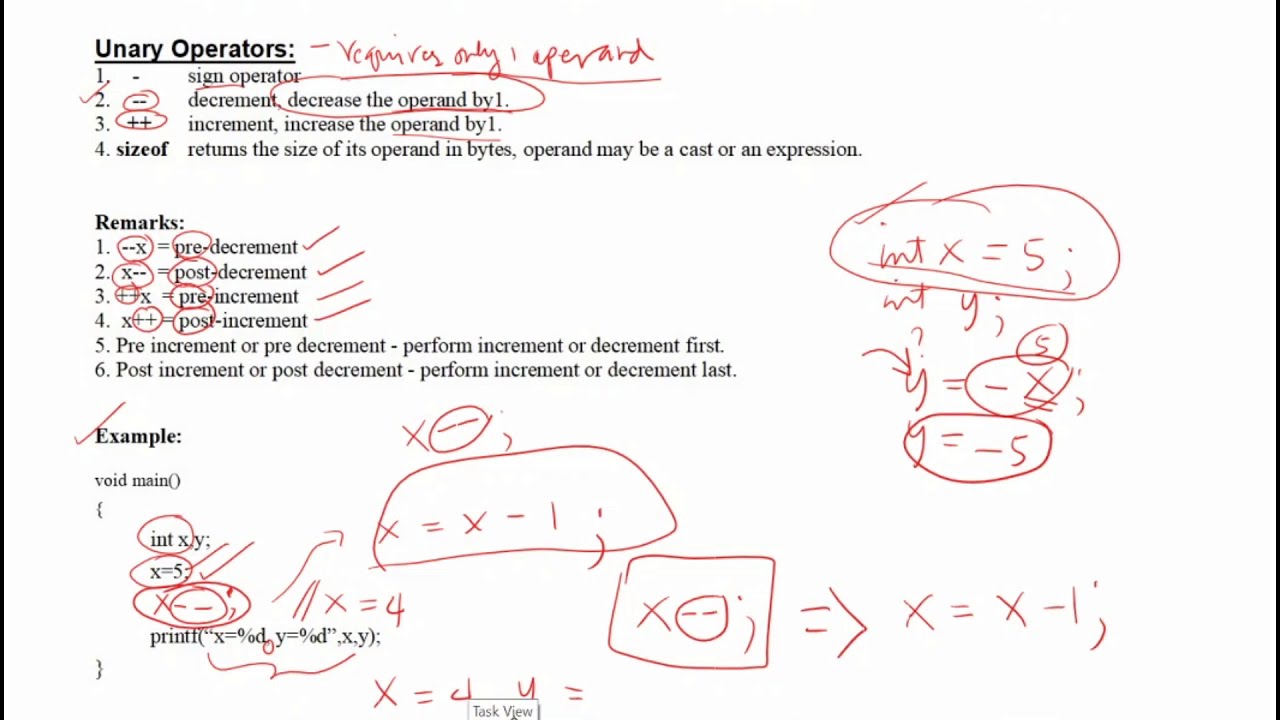
CPE 112 Lecture 18 - Unary Operators
JAVA TECHNICAL QUESTION & ANSWERS FOR INTERVIEW PART - II
C_14 Operators in C - Part 2 | Arithmetic & Assignment Operators | C Programming Tutorials
5.0 / 5 (0 votes)
