konsep ketuhanan part 1
Summary
TLDRIn this video, Muhammad Ziaul Ani explores the concept of God (Tuhan) across different religions, with a focus on Islam. He discusses the interpretation of the term 'ilah' (God) in the Quran and its meaning according to scholars like Ibn Taymiyyah. The video delves into the distinction between 'earthly' and 'heavenly' religions, examining the evolution of human thought about God, from animism to monotheism. It compares Islamic monotheism with other faiths, particularly addressing the Christian doctrine of the Trinity. The video also touches on the significance of understanding God's attributes and the centrality of God in human life.
Takeaways
- 😀 The term 'Tuhan' refers to 'Rabbun' in Arabic, derived from the interpretations of surah al-Jatsiyah and surah 38, both containing the term 'Ilah' meaning 'God'.
- 😀 'Ilah' in Islamic tradition, according to Ibn Taymiyyah, refers to the entity that is worshipped with complete love, submission, and devotion, and the source of comfort in difficult times.
- 😀 The word 'agama' (religion) originates from Sanskrit and encompasses human relationships with rulers, deities, and other humans, highlighting the need for interconnectedness in life.
- 😀 There are two major categories of religions: 'Agama Arthi' (earthly religions, shaped by human culture and traditions) and 'Agama Samawi' (revealed religions, originating from divine revelation).
- 😀 'Agama Arthi' refers to human-made religions based on traditions and cultural beliefs, whereas 'Agama Samawi' refers to divinely revealed religions that come from God (Allah).
- 😀 Western religious thought on God developed through stages: Dynamism (worship of objects), Animism (belief in spirits), Polytheism (belief in many gods), Henotheism (belief in many gods with one supreme), and ultimately Monotheism (belief in one God).
- 😀 The concept of Monotheism, the belief in one all-powerful God, was eventually embraced universally in Western thought, resolving the confusion caused by polytheistic beliefs.
- 😀 Islam emphasizes the oneness of God (Tawhid), encapsulated in the verse 'Qul huwallahu ahad' from Surah Al-Ikhlas, affirming that Allah is the one and only God, without equal or comparison.
- 😀 In contrast to the Islamic view of God’s oneness, Christianity holds the doctrine of the Trinity, which claims that God exists in three forms: the Father, the Son, and the Holy Spirit.
- 😀 Surah Al-Ikhlas critiques the Christian concept of the Trinity, affirming that Allah is singular, not divided into multiple entities, as reflected in Islamic theology.
- 😀 The key difference in divine concepts between Islam and other religions lies in the clarity of God's oneness in Islam, contrasted with polytheistic or trinitarian views in other faiths.
Q & A
What does the term 'Tuhan' mean in the context of the script?
-In the script, 'Tuhan' refers to the concept of God in different religions, with a focus on the Islamic understanding. The term is derived from the Arabic word 'Rabbun', which refers to the idea of a divine entity worthy of worship and reverence.
How is the term 'Ilah' defined by Ibn Taymiyyah in the script?
-Ibn Taymiyyah defines 'Ilah' as a being that is worshipped with deep love, submission, and humility. This being is the ultimate source of refuge, prayers, and tranquility for the believer.
What is the difference between 'agama ardhi' and 'agama samawi'?
-The script distinguishes between two types of religions: 'agama ardhi', or earthly religions, which are human-made and based on traditions and cultural beliefs, and 'agama samawi', or heavenly religions, which are divinely revealed from Allah and are not a result of human creation.
What is the concept of 'monotheism' in the script?
-Monotheism, as explained in the script, is the belief in one God. This concept emerged from earlier religious ideas such as animism, polytheism, and henotheism, where people began by worshipping multiple gods before eventually recognizing the necessity of worshipping a single, supreme deity.
How does the concept of God in Islam compare with other religions?
-In Islam, God (Allah) is considered the one and only deity, as highlighted in the concept of 'Tawhid' (the oneness of God). This contrasts with Christianity, where the concept of God is expressed through the Trinity (God the Father, the Son, and the Holy Spirit), which Islam critiques for implying a multiplicity of gods.
What is the significance of Surah Al-Ikhlas in defining the Islamic concept of God?
-Surah Al-Ikhlas emphasizes the oneness of God. It states that Allah is the one and only, self-sufficient, and without equal or counterpart. This surah serves as a central declaration of the Islamic understanding of monotheism.
What historical philosophical approach is mentioned in the script to explain the Western view of divinity?
-The script refers to Western philosophers like Max Muller and E.B. Taylor, who proposed theories such as evolutionism, animism, and polytheism to explain how humans initially conceptualized divinity through nature, spirits, and multiple gods before evolving towards monotheism.
What is 'animism', and how does it relate to the development of religious concepts?
-Animism is the belief that non-human objects, such as animals, plants, and natural elements, possess spiritual significance or life force. In the script, animism is presented as an early step in the human understanding of divinity, where people believed that such objects had divine power.
What is the Islamic critique of the Christian concept of the Trinity?
-Islam critiques the Christian doctrine of the Trinity, which posits that God exists as three persons (the Father, the Son, and the Holy Spirit). Islam rejects this notion, asserting that God is a singular, indivisible entity, as outlined in Surah Al-Ikhlas.
What role does the concept of 'submission' play in the Islamic understanding of God?
-In Islam, submission to God (Allah) is a core principle, as believers are expected to acknowledge His sovereignty, seek His guidance, and place their trust in Him, especially during times of difficulty. This is aligned with the definition of 'Ilah' according to Ibn Taymiyyah, which involves total submission and devotion to God.
Outlines

This section is available to paid users only. Please upgrade to access this part.
Upgrade NowMindmap

This section is available to paid users only. Please upgrade to access this part.
Upgrade NowKeywords

This section is available to paid users only. Please upgrade to access this part.
Upgrade NowHighlights

This section is available to paid users only. Please upgrade to access this part.
Upgrade NowTranscripts

This section is available to paid users only. Please upgrade to access this part.
Upgrade NowBrowse More Related Video

Hashim Vai 3 27 4 2025
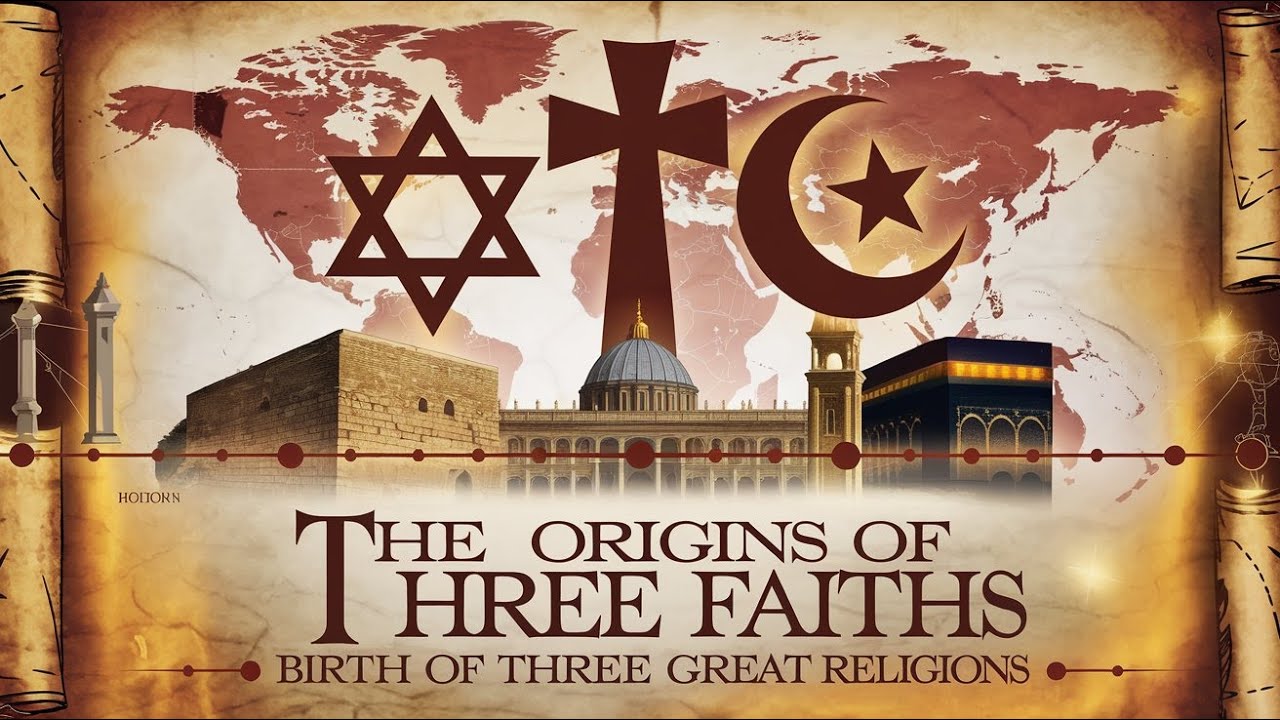
The Origins of Abrahamic Religions | Judaism, Christianity & Islam Explained

Kenapa Banyak Agama Jika Tuhan hanya Satu ?! Dr. Zakir Naik
What's the difference between Christianity and Islam-Christianity VS Islam World Religions Explained

Phony Visitor Is Exposed By Muslims | Hashim | Sh. Ibn Hazm

Всемирная история. 10 класс. Мировые религии и развитие цивилизациий /29.09.2020/
5.0 / 5 (0 votes)
