3 Step BEGINNER Scalping Strategy (500 Trade BACKTEST)
Summary
TLDRIn this video, a seasoned trader with 17 years of experience shares a beginner-friendly scalping strategy that he has backtested 500 times. The strategy involves three simple steps: identifying market bias using a specific candle pattern, setting up range breakouts, and finding a point of interest using demand zones. The trader provides live examples across various markets like Forex, NASDAQ, and Gold to demonstrate how these steps can be applied for consistent success. While results aren't guaranteed, the approach has helped many traders in his community achieve success.
Takeaways
- 😀 Trading success isn't just about personal gains, but also about the success of the trading community.
- 😀 The scalping strategy is simple, quick, and only requires three steps: bias, range breakouts, and finding a point of interest.
- 😀 The strategy has been personally backtested 500 times, showing its reliability, though backtesting doesn't guarantee future results.
- 😀 Step 1: Identifying market direction through the analysis of the 7 a.m. and 8 a.m. candles to determine bullish or bearish trends.
- 😀 Bullish patterns (like the bullish engulfing pattern) suggest price movement upwards, while bearish patterns signal a potential downward movement.
- 😀 The strategy works across various markets including Forex, NASDAQ, and Gold, all using hour-long candles for clarity.
- 😀 Step 2: Set up range breakouts by marking the top and bottom of the first 15 minutes (9:30 to 9:45 a.m.) of the New York Stock Exchange open.
- 😀 After the range is identified, waiting for price to break and close outside of that range confirms the momentum and signals the trade direction.
- 😀 Step 3: Identify points of interest, like demand and supply zones, and use fair value gaps to enter the trade after a retracement.
- 😀 Risk-to-reward ratios are key. For example, the strategy might target a 2:1 or 2.3 risk-to-reward ratio for profitable trades.
- 😀 The strategy incorporates real-life examples to demonstrate how it works in practice, making it easier for beginners to understand and apply.
Q & A
What is the main focus of the trading strategy discussed in the video?
-The main focus is a beginner-friendly scalping strategy that the speaker has personally backtested 500 times, designed for short-term trading with clear three-step rules.
How does the speaker determine the market bias in step one?
-Market bias is determined by analyzing two specific one-hour candles at 7:00 a.m. and 8:00 a.m. A bullish engulfing pattern signals an upward trend, while a bearish engulfing pattern signals a downward trend.
What time frame does the speaker trade in, and why?
-The speaker trades from 9:30 to 11:00 a.m. Eastern during the New York session, as this period provides consistent market activity suitable for scalping strategies.
What is the purpose of marking a range in step two?
-Marking the range during the first 15 minutes of the trading session helps identify potential breakout points. Price breaking and closing outside this range confirms momentum in the trade direction.
Which indicators are recommended for step two, and how are they set up?
-The speaker recommends using the 'Opening Range with Breakouts and Targets' indicator by Lux Algo, set for a 15-minute time period, covering 9:30 to 9:45 a.m., with the chart set to UTC minus 4.
What is a 'level of demand,' and how is it used in step three?
-A level of demand is a zone where aggressive buying occurred previously, often after a break of structure. Traders wait for price to retrace to this level to enter trades, increasing the probability of a successful position.
How does the speaker determine stop-loss and take-profit levels?
-Stop-loss is typically set below the trading range or recent structure, while take-profit is set near significant supply zones or previous price action levels to maximize risk-reward.
Does this strategy work for both buy and sell trades?
-Yes, the strategy is applicable for both buy and sell trades. The same three-step process applies, using bullish engulfing patterns for buys and bearish engulfing patterns for sells.
How does backtesting support the use of this strategy?
-Backtesting 500 trades provides historical evidence of the strategy's performance. While not a guarantee of future results, it shows the model's consistency and effectiveness over past market conditions.
What additional resources does the speaker suggest for viewers interested in this strategy?
-The speaker recommends watching other videos demonstrating the strategy algorithmically and trying a trading robot that automates the scalping method for convenience and learning.
Why does the speaker emphasize observing real charts with multiple examples?
-Using real charts helps viewers understand how the strategy plays out in actual market conditions, demonstrating patterns, range setups, and price reactions to reinforce learning.
How does the speaker manage trades once a position is active?
-The speaker sets take-profit and stop-loss levels, sometimes adjusts to break-even when profitable, and may monitor trades manually to capture maximum gains or protect against adverse moves.
Outlines

This section is available to paid users only. Please upgrade to access this part.
Upgrade NowMindmap

This section is available to paid users only. Please upgrade to access this part.
Upgrade NowKeywords

This section is available to paid users only. Please upgrade to access this part.
Upgrade NowHighlights

This section is available to paid users only. Please upgrade to access this part.
Upgrade NowTranscripts

This section is available to paid users only. Please upgrade to access this part.
Upgrade NowBrowse More Related Video

The ONLY Trading Strategy You Need for 2026
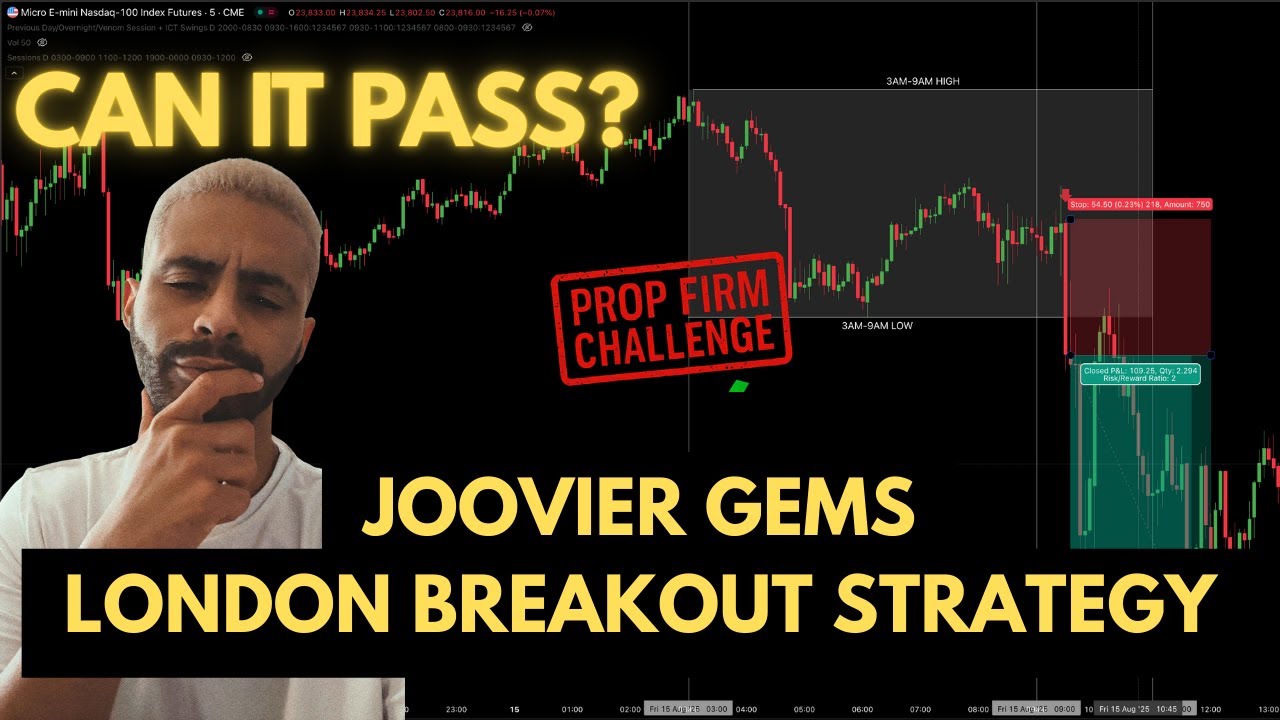
Prop Firm Strategy Backtest - Joovier Gems - CAN IT PASS?

How to Start Forex Trading as a BEGINNER in 2025 (Full Guide)

The Easiest Beginner Forex Scalping Strategy of ALL TIME

12 Tahun Pengalaman trading forex dalam 18 Menit | TRADING MASTERCLASS

The " ONE CANDLE " Scalping Strategy I Will Use For Life
5.0 / 5 (0 votes)
