Why Weimar Germany Collapsed
Summary
TLDRThe Weimar Republic, despite surviving economic crises, political fragmentation, and extreme challenges like hyperinflation and uprisings, ultimately fell due to a crisis of legitimacy. By 1933, amidst the Great Depression, extremist parties like the Nazis gained power, exploiting political instability. The failure of leaders to form broad coalitions, combined with President Hindenburg’s decision to appoint Hitler as Chancellor, led to the Republic’s collapse. The rise of Hitler and the passage of laws that undermined democracy serve as a powerful reminder that democratic processes alone cannot ensure freedom without public commitment and responsible leadership.
Takeaways
- 😀 The Weimar Republic survived significant challenges such as communist revolutions, attempted coups, and hyperinflation before its eventual collapse.
- 😀 Despite Germany's defeat in World War I and the humiliating Treaty of Versailles, the Weimar Republic managed to function until 1933.
- 😀 The Weimar Republic's ultimate downfall was largely due to the onset of the Great Depression in 1929 and the political instability it caused.
- 😀 In 1930, the Nazi party became the second-largest party in Germany's Parliament, signaling a shift toward authoritarianism.
- 😀 Political fragmentation, with parties failing to form stable coalitions, contributed to the Republic's inability to manage crises effectively.
- 😀 The rise of the Nazi party and communism pushed the Republic toward extreme polarization, making it harder to form effective governance.
- 😀 President Paul von Hindenburg's frequent use of emergency decrees further eroded the legitimacy of the Republic and the rule of law.
- 😀 A crisis of legitimacy, rather than just economic or military failures, was the critical factor in the collapse of the Weimar Republic.
- 😀 The political process became more about attacking opponents than solving national problems, which weakened the Republic's stability.
- 😀 Hitler's legal appointment as Chancellor in 1933, followed by the Nazis' swift consolidation of power, marked the end of the Weimar Republic.
- 😀 The Weimar Republic's collapse serves as a warning about the dangers of using democratic processes to undermine political opponents and erode trust in democracy.
Q & A
What were the main challenges faced by the Weimar Republic during its existence?
-The Weimar Republic faced several major challenges, including hyperinflation, communist revolutions, attempted coups, and political fragmentation. Despite these, it survived for over a decade before collapsing in 1933.
How did the Weimar Republic manage to survive for so long despite these challenges?
-The Weimar Republic survived due to the resilience of its institutions, the commitment of many political leaders to democratic values, and the ability to manage crises like hyperinflation and civil unrest, despite its instability.
What was the significance of the Treaty of Versailles for the Weimar Republic?
-The Treaty of Versailles, signed after Germany's defeat in World War I, humiliated the nation and crippled its economy by imposing heavy reparations, contributing to widespread discontent and instability during the Weimar era.
How did the Nazis gain power within the Weimar Republic?
-The Nazis gained power through a combination of political fragmentation, economic crises, and widespread public dissatisfaction. In 1930, they became the second-largest party in the Reichstag, and by 1933, they exploited the political chaos to legally take control.
What role did the Great Depression play in the downfall of the Weimar Republic?
-The Great Depression exacerbated Germany’s economic problems, leading to mass unemployment and social unrest. The inability of Weimar politicians to manage the crisis eroded public faith in democratic governance and allowed extremist parties like the Nazis to rise.
Why did conservative elites, including President Hindenburg, appoint Hitler as Chancellor?
-Conservative elites, including President Hindenburg, believed they could control Hitler and use him for their own political purposes. They underestimated Hitler’s ambitions and the Nazis' ability to dismantle the republic from within.
What were the consequences of Hitler’s appointment as Chancellor?
-Hitler's appointment as Chancellor led to the Nazis rapidly consolidating power. They passed the Reichstag Fire Decree and the Enabling Act, suspending civil liberties and allowing Hitler to rule by decree, ultimately dismantling the Weimar Republic.
What was the role of political fragmentation in the collapse of the Weimar Republic?
-Political fragmentation made it impossible for moderate parties to form stable coalitions, leading to the rise of extremist parties. The inability to compromise allowed parties like the Nazis and Communists to gain increasing influence and destabilize the political system.
How did the abuse of emergency decrees by President Hindenburg affect the Weimar Republic?
-The frequent use of emergency decrees by President Hindenburg undermined the rule of law and weakened the legitimacy of the democratic process. This erosion of democratic norms contributed to the eventual collapse of the Weimar Republic.
Why is the fall of the Weimar Republic still relevant today?
-The fall of the Weimar Republic serves as a cautionary tale about the dangers of political fragmentation, economic mismanagement, and the abuse of democratic processes. It highlights how democratic institutions can be exploited by those seeking to dismantle them, offering lessons for modern democracies.
Outlines

This section is available to paid users only. Please upgrade to access this part.
Upgrade NowMindmap

This section is available to paid users only. Please upgrade to access this part.
Upgrade NowKeywords

This section is available to paid users only. Please upgrade to access this part.
Upgrade NowHighlights

This section is available to paid users only. Please upgrade to access this part.
Upgrade NowTranscripts

This section is available to paid users only. Please upgrade to access this part.
Upgrade NowBrowse More Related Video
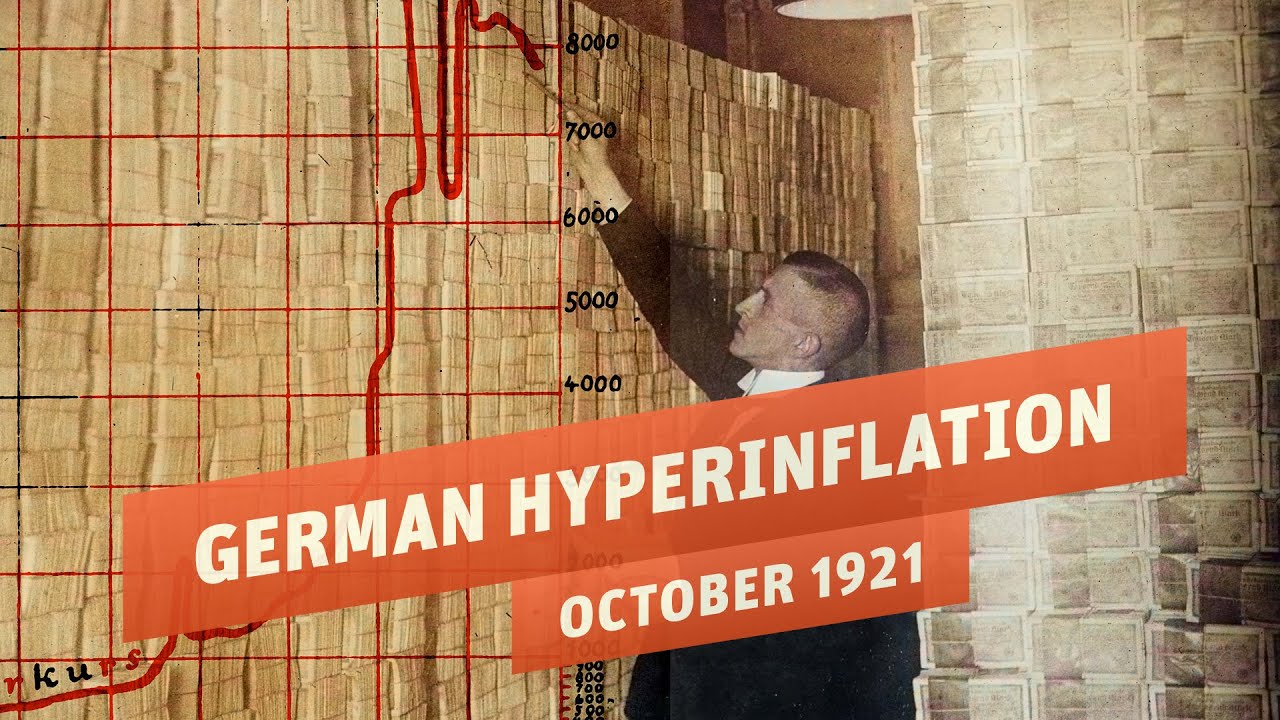
Why Germany Caught Hyperinflation in 1921 (Documentary)
Germany 1918 45

Challenges from the Left and Right - Weimar and Nazi Germany GCSE History

"We Could See Houses Sell For 75 oz Silver..." - Rafi Farber | Gold Silver Price

✅ La CRISIS de VENEZUELA en 15 minutos | ¿Por qué Venezuela está siempre en crisis?
What Caused the Rise of Nazi Germany
5.0 / 5 (0 votes)
