Os Sofistas - Brasil Escola
Summary
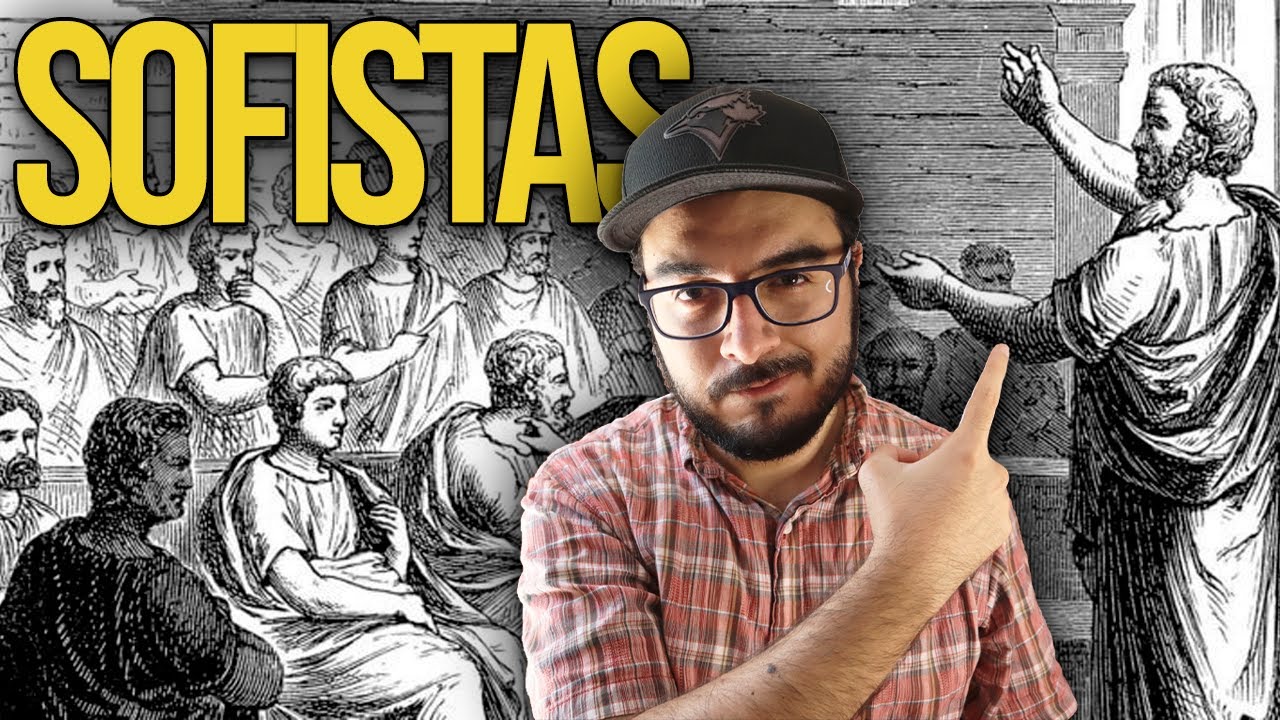
TLDRThe video explores the role of sophists in ancient Greek philosophy, highlighting their emergence during the early days of democracy when citizens needed strong public speaking and persuasive skills. It contrasts the sophists with Socrates, emphasizing their focus on rhetoric and persuasion over objective truth. Key figures like Protagoras, who championed extreme subjectivism, and Gorgias, a skeptic and nihilist, are discussed. The video explains how sophists taught the art of argument for a fee, influencing politics and society, and underscores their practical approach to life, valuing personal satisfaction and immediate experience over absolute truths or moral absolutes.
Takeaways
- 😀 The sophists were skilled orators and teachers of rhetoric who emerged in Ancient Greece during the development of democracy.
- 😀 They were viewed as 'wise' due to their ability to teach persuasive speaking, but their methods were seen as manipulative rather than based on logic or reason.
- 😀 Sophists focused on teaching people how to speak persuasively in political and public settings, particularly in the agora, the public square in Athens.
- 😀 The concept of citizenship in Ancient Greece was restricted to free male Athenians with citizen parents, who were expected to be prepared to engage in politics.
- 😀 The demand for skilled orators grew as democracy required citizens to participate directly in decision-making and public debates.
- 😀 The term 'sophist' comes from 'sophia,' meaning wisdom, as they were considered wise for their eloquence, but they often relied on emotional persuasion rather than rational argumentation.
- 😀 Notable sophists included figures like Protágoras, Górgias, Antístenes, and Pródico, with Protágoras and Górgias being especially famous.
- 😀 Protágoras is known for advocating extreme subjectivism, claiming that 'man is the measure of all things,' meaning that individuals determine what is true or real.
- 😀 This subjectivism led to relativism, both moral and epistemological, where there were no absolute truths or universally applicable moral standards.
- 😀 Górgias, another leading sophist, argued that nothing truly exists, and that if something did exist, humans couldn't know it or communicate it, leading to his views being aligned with skepticism and nihilism.
- 😀 For sophists like Górgias, the goal of life was to live well in the present, as they believed there was no afterlife or permanent truth beyond one's subjective experience.
- 😀 The sophists' use of persuasive techniques made them resemble early forms of lawyers or advocates in the ancient world, skilled at winning arguments through rhetorical mastery rather than logical reasoning.
Q & A
Who were the Sophists and in what historical context did they emerge?
-The Sophists were teachers and intellectuals in ancient Greece who emerged during the early democratic period. They taught rhetoric and persuasion to prepare citizens to participate effectively in political life, particularly in public debates at the Agora.
Why did Socrates and Plato criticize the Sophists?
-Socrates and Plato criticized the Sophists because they focused on persuasion and winning arguments rather than seeking truth. They could convince others of contradictory ideas without using logical reasoning, which Socrates considered deceptive.
What does the term 'Sophist' mean and how did they view themselves?
-The term 'Sophist' means 'wise' or 'savant'. Sophists viewed themselves as holders of universal knowledge and claimed they could teach about any subject, though they primarily specialized in techniques of persuasion.
How was citizenship defined in ancient Athens, and why was it relevant to the Sophists?
-Citizenship was restricted to free men born of Athenian parents. This group could participate in politics, making it important for Sophists to teach rhetorical skills to these citizens, as effective speech and argumentation were key to influencing political decisions.
What is meant by Protágoras being an 'extremist of subjectivism'?
-Protágoras believed that all truths are subjective and that 'man is the measure of all things.' This means there are no absolute truths, and knowledge and morality are determined by individual perception and will.
What is the difference between moral relativism and epistemological relativism as taught by Protágoras?
-Moral relativism is the idea that concepts of right and wrong depend on individual choice. Epistemological relativism is the belief that there is no absolute knowledge, and what is considered true depends on personal perspective.
What were Gorgias' main philosophical ideas?
-Gorgias was a skeptic and nihilist. He argued that nothing real exists, that humans cannot truly know anything, and that it is impossible to communicate real knowledge. For him, the focus was on persuading others and achieving personal satisfaction in life.
How did Sophists use rhetoric and persuasion to influence people?
-Sophists used techniques of emotional appeal and strategic argumentation to convince others, sometimes even presenting contradictory or false ideas convincingly. Their goal was to influence decisions and opinions rather than reveal objective truths.
Why did Sophists charge for their teachings, and who were their typical students?
-Sophists charged for their instruction because their lessons were practical tools for gaining influence and success in politics. Their students were usually wealthy or politically active citizens who could afford such education and intended to participate in governance.
How did the Sophists' philosophy reflect their views on life and mortality?
-Sophists emphasized the importance of the present life, valuing personal satisfaction, fame, and wealth over concerns about the afterlife. They considered humans as ephemeral beings, and their teachings aimed to maximize success and fulfillment in the here and now.
Can the Sophists be compared to any modern profession?
-Yes, Sophists can be compared to modern lawyers or public speakers because they specialized in persuasion and argumentation, using skillful rhetoric to achieve practical outcomes rather than discovering absolute truths.
Outlines

This section is available to paid users only. Please upgrade to access this part.
Upgrade NowMindmap

This section is available to paid users only. Please upgrade to access this part.
Upgrade NowKeywords

This section is available to paid users only. Please upgrade to access this part.
Upgrade NowHighlights

This section is available to paid users only. Please upgrade to access this part.
Upgrade NowTranscripts

This section is available to paid users only. Please upgrade to access this part.
Upgrade NowBrowse More Related Video

Educação na Grécia Clássica: dos Sofistas a Platão - Brasil Escola

SOFISTAS PARA O ENEM

What is Rhetoric?
¿QUÉ ES UN SOFISTA? Significado e historia de los Sofistas, filosofía griega | Filosofía desde cero.

Gianluca Cuniberti - La comunità di cittadini: la polis

🔥✨The 🐐 Impact of Ancient Greece on 🌎 Western Civilization✨🔥
5.0 / 5 (0 votes)
