PENGOLAHAN, PENGAWETAN, DAN PENGEMASAN
Summary
TLDRThis video delves into the fascinating science behind food preservation, exploring how we keep food fresh for days, weeks, or even months. From understanding the causes of spoilage to methods like refrigeration, freezing, drying, canning, and fermentation, the video uncovers the techniques humans use to outsmart nature. It also highlights high-tech methods like food irradiation, which sterilize food without cooking it. Ultimately, the video emphasizes how food preservation is crucial for global food systems, reducing waste and ensuring safe, long-lasting food supplies across the world.
Takeaways
- 😀 Food preservation is a science that helps extend the freshness of food for days, weeks, or even months.
- 😀 Different food items, like fruits, vegetables, and meats, have long journeys before reaching our plates.
- 😀 The core concept behind food preservation is slowing down or stopping the natural process of spoilage.
- 😀 Preservation methods work on various fronts: controlling bacteria, halting internal enzymes, slowing natural ripening, and protecting from external threats like insects.
- 😀 Temperature plays a key role in preservation: cooling slows bacterial activity, while freezing halts it entirely.
- 😀 Heat, on the other hand, kills microorganisms and is used in methods like boiling, baking, and pasteurization.
- 😀 Removing water from food, such as through drying, is one of the oldest and simplest preservation techniques.
- 😀 Sugar also acts as a preservative by drawing out water from bacterial cells, causing them to dehydrate and die.
- 😀 Canning involves sealing food in airtight containers, then heating them to destroy bacteria, ensuring long-term preservation.
- 😀 Modern chemical preservatives like vinegar and benzoates also help prevent spoilage by creating an inhospitable environment for microorganisms.
- 😀 High-tech preservation methods like fermentation create controlled environments for beneficial bacteria, preserving food while adding flavor, as seen in products like kimchi, yogurt, and pickles.
Q & A
Why do foods spoil over time?
-Foods spoil due to the action of bacteria, enzymes, and natural chemical processes that break down the food, as well as external factors like insects and air exposure.
What are the main strategies used to preserve food?
-The main strategies include controlling temperature (cooling, freezing, heating), removing water, creating physical barriers (canning, packaging), using chemicals (sugar, vinegar, preservatives), fermentation, and irradiation.
How does cooling differ from freezing in food preservation?
-Cooling slows down bacterial activity, allowing food to stay fresh for days or weeks, whereas freezing completely halts microbial activity, enabling food to last for months or even years.
What role does heat play in food preservation?
-Heat can kill microorganisms directly, which is why methods like boiling, baking, and pasteurization effectively preserve food by eliminating harmful microbes.
Why is water removal effective in preserving food?
-Microorganisms need water to survive. Removing water through drying or using high sugar content creates an environment where bacteria cannot grow, extending shelf life.
How does sugar act as a preservative?
-High sugar concentrations in jams and candies draw water out of bacterial cells, dehydrating and killing them, which helps preserve the food while also adding sweetness.
What is the principle behind canning and airtight packaging?
-Canning and airtight packaging create a barrier against external microbes. The food is heated to kill existing bacteria, and the sealed container prevents new bacteria from entering.
How does fermentation preserve food?
-Fermentation promotes the growth of beneficial bacteria that create an acidic environment, which inhibits harmful bacteria, thus preserving the food in a controlled way.
What is food irradiation, and how does it work?
-Food irradiation uses controlled ionizing radiation, such as gamma rays, to kill bacteria and parasites without cooking the food. It does not make the food radioactive and acts as a powerful preservation method.
Why is food preservation important globally?
-Food preservation allows for safe consumption of foods year-round, reduces waste, ensures longer storage and transport, and is critical for feeding a growing global population.
What are the advantages and disadvantages of drying food?
-Advantages include lightweight, portable, and long shelf life. Disadvantages include potential changes in texture and flavor compared to fresh food.
How does the script suggest thinking about future food preservation innovations?
-It encourages considering new methods to feed everyone sustainably while minimizing food waste, implying that innovation in preservation will continue to evolve to meet global challenges.
Outlines

This section is available to paid users only. Please upgrade to access this part.
Upgrade NowMindmap

This section is available to paid users only. Please upgrade to access this part.
Upgrade NowKeywords

This section is available to paid users only. Please upgrade to access this part.
Upgrade NowHighlights

This section is available to paid users only. Please upgrade to access this part.
Upgrade NowTranscripts

This section is available to paid users only. Please upgrade to access this part.
Upgrade NowBrowse More Related Video

FoodSHOTS Episode 3: Jams, fruit preserves and pectin
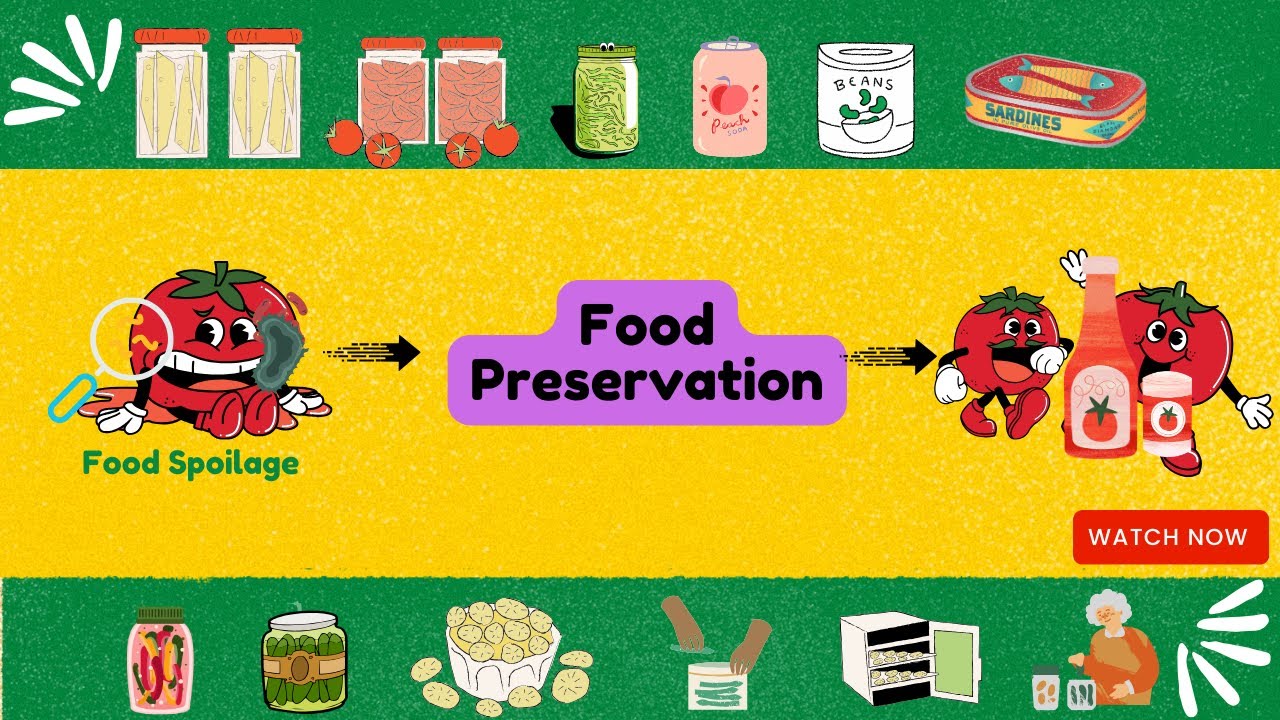
Food Preservation | 5 Food Preservation Methods You Should Know | Techno Food
Solutions: Crash Course Chemistry #27

Meet the enzymes living in your house | Vicky Huang | TED Institute

What Are The LIMITS of HUMAN SURVIVAL? #SURVIVAL #MYTHS #DEBUNKED
How Does Spicy Food Work? Spiciness, Explained With Science
5.0 / 5 (0 votes)
