Perbedaan Asam Kuat dan Asam Lemah
Summary
TLDRThis video explains the differences between strong and weak acids, focusing on their ionization properties and how they affect pH. Strong acids, like HCl and HNO₃, fully dissociate into ions, while weak acids, such as acetic acid (CH₃COOH), dissociate only partially. The video also highlights how to identify strong vs. weak acids based on their chemical structure and ionization constants (Ka). Additionally, it explores the relationship between pH and H⁺ ion concentration, emphasizing that strong acids can achieve lower pH even at lower concentrations due to their complete ionization.
Takeaways
- 😀 Strong acids release H+ ions completely in water, while weak acids only partially dissociate.
- 😀 Strong acids, like HCl and HNO3, have a high ionization degree and dissociate completely into ions.
- 😀 Weak acids, such as CH3COOH and H2CO3, do not dissociate fully, creating a reversible reaction in water.
- 😀 The degree of ionization for strong acids is 1 (complete dissociation), while weak acids have a degree less than 1.
- 😀 Strong acids have no equilibrium constant (Ka) since their dissociation is complete, while weak acids have a Ka value.
- 😀 If Ka is known for a compound, it's a weak acid; if not, it's likely a strong acid.
- 😀 Strong acids often contain ions from Group 7A (Cl-, Br-, I-), excluding F-, and weak acids do not.
- 😀 For acids with oxygen in their anions, if the difference between the number of oxygen atoms and hydrogen atoms is 2 or more, they are strong acids.
- 😀 An example of a strong acid with a large oxygen to hydrogen difference is HNO3, while H3PO4 is a weak acid.
- 😀 pH is inversely related to the concentration of H+ ions: higher H+ concentration results in a lower pH (more acidic).
- 😀 The strength of an acid depends on how completely it dissociates, while the concentration refers to how much acid is present in a solution.
- 😀 For strong acids, a low pH can be achieved even with lower concentrations, as they dissociate fully. Weak acids require higher concentrations for a similar pH.
Q & A
What is the definition of an acid according to the video script?
-An acid is a substance that can release H⁺ ions in its solution and has a pH less than 7.
What is the difference between strong acids and weak acids in terms of ionization?
-Strong acids ionize completely in solution, releasing all their H⁺ ions, while weak acids ionize only partially, with some molecules remaining undissociated.
Can you give examples of strong acids mentioned in the script?
-Examples of strong acids include HCl, HNO₃, HBr, and HI.
Can you give examples of weak acids mentioned in the script?
-Examples of weak acids include CH₃COOH (acetic acid), H₂CO₃ (carbonic acid), H₂S, HCN, and HF.
What is the degree of ionization (α) for strong acids and weak acids?
-For strong acids, α = 1 because they ionize completely, while for weak acids, 0 < α < 1 because they only partially ionize.
How can you distinguish a strong acid from a weak acid based on Ka values?
-If the acid's Ka value is given, it indicates a weak acid, since strong acids are fully ionized and do not have a Ka.
Which anions typically indicate a strong acid according to the video?
-Strong acids typically have H⁺ combined with halide anions from Group 7A, excluding fluorine, such as Cl⁻, Br⁻, and I⁻.
What rule involving oxygen atoms helps identify strong acids?
-If the difference between the number of oxygen atoms and hydrogen atoms in the acid is 2 or more, the acid is considered strong; if it is less than 2, the acid is weak.
How does the concentration of H⁺ ions relate to pH?
-The higher the concentration of H⁺ ions in a solution, the lower the pH, making the solution more acidic.
Why can strong acids have low pH even at lower concentrations compared to weak acids?
-Strong acids ionize completely, producing more H⁺ ions even at low concentrations, whereas weak acids only partially ionize, so they require higher concentrations to achieve a similarly low pH.
What is the main factor that determines the strength of an acid?
-The strength of an acid is determined by the extent of ionization, not by the concentration of the solution.
What is the main factor that determines the pH of a solution?
-The pH is determined by the concentration of H⁺ ions in the solution.
Outlines

This section is available to paid users only. Please upgrade to access this part.
Upgrade NowMindmap

This section is available to paid users only. Please upgrade to access this part.
Upgrade NowKeywords

This section is available to paid users only. Please upgrade to access this part.
Upgrade NowHighlights

This section is available to paid users only. Please upgrade to access this part.
Upgrade NowTranscripts

This section is available to paid users only. Please upgrade to access this part.
Upgrade NowBrowse More Related Video

KESETIMBANGAN ION DALAM LARUTAN ASAM BASA
HIDROLISIS GARAM PART 1 : SIFAT-SIFAT GARAM DAN MENENTUKAN REAKSI HIDROLISIS GARAM

Larutan Asam Basa (3) | Cara Menentukan pH Larutan Asam | Kimia kelas 11
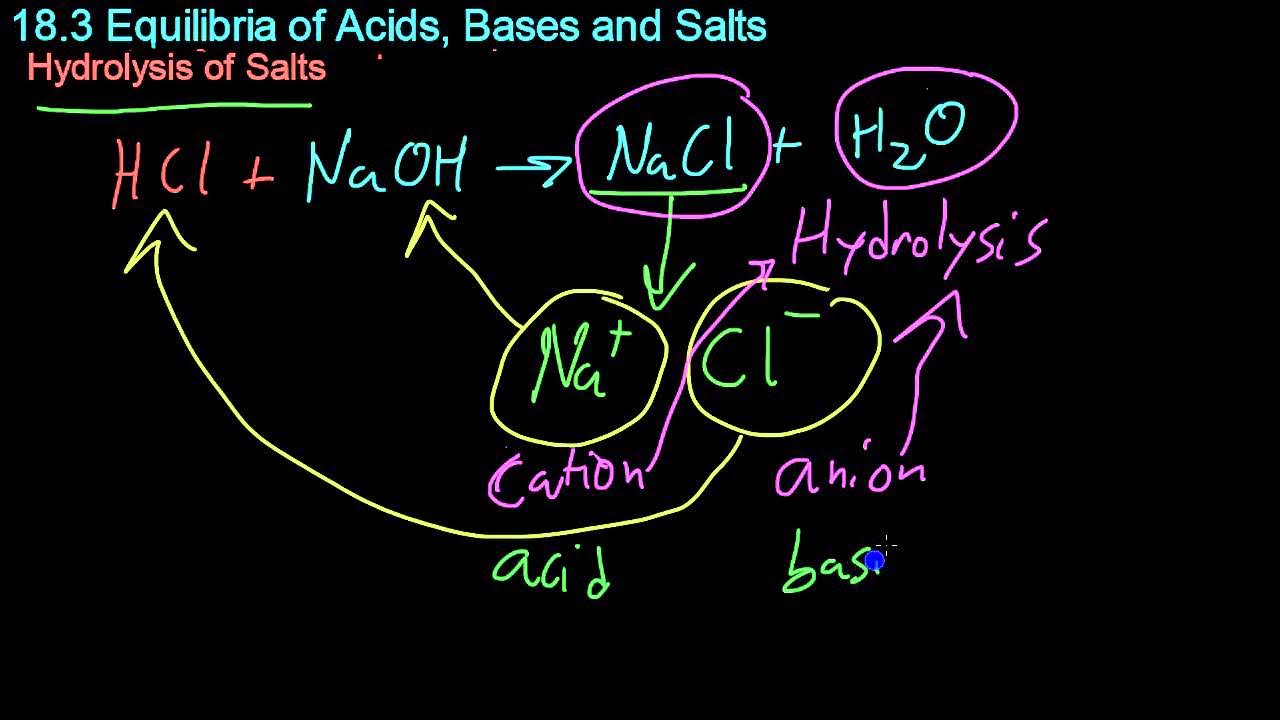
18.3 Equilibria of Acids, Bases and Salts

Menghitung pH Larutan Garam : KIMIA SMA KELAS 11

Kimia Kelas XI - pH, Asam Kuat, Asam Lemah, Basa Kuat, Basa Lemah
5.0 / 5 (0 votes)
