The 44 Phonemes & The Science of Reading
Summary
TLDRThis video script provides an in-depth guide to teaching English phonics, focusing on the 44 phonemes of the language. It outlines the process of introducing consonant and vowel sounds progressively, from basic CVC words to more complex structures like diphthongs and syllable types. The script emphasizes the importance of decodable books, which align with a child's phonics skill level, and includes practical tips for segmentation practice to support spelling. It offers a structured approach to building reading confidence and understanding, designed to foster clarity and growth in young learners.
Takeaways
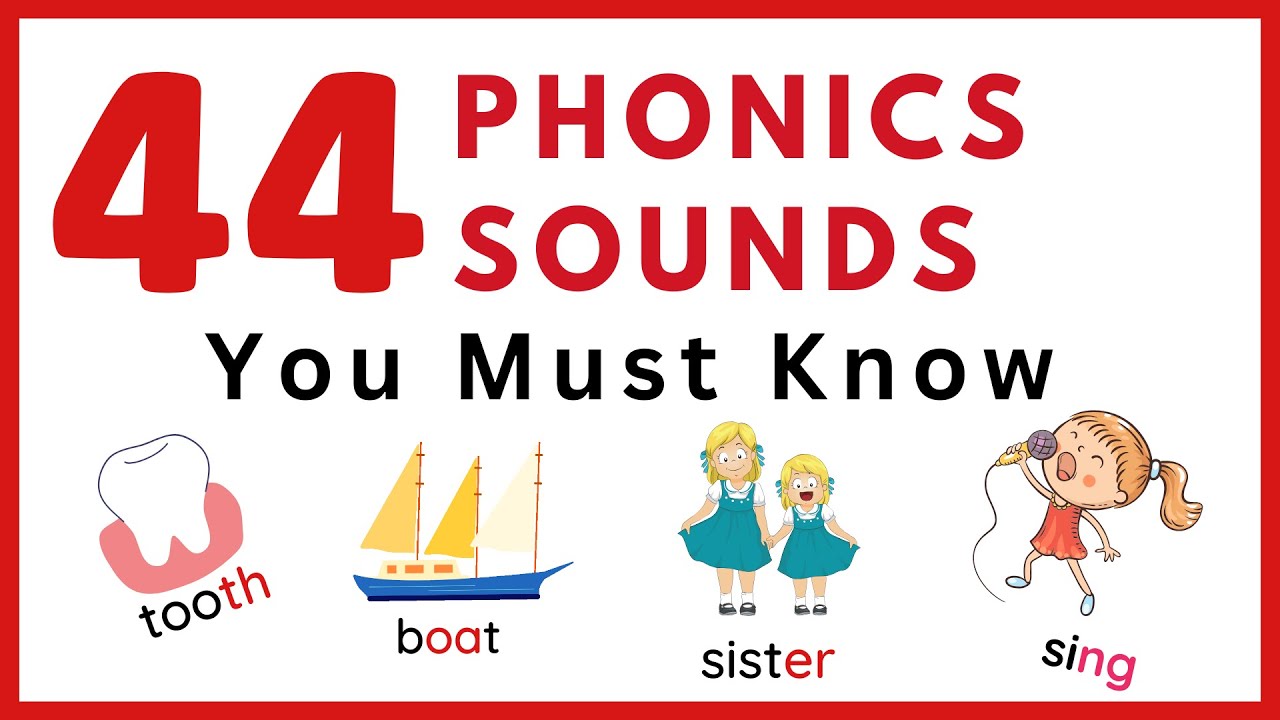
- 😀 There are 44 phonemes in the English language, comprising 24 consonant sounds and 20 vowel sounds, which are essential building blocks of the language.
- 😀 Consonant sounds can be represented by one letter or a combination of two letters (digraphs), while vowel sounds are made by just five letters but can produce up to 20 sounds.
- 😀 Short vowel sounds are introduced first to children, while long vowel sounds and sounds created by combinations of vowels (like in diphthongs) are taught later.
- 😀 Children begin learning phonemes with simple consonant-vowel-consonant (CVC) words, progressing to more complex word structures like CCVC and CVCC.
- 😀 The science of reading recommends a progressive approach in teaching children how to read, starting with basic phonemes and gradually increasing complexity to build confidence.
- 😀 In Level 1 of phonics, children learn 24 consonant sounds, five short vowel sounds, and how to blend them into CVC words.
- 😀 Level 2 of phonics introduces more complex patterns like CVCE (magic E) and CVBC, where children first learn about long vowel sounds.
- 😀 Level 3 of phonics involves teaching advanced concepts like diphthongs and special rules for letters (e.g., 'C' and 'G' can make different sounds depending on the context).
- 😀 After learning the basic phonemes and blending them into words, children are introduced to syllable types to help them break down longer words.
- 😀 Decodable books are specially designed to match children's phonics learning levels, containing a high percentage of words the child has already learned to ensure confidence in reading.
Q & A
What are the 44 phonemes of the English language?
-The 44 phonemes consist of 24 consonant sounds and 20 vowel sounds. Consonants can be single letters or digraphs, while vowel sounds include short, long, and combined variations formed from only five vowels.
Why are phonemes considered the building blocks of English?
-Phonemes are the smallest units of sound in language. Learning them helps children blend sounds to form words, which is essential for reading and writing proficiency.
What is the recommended order for introducing phonemes to children?
-Children should first learn the 24 consonant sounds and 5 short vowel sounds (Level 1), followed by long vowel sounds and alternative spelling patterns (Level 2), and then more complex sounds like diphthongs and special letter rules (Level 3).
What are CVC words, and why are they important?
-CVC words are consonant-vowel-consonant words, like 'cat' or 'dog'. They are foundational because they allow children to practice blending simple sounds into words using the first set of phonemes they learn.
What is the 'magic E' or CVCE pattern?
-The CVCE pattern, also called 'magic E', is when a word ends with an 'E' that makes the preceding vowel long, such as in 'cake' or 'kite'. It helps children recognize that vowels can have more than one sound.
What are decodable books, and how do they support reading development?
-Decodable books are texts designed to match a child’s phonics level, containing mostly words they have already learned. This helps children independently decode, practice reading fluency, and reinforce phonics knowledge.
Why is segmentation practice important in the science of reading?
-Segmentation practice teaches children to break spoken words into individual sounds for accurate spelling. Even if children can read words correctly, they often need explicit practice to write them correctly.
What is the role of morphology in reading instruction?
-Morphology introduces prefixes, suffixes, and root words, helping children understand how word meanings change. For example, adding '-ing' to 'run' changes it to 'running', showing ongoing action.
What are the six syllable types, and why are they taught?
-English has six syllable types that help children decode longer words systematically. Learning these allows children to apply phonics knowledge to multi-syllable words and improves reading fluency.
How are advanced or exceptional words handled in phonics instruction?
-Advanced concepts cover words borrowed from Greek, Latin, and French that do not follow regular phonics patterns. These exceptions are taught separately after children have mastered the foundational 44 phonemes and 70+ spelling patterns.
How should teachers and parents address difficulties with certain sounds, like 'R' or 'V'?
-Teachers and parents should use listening tools and explicit guidance to teach correct pronunciation. For example, 'R' may differ from a child’s native language, and 'V' requires correct jaw placement and sound articulation.
Why is progressive complexity important in teaching reading?
-Progressive complexity ensures children build confidence and clarity in reading. Introducing simpler sounds first and gradually adding complexity prevents confusion and allows for mastery at each stage.
Outlines

This section is available to paid users only. Please upgrade to access this part.
Upgrade NowMindmap

This section is available to paid users only. Please upgrade to access this part.
Upgrade NowKeywords

This section is available to paid users only. Please upgrade to access this part.
Upgrade NowHighlights

This section is available to paid users only. Please upgrade to access this part.
Upgrade NowTranscripts

This section is available to paid users only. Please upgrade to access this part.
Upgrade Now


5.0 / 5 (0 votes)
