🔴 Ngabuburit #day5 || Maulida Riskiyah || Seni Kuasai diri : Saat Lapar Jadi Guru, Puasa Jadi Ilmu
Summary
TLDRThis video emphasizes the deeper meaning of fasting during Ramadan, focusing on self-discipline both physically and spiritually. It highlights that true fasting isn't just abstaining from food and drink, but also controlling one's desires, emotions, and actions. Through examples from the Quran and Hadith, the video encourages viewers to reflect on their behavior, emphasizing that self-control leads to personal growth, integrity, and empathy. The speaker urges viewers to make this Ramadan more than a yearly ritual, aiming for lasting positive change.
Takeaways
- 😀 Self-control is the essence of fasting, both physically and spiritually.
- 😀 Fasting teaches us to manage our bodily desires and impulses, making us masters over them.
- 😀 The true test of fasting is not just hunger but the ability to control our actions and words.
- 😀 Ramadan provides an opportunity for deep introspection and spiritual growth.
- 😀 The Quran emphasizes that fasting is meant to build taqwa (God-consciousness) and self-discipline.
- 😀 True success comes not from knowledge but from the ability to control oneself.
- 😀 Fasting is not just abstaining from food and drink, but also from negative emotions like anger and arrogance.
- 😀 The Prophet Muhammad (pbuh) reminds us to control our speech and actions during fasting, avoiding foul language and arguments.
- 😀 Failure to manage our inner self can lead to personal and societal conflicts, such as corruption and domestic disputes.
- 😀 A successful Ramadan is one where we emerge spiritually stronger, more empathetic, and with better integrity.
Q & A
What is the main purpose of fasting according to the transcript?
-The main purpose of fasting is to develop self-control and takwa (God-consciousness), both physically and spiritually, not merely to abstain from food and drink.
How does fasting help in controlling physical desires?
-Fasting trains a person to manage their physical desires such as hunger and thirst, teaching them to say 'no' to immediate impulses, which strengthens personal integrity and self-discipline.
What does the transcript say about the spiritual or inner aspect of fasting?
-The spiritual aspect involves controlling one's speech, emotions, and pride. True fasting means restraining from negative behaviors like insulting others, showing arrogance, or harboring ill feelings.
Which Quranic verses are referenced in the discussion, and what do they emphasize?
-The transcript references Surah Al-Baqarah (2:183) about the obligation of fasting to attain takwa, and Surah An-Nazi’at (79:40-41) highlighting that those who restrain themselves from their desires out of fear of God will be rewarded with paradise.
According to the transcript, why might someone’s fasting be ineffective?
-Fasting may be ineffective if a person only refrains from food and drink but continues negative behaviors like cursing, arguing, or harboring arrogance, as the inner self is not disciplined.
What is meant by 'laboratory of self-control' in the transcript?
-It refers to fasting being a training ground to test and strengthen control over both the body and the mind, helping a person practice patience, discipline, and moral integrity.
How does fasting relate to preventing social and moral issues?
-Fasting teaches self-restraint, which reduces impulsive behaviors that can lead to conflicts, corruption, and other societal problems. It acts as a 'brake' against harmful actions.
What role does empathy play in the lessons of fasting?
-By experiencing hunger and practicing restraint, a person becomes more aware of others' struggles, which fosters empathy and compassion.
How does the transcript define true success in relation to fasting?
-True success is defined not by intelligence or material achievement, but by the ability to master oneself and maintain self-discipline, integrity, and empathy.
What advice does the transcript give for making Ramadan meaningful?
-It advises using Ramadan as more than a ritual: to actively develop self-control, moral integrity, spiritual awareness, and compassion, ensuring the fasting experience is spiritually rewarding and beneficial.
Why is integrity highlighted as an important outcome of fasting?
-Integrity is important because fasting teaches consistent control over both outward actions and inward impulses, creating a person whose behavior aligns with ethical and spiritual values.
What is the significance of being observed by Allah during fasting?
-Knowing that Allah observes one’s actions reinforces accountability, reminding individuals to maintain discipline and sincerity even when no one else is watching.
Outlines

This section is available to paid users only. Please upgrade to access this part.
Upgrade NowMindmap

This section is available to paid users only. Please upgrade to access this part.
Upgrade NowKeywords

This section is available to paid users only. Please upgrade to access this part.
Upgrade NowHighlights

This section is available to paid users only. Please upgrade to access this part.
Upgrade NowTranscripts

This section is available to paid users only. Please upgrade to access this part.
Upgrade NowBrowse More Related Video

#2 Puasa Yang Sebenarnya
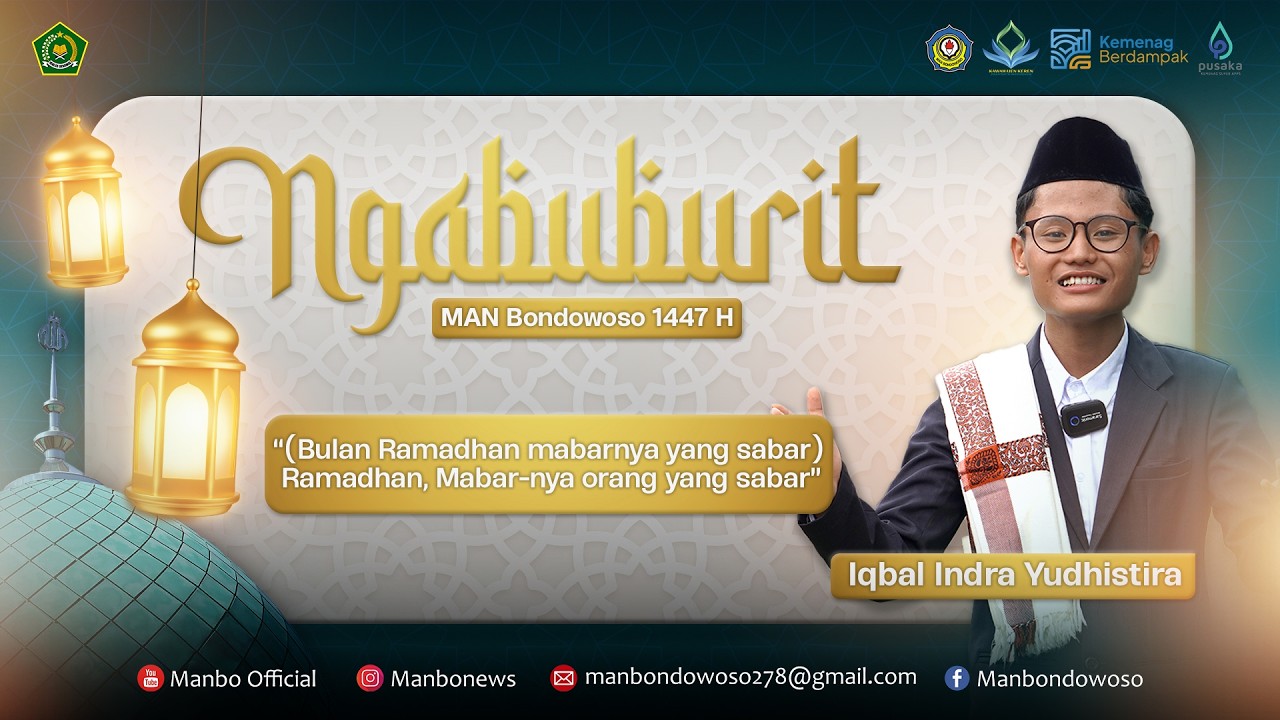
🔴 Ngabuburit #day12 || Iqbal Indra Yudhistira || Bulan Ramadhan Mabarnya Yang Sabar

Ibadah yang Bisa Dilakukan di Bulan Ramadhan | Ustadz Abdul Somad - Indahnya Ramadhan

Podcast Bincang Asik Ramadhan (BISIKAN) Episode 1 bersama Bpk. Drs. H. Nurkholiq dengan Tema Puasa

CINTA DIGITAL #20 - NGOPAI RAMADAN 1446H –HIKMAH PUASA DI BULAN RAMADAN

SAHARA || H-12 || IDUL FITRI 1446H #ngabuburit #dispendiksby #kemendikdasmen
5.0 / 5 (0 votes)
