Variabilidade genética - Brasil Escola
Summary
TLDRIn this video, Professor Fred explores genetic variability, explaining how differences in genes and alleles create diverse traits among individuals. He clarifies key genetic concepts like genes, alleles, loci, and phenotypes, and illustrates how mutations and sexual reproduction introduce new genetic variations. The video emphasizes natural selection as the driving force determining which traits persist in populations, highlighting that evolution occurs at the population level, not in single individuals. Fred also discusses how environment and habitat influence survival of traits and the role of recessive characteristics. Overall, it’s a clear guide to understanding the foundations of genetic diversity and evolution.
Takeaways
- 😀 Genetic variability refers to the differences in traits within a species, mainly due to variations in genes and alleles.
- 😀 Genes are sequences of nucleotides in DNA, while alleles are different variations of those genes.
- 😀 The locus is the specific location of a gene on a chromosome, which can hold different alleles within a population.
- 😀 Phenotypic variability refers to observable traits that arise due to the expression of specific alleles.
- 😀 Natural selection is the process by which the environment 'chooses' which traits are beneficial for survival, eliminating those that are not.
- 😀 Mutations are random changes in genetic material that can lead to new alleles and create genetic variability.
- 😀 Mutations can be beneficial, harmful, or neutral, depending on environmental factors, and are the main source of new genetic material.
- 😀 Sexual reproduction leads to recombination of alleles from both parents, creating genetic variability through processes like crossing over.
- 😀 Evolution occurs at the population level, not at the individual level, driven by genetic changes that spread through populations over generations.
- 😀 The selection of traits in different environments can cause species to adapt differently, leading to distinct evolutionary paths.
- 😀 Recessive traits may persist in populations for a long time because they can remain hidden in carriers, not showing up unless both alleles are present.
Q & A
What is genetic variability?
-Genetic variability refers to the differences in characteristics among individuals within a species, which arise from variations in genes and alleles.
What is the difference between a gene, an allele, and a locus?
-A gene is a sequence of nucleotides in DNA that codes for a trait, an allele is a variation of that gene, and a locus is the specific location of a gene on a chromosome.
How are phenotypic variations related to genetic variability?
-Phenotypic variations are the observable characteristics resulting from the expression of different alleles. They are the visible outcome of genetic variability.
What role do mutations play in genetic variability?
-Mutations create new alleles by altering the DNA sequence. They are random events that can produce new traits, which may be beneficial, neutral, or harmful depending on environmental conditions.
How does natural selection influence which traits persist in a population?
-Natural selection favors traits that increase survival and reproduction in a given environment. Traits that are disadvantageous are gradually removed from the population.
What is the difference between mutations in somatic cells and gametes?
-Mutations in somatic cells affect only the individual and are not passed to offspring, while mutations in gametes can be inherited and influence genetic variability in the next generation.
How does sexual reproduction contribute to genetic variability?
-Sexual reproduction generates variability through recombination of alleles during gamete formation (crossing over) and the independent segregation of chromosomes, resulting in offspring with unique combinations of traits.
Why is genetic variability important for evolution?
-Genetic variability provides the raw material for evolution. Populations with greater variability have a higher chance of surviving environmental changes because some individuals may possess advantageous traits.
What is the difference between genetic variability at the individual level and evolution at the species level?
-Genetic variability occurs in individuals when new traits appear, but evolution occurs at the population or species level when beneficial traits spread and persist across generations.
How can the same trait have different effects in different environments?
-The success of a trait depends on environmental context. A trait that is advantageous in one habitat may be neutral or disadvantageous in another, leading to differences in natural selection across regions.
Why can recessive traits persist in a population for a long time?
-Recessive traits require two copies of the allele to be expressed. Individuals can carry a single recessive allele without showing the trait, allowing it to persist silently in the population.
How do crossing over and independent segregation contribute differently to genetic variability?
-Crossing over exchanges DNA segments between homologous chromosomes, creating new allele combinations, while independent segregation randomly distributes chromosomes into gametes, ensuring varied combinations of existing alleles.
Outlines

This section is available to paid users only. Please upgrade to access this part.
Upgrade NowMindmap

This section is available to paid users only. Please upgrade to access this part.
Upgrade NowKeywords

This section is available to paid users only. Please upgrade to access this part.
Upgrade NowHighlights

This section is available to paid users only. Please upgrade to access this part.
Upgrade NowTranscripts

This section is available to paid users only. Please upgrade to access this part.
Upgrade NowBrowse More Related Video
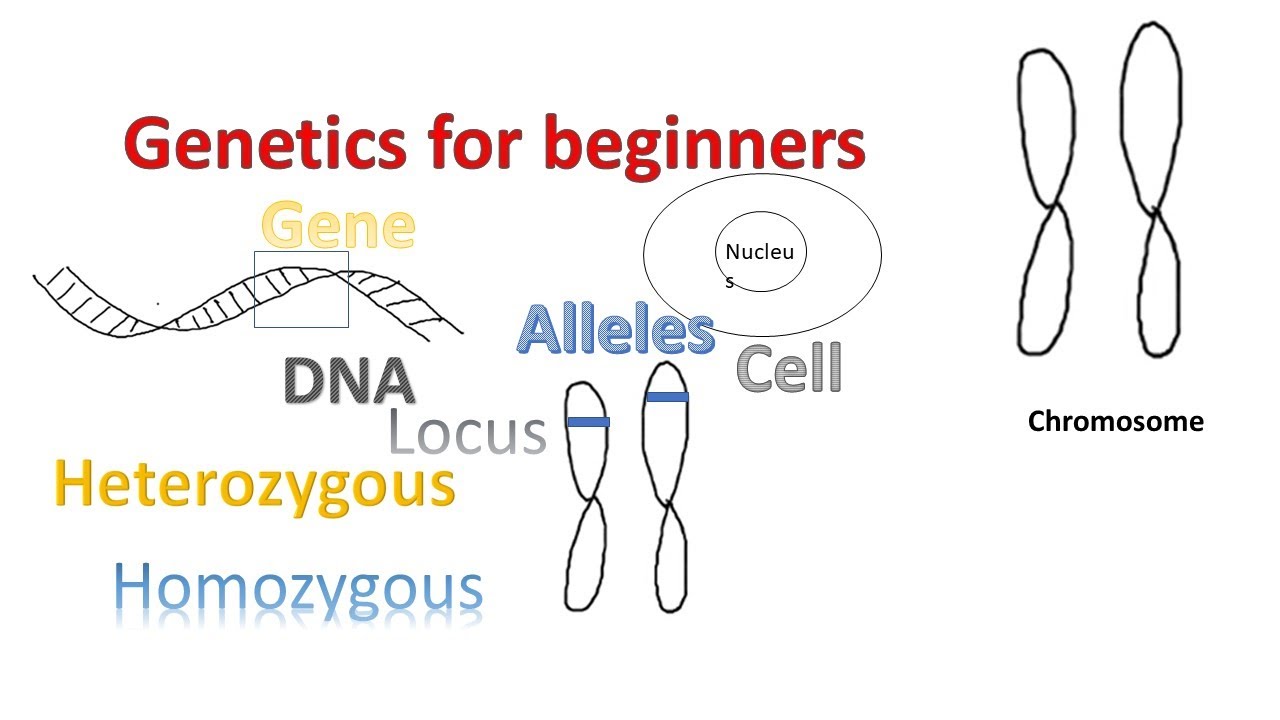
Genetics for beginners | Genes Alleles Loci on Chromosomes |
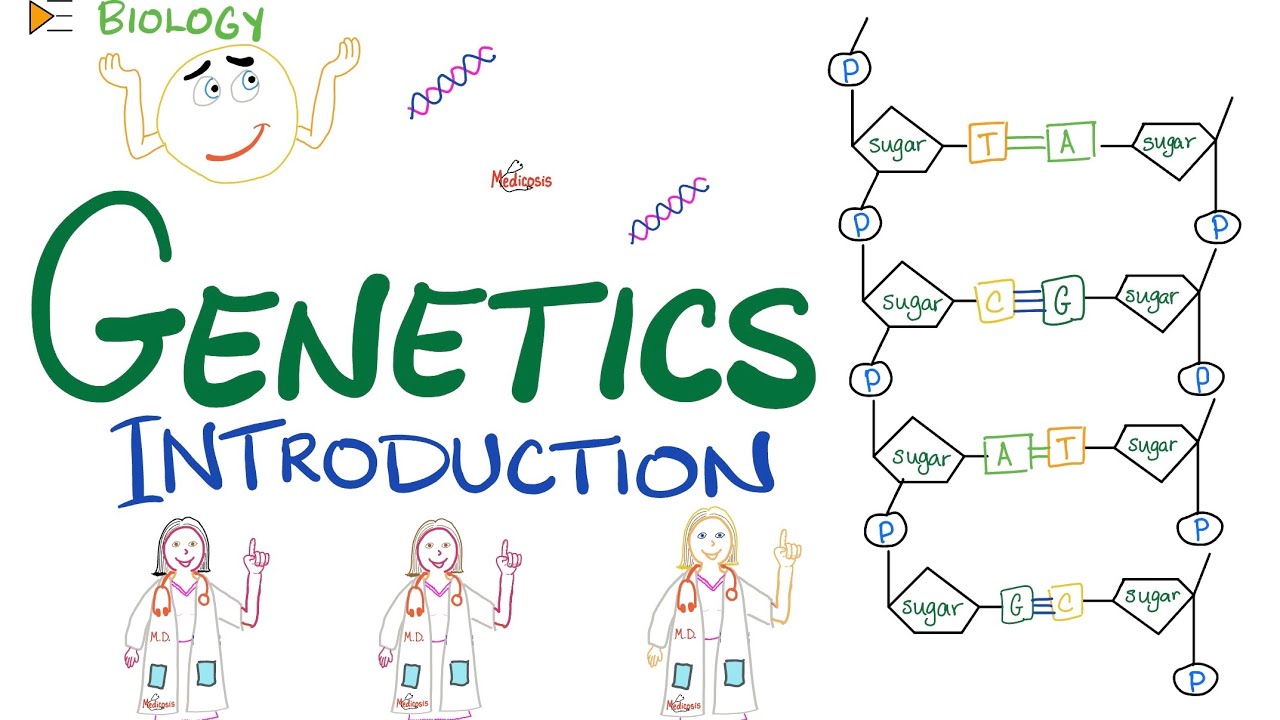
Introduction to Genetics - DNA, RNA, Genes, Nucleosides, Nucleotides, Transcription, Translation

GCSE Biology - DNA Part 2 - Alleles / Dominant / Heterozygous / Phenotypes and more! #64
Inheritance Explained || How do we inherit features from our parents?

Heredograma - Brasil Escola
L'ADN et les informations génétiques - SVT Seconde - Les Bons Profs
5.0 / 5 (0 votes)
