Polymerase Chain Reaction (PCR) Protocol
Summary
TLDRIn this video, Alyssa, a Senior Quality Control Scientist at Addgene, walks you through the process of Polymerase Chain Reaction (PCR), a technique used to amplify specific DNA regions. The guide covers essential materials, including primers, Taq polymerase, and dNTPs, and explains the step-by-step procedure involving denaturation, annealing, and extension cycles. Alyssa also discusses tips for troubleshooting, such as adjusting magnesium chloride levels and annealing temperatures. The video ends with a quick look at verifying PCR results using gel electrophoresis and provides additional resources for further learning.
Takeaways
- 🧬 PCR (Polymerase Chain Reaction) allows scientists to make thousands of copies of a specific DNA region in vitro.
- 👩🔬 PCR requires a DNA template, two unique single-stranded primers, dNTPs, a DNA polymerase, buffer, and water.
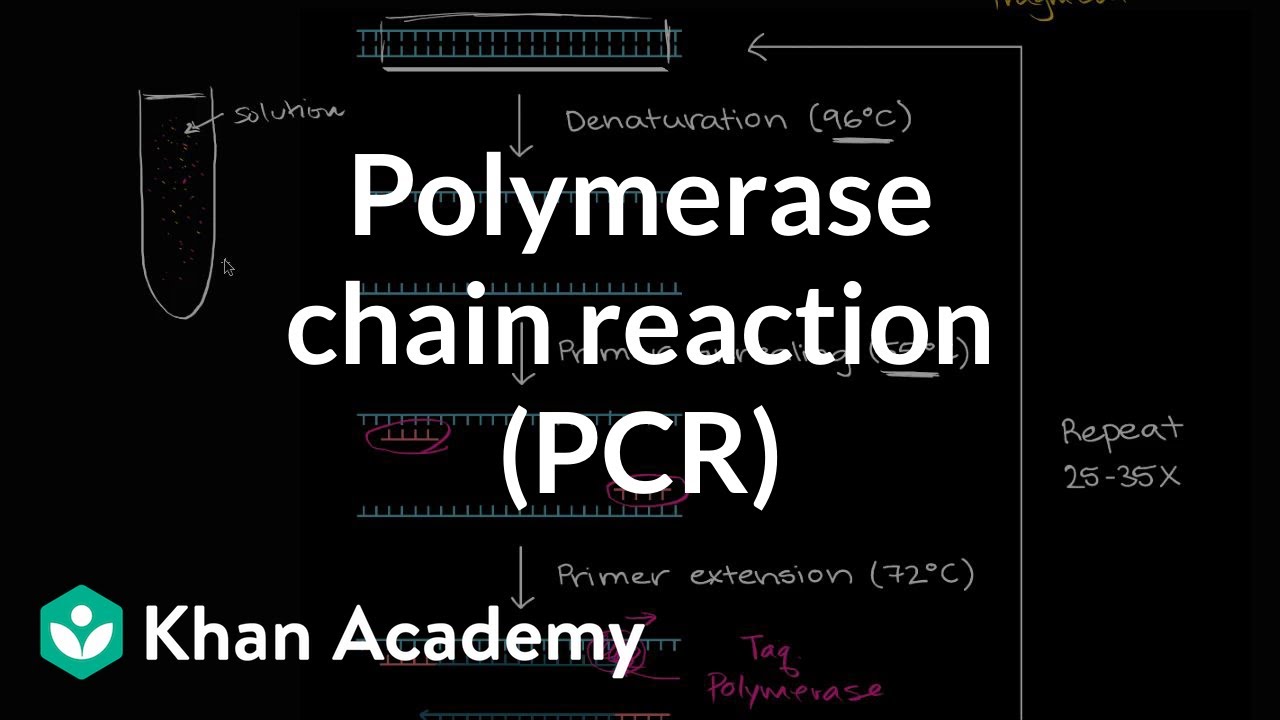
- 🔥 PCR works through repeated cycles of DNA denaturation, primer annealing, and DNA extension.
- ❄️ Primers must be designed to anneal to the ends of the target DNA region and have similar melting temperatures.
- 🧊 Keeping reagents on ice during preparation helps maintain stability and accuracy.
- 🔬 Using a master mix can save time and reduce pipetting errors when performing multiple PCR reactions.
- 🌡️ The PCR machine automates temperature changes: initial denaturation (94°C), annealing (5°C below primer Tm), and extension (72°C).
- ⏱️ Denaturation, annealing, and extension cycles are typically repeated 25–30 times, followed by a final extension for 5 minutes.
- 🧪 PCR products can be verified by running a small sample on an agarose gel to check size and concentration.
- ⚙️ Troubleshooting PCR may involve adjusting magnesium chloride, DMSO, or annealing temperatures to optimize product yield and specificity.
- 📚 Addgene provides detailed protocols and resources for primer design, PCR setup, and gel electrophoresis for those needing guidance.
Q & A
What is PCR and what is it used for?
-PCR (Polymerase Chain Reaction) is an in vitro technique that allows scientists to amplify specific regions of DNA, making millions of copies from a single DNA molecule. It is widely used in genetic research, diagnostics, and cloning.
Why is Taq polymerase used in PCR?
-Taq polymerase is used in PCR because it is heat-stable, meaning it can withstand the high temperatures required during the denaturation step of the PCR cycle. This allows the polymerase to function even after the DNA strands are separated.
What role do primers play in PCR?
-Primers are short, single-stranded DNA sequences that bind to the regions upstream and downstream of the target DNA. They serve as starting points for DNA synthesis, enabling the polymerase to extend and amplify the target sequence.
How are primers designed for PCR?
-Primers must be designed to match the beginning and end of the target DNA sequence. They should have similar melting temperatures to ensure efficient binding. There are online tools, like Addgene's PCR cloning protocol, to help design primers effectively.
What is a master mix in PCR, and why is it used?
-A master mix is a pre-mixed solution containing common PCR reagents such as Taq polymerase, dNTPs, and water. It simplifies the process, reduces pipetting errors, and saves time, especially when setting up multiple PCR reactions.
What happens during the denaturation step of PCR?
-During denaturation, the DNA template is heated to 94°C, causing the hydrogen bonds between the two DNA strands to break. This results in two single-stranded DNA molecules that are ready for primer binding in the next step.
How does the annealing step in PCR work?
-In the annealing step, the temperature is lowered to 5°C below the melting temperature of the primers. This allows the primers to bind (anneal) to their complementary sequences on the single-stranded DNA template.
Why is the extension step performed at 72°C in PCR?
-The extension step is performed at 72°C because this is the optimal temperature for Taq polymerase. At this temperature, the polymerase synthesizes new DNA strands by adding nucleotides to the primer, extending the DNA sequence.
What is the purpose of the final extension step in PCR?
-The final extension step at 72°C for 5 minutes ensures that any incomplete DNA strands are fully extended. This ensures that the newly synthesized DNA strands are complete and ready for analysis.
What should you do if your PCR reaction doesn't work as expected?
-If the PCR doesn't work, try adding 1 µL of 25 mM magnesium chloride (MgCl2) or DMSO to the reaction to stabilize the template. Additionally, adjust the annealing temperature or run the reaction with different conditions to improve yield and specificity.
Outlines

This section is available to paid users only. Please upgrade to access this part.
Upgrade NowMindmap

This section is available to paid users only. Please upgrade to access this part.
Upgrade NowKeywords

This section is available to paid users only. Please upgrade to access this part.
Upgrade NowHighlights

This section is available to paid users only. Please upgrade to access this part.
Upgrade NowTranscripts

This section is available to paid users only. Please upgrade to access this part.
Upgrade NowBrowse More Related Video



5.0 / 5 (0 votes)
