Free will is scientifically impossible | Robert Sapolsky, Paul Bloom, and Lucy Allais
Summary
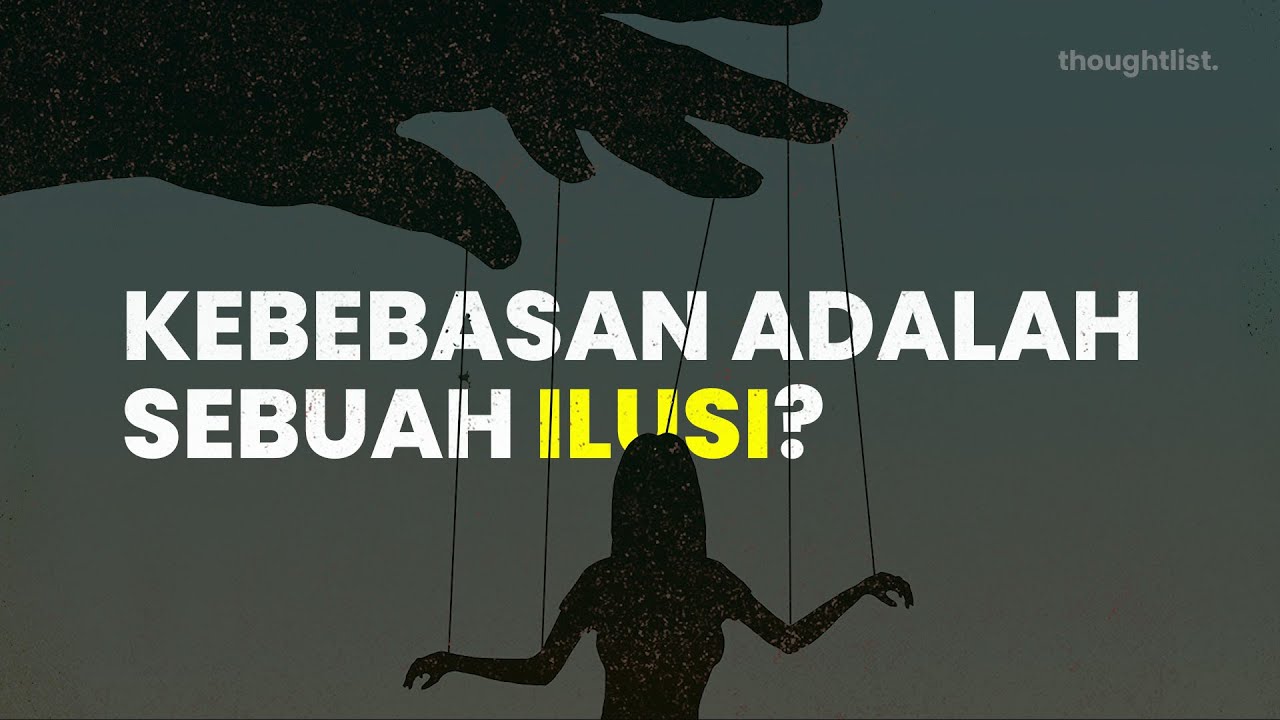
TLDRThis video explores the complex debate surrounding free will, determinism, and human agency. Experts present contrasting perspectives: Paul advocates for compatibilism, suggesting our actions are determined by brain processes yet still meaningful and subject to moral evaluation. Robert argues for strict determinism, asserting free will is an illusion shaped by biology, environment, and evolution. Lucy emphasizes a nuanced, multi-level view, highlighting that complex, self-organizing living systems exhibit agency within natural constraints. The discussion weaves together neuroscience, philosophy, and science, challenging viewers to reconsider how choices, responsibility, and human behavior are understood in a deeply interconnected world.
Takeaways
- 🧠 Human behavior is influenced by neurons firing in the brain, which are triggered by environmental stimuli, hormones, and past experiences, suggesting a deterministic view of actions.
- 🤔 The concept of free will is widely debated; some argue it is an illusion, while others believe humans possess the capacity to make choices.
- 👶 From childhood, humans develop beliefs such as dualism (the mind is separate from the body) and free will, which shape how we perceive our actions and selves.
- 🔬 Compatibilism proposes that even if behavior is determined by physical and biological processes, humans can still exercise meaningful choice and be held morally responsible.
- ⚖️ Intentional actions matter ethically; whether someone acts deliberately or accidentally has real-world consequences and is key to moral judgment.
- 💊 Complex behaviors, like addiction, challenge simple classifications of voluntary versus involuntary action, illustrating nuances in determinism and choice.
- 🌳 Environmental, cultural, and ancestral factors, along with evolution, shape the brain and influence decision-making over time.
- 🌀 Attempts to base free will on quantum mechanics or chaos theory do not provide a convincing foundation, according to neuroscientific evidence.
- 🌐 Reductionist interpretations of physics are insufficient to explain living systems; higher-level structures and self-organizing processes also play causal roles.
- 💡 Agency is embodied and operates at multiple levels—physical, biological, and psychological—without requiring metaphysical freedom or magic.
- 📚 Philosophical interpretation is crucial: science informs but does not dictate conclusions about free will and human agency.
- 🌟 The complexity of life means that causal explanations can exist at multiple scales, and understanding humans requires integrating biology, psychology, culture, and evolution.
Q & A
What is the main question people ask about human behavior in the transcript?
-People often ask 'Why did they do that?' when observing someone's actions, trying to understand the causes behind behavior.
How do neuroscientists explain immediate causes of behavior?
-Neuroscientists explain that behavior results from neurons activating in the brain, which can be traced back to environmental stimuli and internal brain states influenced by hormones and prior experiences.
What is 'common sense dualism' according to Paul?
-Common sense dualism is the intuitive belief that while humans have physical bodies, the self is an immaterial soul, separate from the body.
What is Paul's view on free will and determinism?
-Paul argues that both common sense dualism and belief in free will are mistaken. He supports materialism and determinism but believes intentional actions still matter morally, making him a compatibilist.
What example does Paul use to explain intentional versus accidental actions?
-Paul uses the example of bumping someone into a ditch. If it happens by accident (slip or tremor), it’s different from doing it intentionally. Both are determined by brain activity, but intentional actions carry moral responsibility.
How does Robert’s perspective differ from Paul's?
-Robert rejects free will entirely, arguing that all behavior is determined by antecedent causes such as brain activity, environment, hormones, life experiences, and evolution. He believes rejecting free will could be beneficial for society.
What role does evolution play in Robert's explanation of behavior?
-Robert highlights that human behavior, including tendencies like monogamy, is influenced by millions of years of evolution, shaping genetic and biological predispositions that impact decision-making.
According to Lucy, why is free will not necessarily contradicted by science?
-Lucy argues that science is often interpreted reductively, focusing only on physics. She emphasizes that complex, self-organizing systems like humans have properties and agency that cannot be fully explained by fundamental physics alone.
What does Lucy mean by 'agency is thoroughly embodied'?
-Lucy means that human decision-making and purposeful action are grounded in the physical body and biological processes, but they emerge as organized, goal-directed behavior rather than being 'magical' or purely reducible to physics.
How do the panelists illustrate the tension between determinism and moral responsibility?
-Paul illustrates it by showing that even if all actions are determined, distinguishing between intentional and accidental behavior allows for moral praise or blame, demonstrating a compatibilist approach to reconciling determinism with responsibility.
What does the transcript suggest about the relationship between multiple disciplines in understanding behavior?
-The transcript emphasizes that understanding human behavior requires integrating biology, neuroscience, psychology, culture, and evolution. Each discipline provides causal explanations at different levels, forming a cohesive understanding of why actions occur.
Why does Robert reject the idea of quantum indeterminism as a source of free will?
-Robert argues that attempts to locate free will in quantum indeterminism or chaos theory fail, because the overall arc of biological, environmental, and evolutionary causes leaves no gaps for genuine freedom.
Outlines

This section is available to paid users only. Please upgrade to access this part.
Upgrade NowMindmap

This section is available to paid users only. Please upgrade to access this part.
Upgrade NowKeywords

This section is available to paid users only. Please upgrade to access this part.
Upgrade NowHighlights

This section is available to paid users only. Please upgrade to access this part.
Upgrade NowTranscripts

This section is available to paid users only. Please upgrade to access this part.
Upgrade NowBrowse More Related Video



5.0 / 5 (0 votes)
