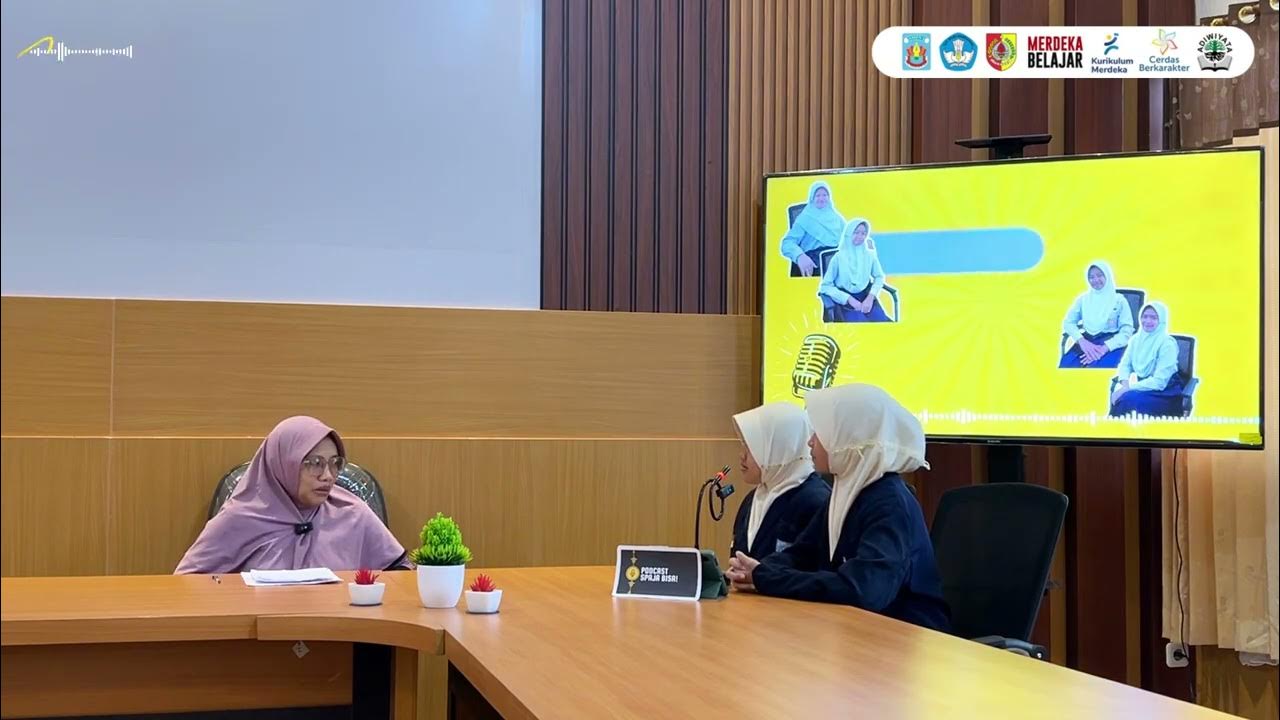
Literasi Dalam Pandangan Islam Pesantren Ekologi d'Joppy Podcast SMKN 1 Bojongpicung
Summary
TLDRIn this podcast episode, hosts Wildan and Ibu Indri, along with guest Ibu Elis, discuss the importance of literacy, particularly in the context of Islam. They explore various types of literacy, including basic, digital, critical, and Islamic literacy, emphasizing the significance of reading, understanding, and applying knowledge, especially the Quran and Hadith. The conversation highlights how literacy can enhance communication, critical thinking, and personal growth. The discussion also touches on the challenges of truly understanding texts and the need for continuous learning, with a focus on spiritual and moral literacy within Islamic teachings.
Takeaways
- 😀 Literacy in Islam is crucial for understanding and applying religious teachings like the Qur'an, Hadith, and Fiqh.
- 😀 Literacy extends beyond reading and writing; it involves comprehension and the ability to communicate effectively.
- 😀 The first revelation to Prophet Muhammad (pbuh) was 'Iqra' (read), emphasizing the importance of literacy in Islam.
- 😀 There are different types of literacy: basic literacy, information literacy, digital literacy, and critical literacy.
- 😀 To understand the Qur'an, one must not only read it but also comprehend its meaning and apply its teachings in daily life.
- 😀 Literacy in Islam includes understanding the Qur'an, Hadith, Fiqh (Islamic law), and Akhlak (ethics).
- 😀 During Ramadan, literacy isn't just about reading the Qur'an but about controlling emotions and refraining from negative speech.
- 😀 Reading and understanding Islamic texts help in enhancing one's faith, knowledge, and moral behavior.
- 😀 Lack of literacy leads to a limited understanding of information, which can cause dependency and miscommunication.
- 😀 Those with poor literacy skills are more vulnerable to misinformation and manipulation, especially through social media.
- 😀 Improving literacy can be achieved through regular reading of the Qur'an, participating in religious studies, and applying Islamic teachings in everyday life.
Q & A
What is the main topic of the podcast discussed in the transcript?
-The main topic discussed in the podcast is 'literacy in Islam,' with a focus on how literacy relates to understanding the Quran, Hadith, Fiqh, and Akhlak (morality).
Why is literacy important in Islam according to the podcast?
-Literacy is crucial in Islam because it helps individuals understand the teachings of the Quran and Hadith, which are central to living a righteous life. It also supports the development of good morals and decision-making.
What are the types of literacy discussed in the podcast?
-The podcast discusses several types of literacy: basic literacy, information literacy, digital literacy, and critical literacy. Specifically, in Islam, it mentions literacy in the Quran, Hadith, Fiqh, and Akhlak.
How does literacy improve communication skills?
-By engaging in literacy activities such as reading and understanding texts, individuals improve their ability to communicate effectively, both verbally and in writing, as they gain the ability to express and comprehend ideas more clearly.
What is the connection between literacy and personal development in Islam?
-In Islam, literacy is closely linked to personal development as it enhances understanding of religious texts, which in turn helps an individual live a better, more moral life. It also increases one’s ability to make informed decisions and improve their behavior.
What was the first revelation of the Quran to Prophet Muhammad, and why is it significant?
-The first revelation of the Quran to Prophet Muhammad was Surah Al-Alaq (96), which begins with the word 'Iqra' (Read). This is significant because it emphasizes the importance of reading and acquiring knowledge, particularly in relation to the Quran.
What is the importance of understanding the context when reading the Quran?
-Understanding the context of Quranic verses is essential to accurately interpreting the message and applying it to everyday life. Without context, there is a risk of misinterpretation or misunderstanding the teachings.
What role does reading the Quran play in strengthening one’s faith?
-Reading and reflecting on the Quran helps strengthen one's faith by deepening the understanding of God's guidance. This, in turn, can lead to greater devotion, improved behavior, and increased spiritual awareness.
How does the podcast suggest we can increase our literacy in Islam?
-The podcast suggests increasing literacy in Islam through continuous reading of the Quran, understanding its meanings, attending religious lectures (even via online platforms), and applying its teachings in daily life. Regular engagement with Islamic texts enhances both knowledge and piety.
What are the consequences of not being literate, as discussed in the podcast?
-According to the podcast, individuals who are not literate may struggle with understanding information, make poor decisions, and are more susceptible to manipulation or misinformation. Literacy helps avoid these issues by enabling individuals to think critically and understand their surroundings better.
Outlines

This section is available to paid users only. Please upgrade to access this part.
Upgrade NowMindmap

This section is available to paid users only. Please upgrade to access this part.
Upgrade NowKeywords

This section is available to paid users only. Please upgrade to access this part.
Upgrade NowHighlights

This section is available to paid users only. Please upgrade to access this part.
Upgrade NowTranscripts

This section is available to paid users only. Please upgrade to access this part.
Upgrade NowBrowse More Related Video

TEMAN SAHUR EPS. 10 | MENJAGA KEDISIPLINAN DI BULAN RAMADHAN

TEMAN SAHUR EPS. 11 | AMALAN KECIL BERDAMPAK BESAR

LAST EPISODE | APA YANG DITAKDIRKAN UNTUKMU, TIDAK AKAN MELEWATKANMU
PJJ HARI KE-2 MOTIVASI DAN SEMANGAT BELAJAR : BAGAIMANA KITA BISA MENCINTAI ILMU ?

TEMAN SAHUR EPS. 8 | MENJAGA STABILITAS EMOSI

TEMAN SAHUR EPS. 19 | RAMADHAN MEMBENTUK KARAKTER BARU YANG POSITIF
5.0 / 5 (0 votes)
