1. Apa itu Bencana dan Kenapa covid-19 termasuk bencana
Summary
TLDRThe video explains the concept of disaster, particularly focusing on the COVID-19 pandemic as a global disaster. It explores the key components of a disaster: hazard, vulnerability, and capacity, and emphasizes the impact of COVID-19 in terms of human losses and disruptions. The video draws on Indonesia's legal framework, referencing the 2007 Disaster Law, to categorize COVID-19 as a national disaster. Through this, the video aims to shed light on the necessity for external aid and the importance of planning for sustainable development and disaster mitigation in Indonesia.
Takeaways
- 😀 Natural disasters are becoming more frequent in Indonesia, as shown by the number of reported cases of disasters, including floods and other significant events.
- 😀 The term 'disaster' is defined as an event that occurs at a specific time and place, impacting a community or society in a way that disrupts their normal life.
- 😀 Disasters can result in losses, including human life, economic losses, physical damage, and environmental destruction.
- 😀 A disaster is categorized as such when a community is unable to cope with the impact, requiring external assistance for recovery.
- 😀 According to Indonesian law (Undang-Undang 24/2007), disaster classification involves the number of casualties, property damage, and the extent of the social and economic impact.
- 😀 The COVID-19 pandemic is recognized as a disaster due to the widespread health impacts, resulting in millions of infections and deaths.
- 😀 COVID-19's classification as a disaster is supported by Indonesia's government actions, such as the implementation of large-scale social restrictions (PSBB).
- 😀 Disasters involve three key components: hazard (threat), vulnerability (exposure to the hazard), and capacity (ability to respond and recover).
- 😀 In the context of COVID-19, the virus (SARS-CoV-2) is the threat, individuals with pre-existing conditions or age factors are vulnerable, and the healthcare system's capacity is crucial for managing the crisis.
- 😀 Disasters occur when the three components—hazard, vulnerability, and capacity—intersect at a specific time and location, leading to catastrophic events like flooding or landslides.
- 😀 A national disaster, like COVID-19, not only affects the country but often requires international aid and assistance, including medical supplies and healthcare professionals.
Q & A
What is the definition of a disaster as discussed in the script?
-A disaster is an event that occurs at a specific time and place, disrupting the normal functions of society, causing significant losses (human, material, or environmental), and often requiring external aid for recovery.
Why is COVID-19 categorized as a disaster?
-COVID-19 is categorized as a disaster due to its widespread impact, causing millions of deaths globally, overwhelming healthcare systems, and disrupting daily life on a massive scale, requiring international assistance for mitigation.
What are the key components that make up a disaster?
-The three key components of a disaster are: hazard (the potential threat or event), vulnerability (the susceptibility of people or systems to the hazard), and capacity (the ability to respond and recover from the disaster).
What is the role of vulnerability in a disaster?
-Vulnerability refers to the exposure of individuals, communities, or systems to a hazard. It includes factors such as physical environment, social status, and pre-existing health conditions, all of which influence the degree of impact during a disaster.
How does capacity relate to disaster management?
-Capacity refers to the resources, abilities, and systems available to manage and respond to a disaster. This includes things like healthcare facilities, trained personnel, and emergency infrastructure that can mitigate the impact of a disaster.
What is the significance of external aid in a disaster?
-External aid becomes crucial when a disaster overwhelms a nation's internal resources and capacity. In the case of COVID-19, external assistance was needed in the form of medical supplies, healthcare personnel, and technology to manage the crisis.
How does the script define 'hazard' in the context of disasters?
-Hazard refers to conditions or events that have the potential to cause harm or damage. In the case of COVID-19, the virus itself is the hazard, which spreads and threatens public health.
What are some examples of vulnerability in the context of COVID-19?
-Vulnerability in COVID-19 includes individuals with pre-existing health conditions, the elderly, or those in crowded environments. These groups are at higher risk of severe illness and death from the virus.
What does the script mean by the 'capacity' of a hospital during a disaster?
-Capacity in a hospital setting refers to the hospital's ability to accommodate and treat patients during a disaster. This includes the availability of medical staff, equipment, and space. If the number of patients exceeds the hospital's capacity, the disaster response becomes less effective.
How does the script explain the relationship between hazard, vulnerability, and capacity in the occurrence of a disaster?
-The script explains that a disaster occurs when a hazard, vulnerability, and capacity come together in one specific place and time. If a community is exposed to a hazard (e.g., the COVID-19 virus), and the vulnerable population does not have sufficient capacity to respond (e.g., adequate healthcare systems), a disaster results.
Outlines

This section is available to paid users only. Please upgrade to access this part.
Upgrade NowMindmap

This section is available to paid users only. Please upgrade to access this part.
Upgrade NowKeywords

This section is available to paid users only. Please upgrade to access this part.
Upgrade NowHighlights

This section is available to paid users only. Please upgrade to access this part.
Upgrade NowTranscripts

This section is available to paid users only. Please upgrade to access this part.
Upgrade NowBrowse More Related Video
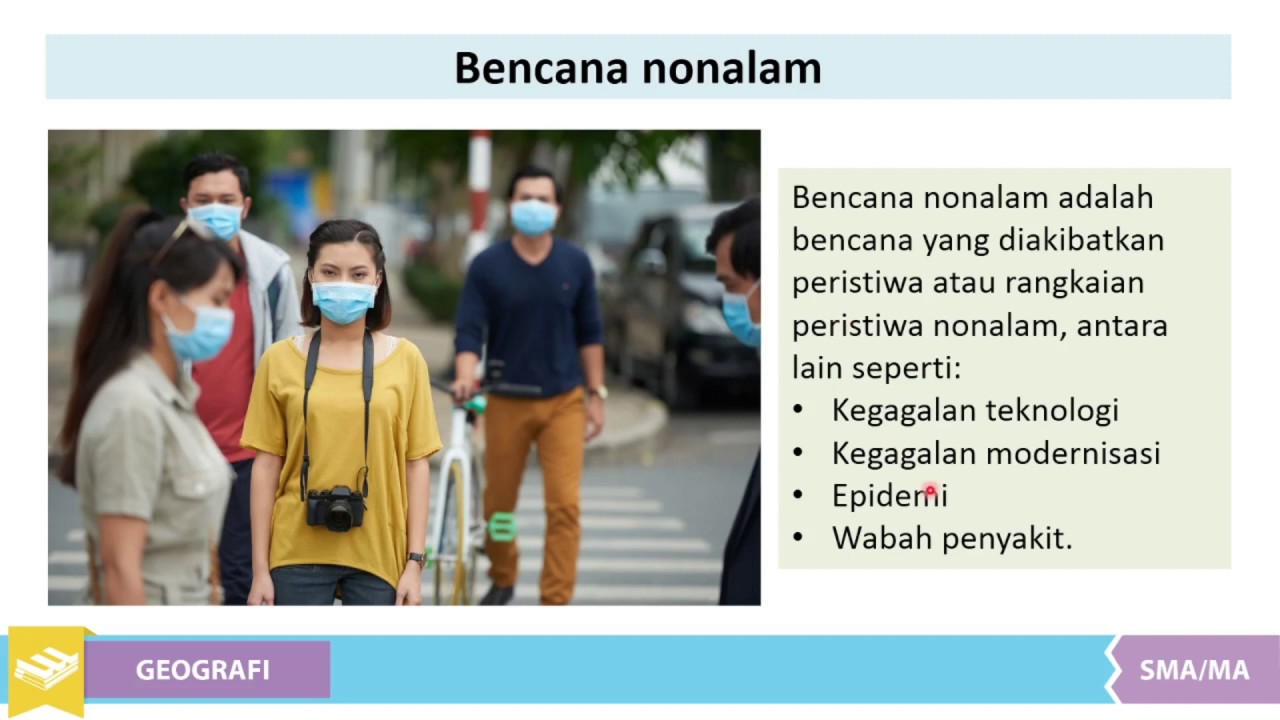
Materi Mitigasi Bencana | Pengertian Bencana | Kelas XI SMA
IPA - 2 - MITIGASI BENCANA ALAM : Langkah Pencegahan dan Penanggulangan Bencana Alam
Key Concepts of Disaster Readiness and Risk Reduction
INFODEMIC Episode 6 - Science in the Face of Natural Disasters

DATO' SRI TAHIR INGIN BERMANFAAT BAGI BANYAK ORANG,TIDAK INGIN MASUK POLITIK-Hermanto Tanoko(Part 3)
DRRR WEEK2 MELC3: DISASTER AND ITS EFFECTS
5.0 / 5 (0 votes)
