Directional Terms
Summary
TLDRIn this educational video, Heidi, Rowan, Lilly, and Taylor teach viewers about anatomical directional terms. The video covers key terms like anterior, posterior, ventral, dorsal, proximal, distal, superior, inferior, medial, lateral, superficial, and deep. Through demonstrations with human and quadruped models, the video explains how these terms apply differently to bipeds and quadrupeds. Viewers are encouraged to use a printable handout for notes and diagrams to better visualize the terms. The video aims to simplify anatomical terminology by relating it to everyday concepts and body parts.
Takeaways
- 😀 Anatomical terms are like a foreign language, crucial for understanding the body and its movements.
- 😀 Directional terms in anatomy are paired opposites, such as anterior vs. posterior, ventral vs. dorsal, and superficial vs. deep.
- 😀 **Anterior** refers to the front of the body, while **posterior** means the back. These terms differ for bipeds (humans) and quadrupeds (four-legged animals).
- 😀 **Ventral** means the belly side, and **dorsal** refers to the back or spine. In quadrupeds, the dorsal region is along the backbone.
- 😀 **Proximal** refers to something closer to the body's center, like the upper arm, while **distal** refers to parts farther away, like fingers or toes.
- 😀 **Superior** means above, like the head being superior to the chest, while **inferior** means below, like the abdomen being inferior to the chest.
- 😀 **Medial** means closer to the body's midline, such as the belly button, while **lateral** refers to parts farther away from the center, like the shoulders.
- 😀 **Superficial** means close to the surface (e.g., skin), while **deep** refers to structures farther inside the body, such as internal organs.
- 😀 The video uses both **bipeds** and **quadrupeds** to explain how these directional terms differ across species.
- 😀 Visual aids and diagrams are crucial for understanding and remembering directional terms, especially when working with the human body or animals.
- 😀 The handout provided with the video can be printed or saved for note-taking and deeper learning on the anatomical terms discussed.
Q & A
What is the main focus of the video?
-The main focus of the video is to teach directional terms in anatomy, explaining how these terms are used to describe the position of body parts in relation to each other. The video also compares how these terms apply to bipeds (humans) and quadrupeds (animals with four legs).
How are anatomical terms organized in the video?
-The terms are organized in pairs, with each pair representing opposites. Examples include 'anterior' and 'posterior,' 'ventral' and 'dorsal,' 'superior' and 'inferior,' and 'medial' and 'lateral.' These terms are used to describe body positions and locations.
What role do Lily and Rowan play in demonstrating the directional terms?
-Lily, representing a biped (human), and Rowan, representing a quadruped (four-legged animal like a cat), are used to demonstrate how directional terms apply differently to bipeds and quadrupeds.
What does 'anterior' mean in anatomical terms?
-'Anterior' refers to the front of the body. For humans, this includes the face, chest, and front of the legs. In quadrupeds, it refers to the front of the head and limbs.
How does 'posterior' differ from 'anterior'?
-'Posterior' refers to the back of the body. For humans, it includes the back of the head, back, and legs. In quadrupeds, it refers to the back portion but not the back itself.
What is the difference between 'ventral' and 'dorsal' in humans and quadrupeds?
-'Ventral' refers to the belly side of the body. In humans, it is the front side, while in quadrupeds, it refers specifically to the belly. 'Dorsal' refers to the back side. In humans, it is equivalent to 'posterior,' while in quadrupeds, it refers to the back along the spine.
What is the difference between 'proximal' and 'distal'?
-'Proximal' refers to something that is closer to the trunk of the body, such as the upper arm being more proximal than the forearm. 'Distal' refers to parts further away from the trunk, such as the fingers being distal to the hand.
What do 'superior' and 'inferior' refer to in anatomy?
-'Superior' refers to something located above or higher on the body, like the nasal region being superior to the oral region. 'Inferior' refers to something below or lower, such as the lumbar vertebrae being inferior to the thoracic vertebrae.
How are 'medial' and 'lateral' used in describing body parts?
-'Medial' refers to the middle of the body, such as the sternum being medial. 'Lateral' refers to parts farther away from the center, like the cheekbones being lateral to the nose.
What is the significance of 'superficial' and 'deep' in anatomy?
-'Superficial' refers to parts that are closer to the surface of the body, such as the skin. 'Deep' refers to parts that are farther inside the body, like the organs or bones beneath the skin.
Outlines

This section is available to paid users only. Please upgrade to access this part.
Upgrade NowMindmap

This section is available to paid users only. Please upgrade to access this part.
Upgrade NowKeywords

This section is available to paid users only. Please upgrade to access this part.
Upgrade NowHighlights

This section is available to paid users only. Please upgrade to access this part.
Upgrade NowTranscripts

This section is available to paid users only. Please upgrade to access this part.
Upgrade NowBrowse More Related Video

Anatomical Position and Directional Terms [Anatomy MADE EASY]
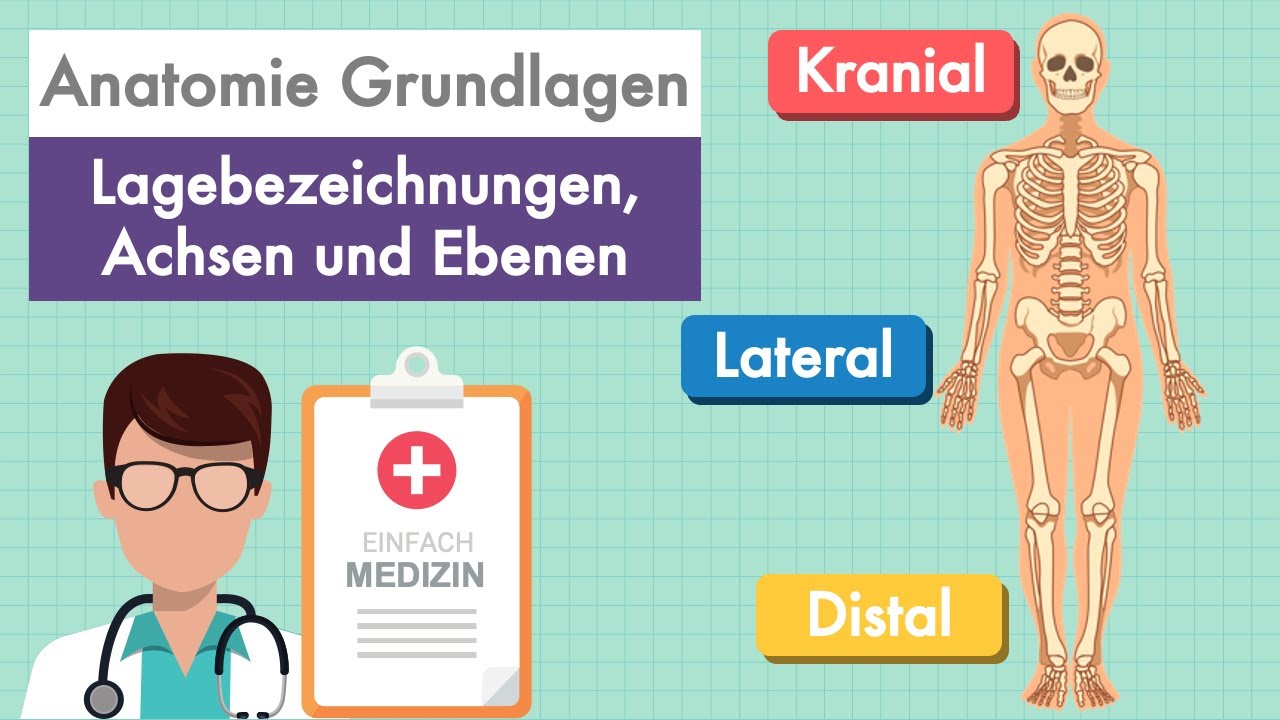
Anatomie Grundlagen - Lagebezeichnungen und Ebenen am Körper einfach erklärt

A&P I: chapter 1 orientation

A&P I Lab | Exercise 1: Anatomical Position, Directional Terms, & Body Planes

Introduction Of Anatomy Sesi 2 - Putri Halleyana Adrikni Rahman, dr., M.Kes

Anatomical Terms: Directional Terms (Anatomy)
5.0 / 5 (0 votes)
