MATERI UTBK SNBT PENALARAN UMUM - PENALARAN INDUKTIF
Summary
TLDRIn this video, Kak Fadli provides a comprehensive guide to the UTBK test's inductive reasoning section (Penalaran Induktif). The session covers the key concepts of inductive reasoning, explaining how it involves drawing general conclusions from specific premises. Kak Fadli walks through various example problems, including analogies, drawing conclusions from texts, and identifying correct and incorrect statements based on provided data. The video emphasizes the importance of practice and understanding the underlying logic to excel in the UTBK exam. It's an invaluable resource for anyone looking to improve their reasoning skills for the test.
Takeaways
- 😀 Inductive reasoning is the process of drawing general conclusions from specific premises and involves generalization, analogy, and causal relationships.
- 😀 The UTBK test includes 3 subtests: inductive reasoning, deductive reasoning, and quantitative reasoning. Each subtest consists of 10 questions that need to be answered within 10 minutes.
- 😀 Practicing regularly with mock questions is important to improve reasoning skills and increase the chances of doing well in the UTBK test.
- 😀 Inductive reasoning questions may include analogies, drawing conclusions from texts or data, and determining the relevance of statements.
- 😀 In analogy questions, it's essential to look for the correct relationship between the first and second terms (e.g., a painter uses a brush to paint, just as a whale uses lungs to breathe).
- 😀 When working with texts, students must be able to identify statements that are likely true based on the text (even if not explicitly stated), and distinguish them from those that are definitely true or false.
- 😀 The exploration of antibiotics involves identifying new potential sources, and some statements in related texts may help confirm or deny this process.
- 😀 Certain questions ask for the most accurate conclusion or generalization, requiring careful attention to all details presented in the accompanying data or text.
- 😀 Key strategies for approaching text-based questions include skimming for main ideas and scanning for specific details, which helps identify whether statements are true or false.
- 😀 Analyzing the trends in data (like consumption or population figures) can lead to a more accurate conclusion, such as understanding fluctuating migration patterns.
Q & A
What are the three types of reasoning tested in the TPS (Penalaran Umum)?
-The three types of reasoning tested in the TPS are inductive reasoning, deductive reasoning, and quantitative reasoning.
How much time is allocated for each subtest in the TPS?
-Each subtest in the TPS should be completed within 10 minutes, with 10 questions per subtest. This means roughly one minute per question.
What is inductive reasoning and how is it related to generalization?
-Inductive reasoning is a thinking process that draws general conclusions from specific premises. It is closely associated with generalization, analogy, and causal relationships.
What types of questions are typically included in the inductive reasoning subtest?
-The inductive reasoning subtest typically includes questions about analogies, making conclusions from text or data, and determining the relevance of statements.
In the analogy question about 'paus' and 'paru-paru', why is the correct analogy the one that connects a painter with a brush?
-The analogy connects 'paus' (whale) to 'paru-paru' (lungs) because a whale uses its lungs to breathe. Similarly, a painter uses a brush to paint, forming a parallel relationship.
Why is the analogy involving 'celana' (pants) and 'resleting' (zipper) correct?
-The analogy is correct because, just as a 'resleting' (zipper) is part of 'celana' (pants), a 'pintu' (door) is an essential part of a 'rumah' (house).
What does 'mungkin benar' (may be true) mean in the context of the wacana (text) question?
-'Mungkin benar' means that the statement might be true, but it is not explicitly stated as a fact in the wacana. The correct answer is based on inference rather than direct evidence from the text.
What is the main focus of the text on the exploration of antibiotics?
-The main focus of the text is on the exploration of potential new antibiotics that could be used to fight bacterial infections, highlighting the areas where these antibiotics are found and developed.
How does the text explain the increase in consumption of tea in 2021?
-The text discusses a rise in the consumption of both tea bags and loose tea in 2021, indicating trends in beverage preferences, with specific details about the differences in consumption rates between tea types.
What is the key idea behind the concept of 'simpulan' (conclusion) in the context of the last question about the 5G network?
-The key idea is that the 5G network represents an opportunity for the automation of factories, which can be controlled effectively through this technology, thereby reflecting the conclusion drawn from the text.
Outlines

This section is available to paid users only. Please upgrade to access this part.
Upgrade NowMindmap

This section is available to paid users only. Please upgrade to access this part.
Upgrade NowKeywords

This section is available to paid users only. Please upgrade to access this part.
Upgrade NowHighlights

This section is available to paid users only. Please upgrade to access this part.
Upgrade NowTranscripts

This section is available to paid users only. Please upgrade to access this part.
Upgrade NowBrowse More Related Video
MATERI UTBK SNBT PENALARAN UMUM - MACAM PENYAJIAN DATA
MATERI UTBK SNBT PENALARAN UMUM - INTERPRETASI DATA

SOAL UTBK 2026 PENALARAN UMUM PART 2
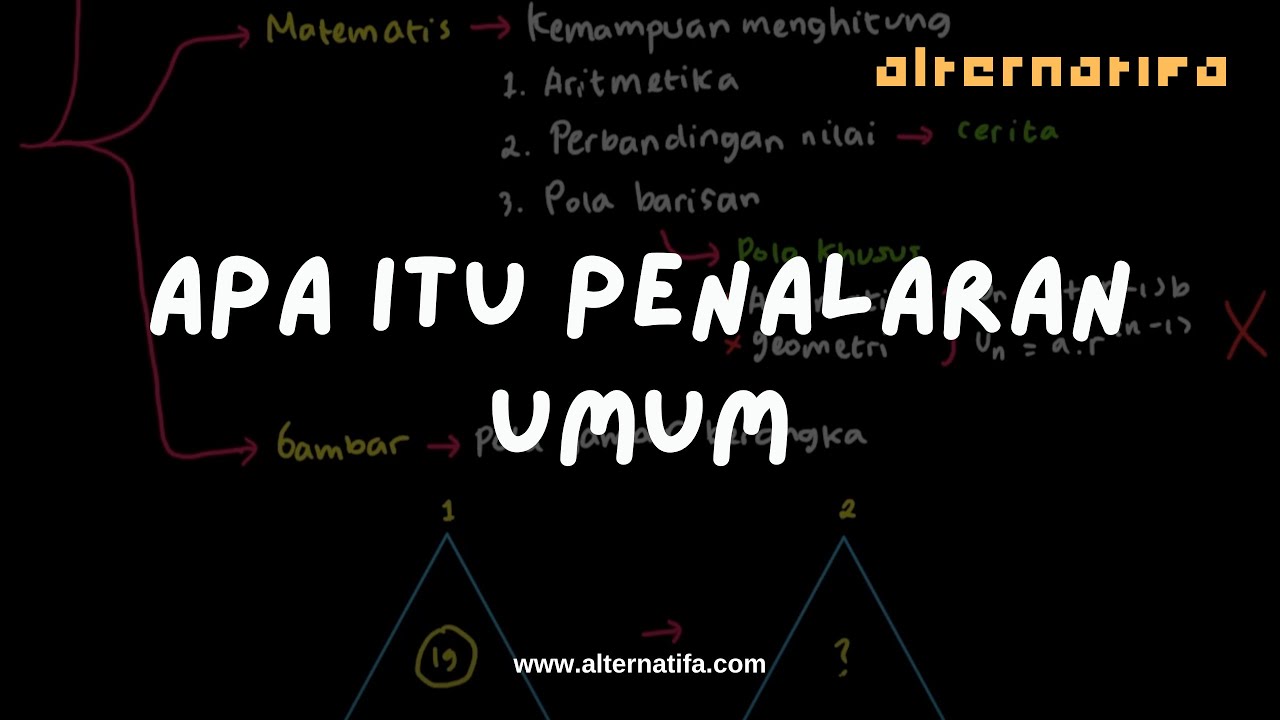
Apa Itu Penalaran Umum | Skolastik | Alternatifa
MATERI UTBK SNBT LITERASI BAHASA INGGRIS - VOCABULARY QUESTION

MATERI UTBK SNBT PENGETAHUAN UMUM - KESESUAIAN PERNYATAAN
5.0 / 5 (0 votes)
