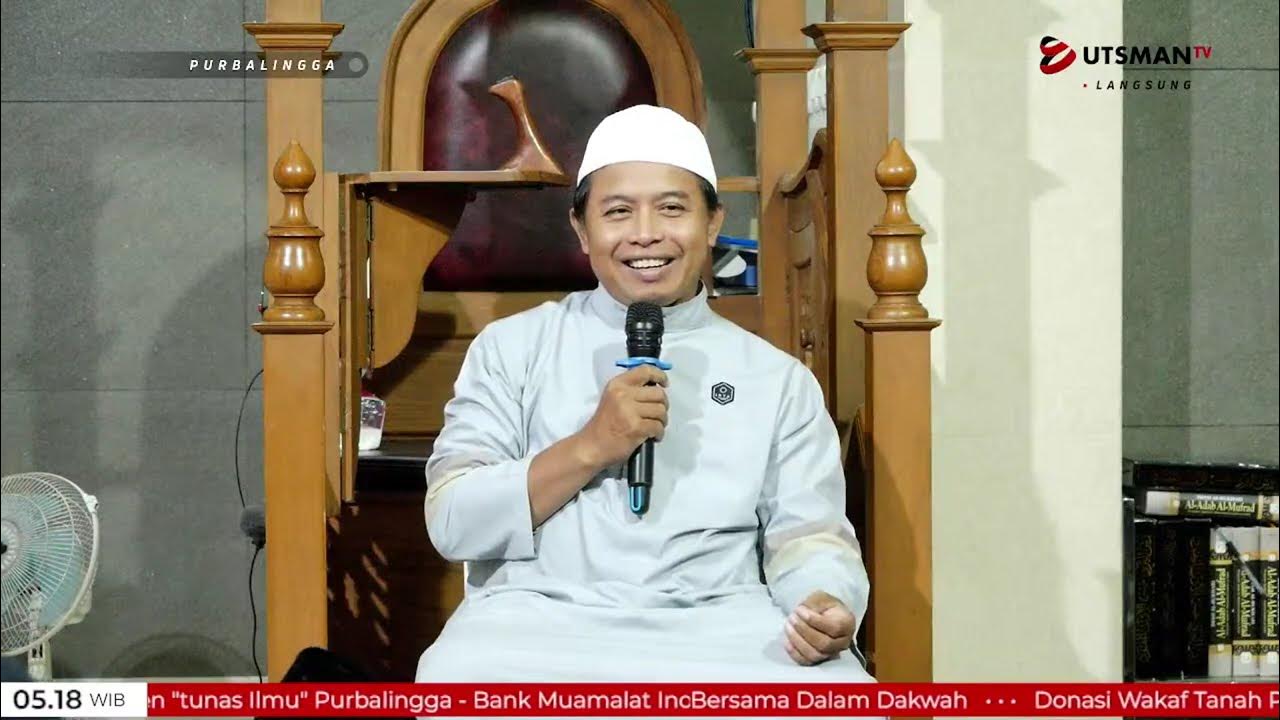
CINTA DIGITAL #4 - PAISLove RAMADAN 1447H - BERBUKA UNTUK BUMI SEDEKAH YANG MENYELAMATKAN LINGKUNGAN
Summary
TLDRThis inspiring sermon blends Islamic teachings with a call for environmental action. It emphasizes that charity (sedekah) extends beyond monetary donations, urging individuals to engage in environmental conservation as an act of faith. The speaker uses the metaphor of 'breaking the fast' to encourage actions like planting trees, reducing waste, and supporting eco-friendly initiatives. Highlighting both 'sedekah jariah' and 'wakaf' for environmental causes, the sermon invites everyone, regardless of resources, to contribute. Ultimately, it underscores the role of Muslims as stewards of the Earth, combining spirituality with practical actions to safeguard the environment.
Takeaways
- 😀 Fasting during Ramadan teaches self-restraint, and the Earth also suffers from excess consumption and exploitation of its resources.
- 🌍 The Earth is 'hungry' for care and attention due to deforestation, pollution, and environmental degradation.
- 💖 Sedekah (charity) in Islam is broad, encompassing good deeds such as environmental care, like planting trees or reducing waste.
- 🌱 Sedekah Jariah (continuous charity) is a powerful concept where actions like planting trees continue to earn rewards even after death.
- 💧 Taking care of the environment is an act of charity, and it is part of our duty as khalifah (guardians) of the Earth.
- 🌳 Waqf (endowment) is not only for religious buildings; it can also be applied to environmental causes, like planting trees or supporting water conservation efforts.
- 👨🎓 Students can participate in environmental charity even without money, by volunteering, teaching others, or promoting eco-friendly practices.
- 🚮 One way to contribute is by reducing plastic usage and practicing sustainable habits, such as using reusable items.
- 🌟 Every small environmental action, like teaching others about cleanliness, is considered a form of Sedekah in Islam.
- 🎶 The speaker encourages unity through singing a modified version of 'Rumah Kita' (Our House) with lyrics about protecting the Earth, emphasizing the importance of collective action.
- 💡 Ramadan is a perfect time to reflect on both spiritual and environmental actions, making every good deed part of worship and a way to serve the Earth.
Q & A
What is the main theme of the speaker's message in this talk?
-The main theme is about taking responsibility for the environment and recognizing that caring for the Earth is an act of charity in Islam, especially during Ramadan. The speaker encourages actions like planting trees, reducing pollution, and supporting environmental causes as forms of *sedekah* (charity).
How does the speaker connect the act of fasting in Ramadan to environmental conservation?
-The speaker draws a parallel between fasting during Ramadan, where Muslims refrain from food and drink, and the Earth’s 'fasting' from resources due to overuse and environmental degradation. He emphasizes that just as we break our fast with sweet and nutritious foods, we should heal the Earth through acts of charity and care for the environment.
What is *sedekah* in Islam, and how is it related to environmental care?
-*Sedekah* refers to voluntary charity in Islam, and it is not limited to monetary donations. The speaker explains that every good deed, such as cleaning the environment, planting trees, and conserving water, is considered a form of *sedekah*, which brings reward and helps the Earth.
What is the concept of *sedekah jariah*, and how does it relate to environmental actions?
-*Sedekah jariah* is charity that continues to benefit the giver even after their death. Actions like planting a tree or building an environmentally sustainable project are examples of *sedekah jariah* because their benefits continue (e.g., oxygen production, shade, fruit-bearing) long after the individual has passed.
What does the Quran say about the environmental damage caused by humans?
-In Surah Ar-Rum, Ayah 41, the Quran states: 'Corruption has appeared throughout the land and sea by [reason of] what the hands of people have earned.' This verse highlights that human actions, such as pollution and environmental destruction, are the cause of ecological harm.
What is *wakaf*, and how can it be applied to environmental causes?
-*Wakaf* traditionally refers to endowing property or land for religious or community use. The speaker introduces the idea of *wakaf al-bi’ah* (environmental endowment), where people can contribute to environmental causes, such as planting trees, creating water conservation projects, or supporting waste management initiatives.
How can students contribute to environmental conservation if they don’t have money to donate?
-Students can still contribute by engaging in activities like participating in clean-up drives (*sedekah of effort*), educating others on environmental responsibility (*sedekah of knowledge*), creating awareness content (*sedekah of creativity*), and avoiding plastic use (*sedekah of restraint*). These actions are all forms of charity that benefit the environment.
Why does the speaker emphasize the role of students in environmental conservation?
-The speaker encourages students because they have the potential for great collective impact. By making small changes, like avoiding plastic or spreading awareness, millions of students can create a significant environmental impact, which the speaker views as a form of *jihad* (struggle) for the Earth.
What is the importance of cleanliness in Islam, as mentioned by the speaker?
-The speaker quotes a saying of the Prophet Muhammad, Sallallahu Alaihi Wasallam, that cleanliness is half of faith (*minal iman*). Keeping the environment clean and reducing pollution is seen as an integral part of one’s faith and responsibility in Islam.
How does the speaker use the song 'Rumah Kita' to conclude the message?
-The speaker adapts the song 'Rumah Kita' to 'Bumi Kita' to emphasize the importance of protecting our planet. The lyrics highlight the Earth as our home, and the message encourages everyone to take responsibility for its well-being, underscoring the call to 'protect our Earth' before fulfilling personal desires.
Outlines

This section is available to paid users only. Please upgrade to access this part.
Upgrade NowMindmap

This section is available to paid users only. Please upgrade to access this part.
Upgrade NowKeywords

This section is available to paid users only. Please upgrade to access this part.
Upgrade NowHighlights

This section is available to paid users only. Please upgrade to access this part.
Upgrade NowTranscripts

This section is available to paid users only. Please upgrade to access this part.
Upgrade NowBrowse More Related Video

Dosa Besar Perusak Lingkungan | Arti Ekoteologi | Kemenag Jabar

Como fazer um ESBOÇO DE PREGAÇÃO pela primeira vez (Atualizado) | Thalles Villas

KULTUM IFTAR 2025 Rafandra Aqilah 7E - Mengubah Insecure Menjadi Bersyukur

Prof.Dr.KH. Said Agil Husin Al Munawar. MA | Ceramah Tarawih 7 Ramadhan 1446 H
LIVE Kultum Subuh | Ustadz Abu Muhammad Agus Waluyo

(UBUM SPECIAL RAMADHAN) WANITA WANITA AHLI SURGA - UST Dr Ahmad Bayani, S.Ag., M.Fil.I
5.0 / 5 (0 votes)
