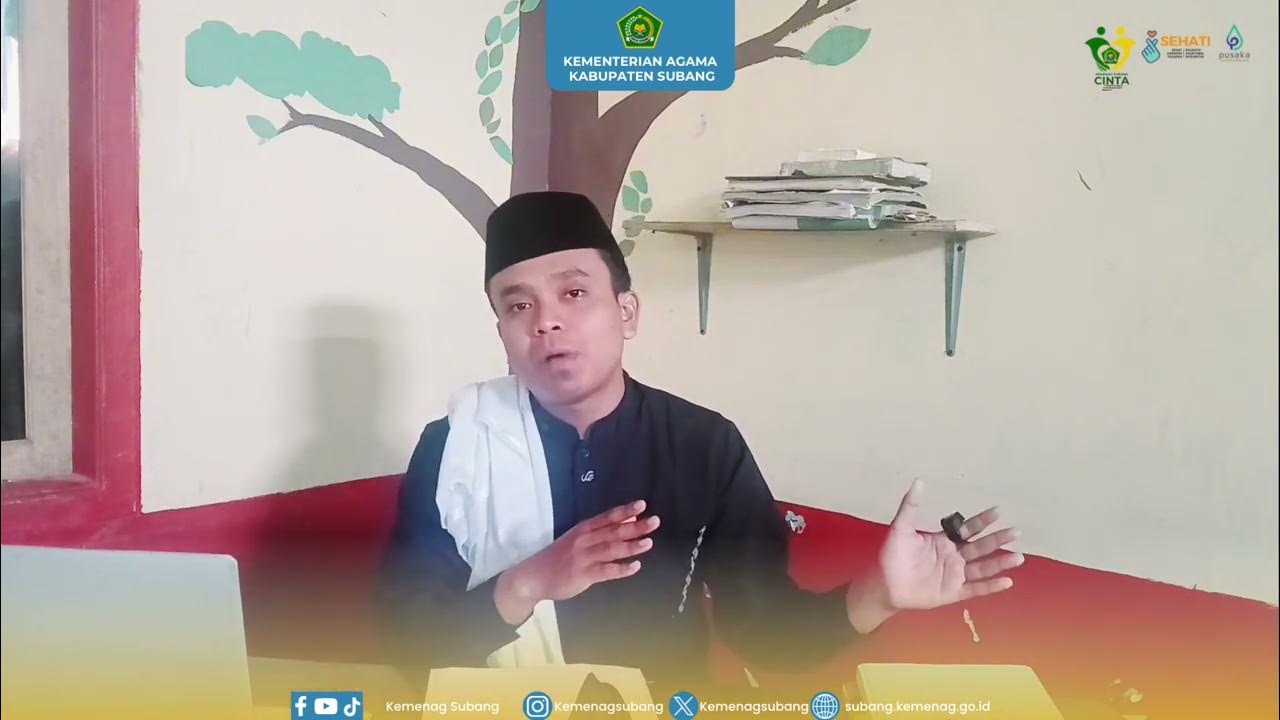
Kultum Ramadhan # 4 || "Ramadhan dan Jalan Menuju Taqwa" ||
Summary
TLDRIn this insightful Ramadan sermon, the speaker calls upon listeners to reflect deeply on their connection with Allah, urging them to embrace the spiritual benefits of fasting. Highlighting the key objective of Ramadan, the speaker emphasizes how fasting fosters Taqwa, or God-consciousness. Through a detailed explanation of the four steps to achieving Taqwa—fear of Allah, following the Qur'an and Hadith, contentment with Allah's provisions, and preparing for the Hereafter—the sermon encourages sincere devotion. A powerful hadith about forgiveness for those who fast with faith reinforces the importance of pure intention and seeking Allah's reward during this blessed month.
Takeaways
- 😀 Ramadan is a blessed month of purity and closeness to Allah, offering an opportunity to purify our hearts and increase our worship.
- 😀 Fasting during Ramadan serves as a means to develop Taqwa (piety), fostering a stronger relationship with Allah and fulfilling His commands.
- 😀 The Qur'anic verse from Surah Al-Baqarah (183) emphasizes the obligation of fasting and its purpose in achieving Taqwa.
- 😀 Taqwa requires sincere effort and involves a process that includes fearing Allah, following His guidance, and being conscious of our actions.
- 😀 The first step on the path to Taqwa is 'Al-Khauf Minal Jalil'—fearing Allah and recognizing that all our actions are under His supervision.
- 😀 Fasting teaches us the significance of performing actions purely for the sake of Allah, as it is an unseen act observed only by Him.
- 😀 The second step to Taqwa is 'Al-Amal Bin Tanzil,' which encourages us to align our actions with the teachings of the Qur'an and Hadith, especially during Ramadan.
- 😀 The third step, 'Al-Qanaah,' teaches contentment with Allah's provisions, urging us to accept both small and large blessings with patience and gratitude.
- 😀 The final step is 'Al-Istiadah Ila Yaumil Jaza,' which reminds us to prepare for the Day of Judgment by performing acts of worship sincerely, seeking Allah's rewards in the Hereafter.
- 😀 The hadith about fasting in Ramadan reminds us that fasting with faith and seeking Allah's reward leads to the forgiveness of past sins.
- 😀 Ramadan is a time to strengthen our relationship with Allah, purify ourselves, and strive for His mercy and forgiveness.
Q & A
What is the main purpose of fasting during Ramadan according to the speaker?
-The main purpose of fasting during Ramadan is to attain taqwa, or God-consciousness, by obeying Allah's commands, avoiding His prohibitions, and developing a closer relationship with Him.
How does the speaker interpret the verse from Surah Al-Baqarah (2:183) about fasting?
-The verse emphasizes that fasting is obligatory for believers just as it was for those before them, and the ultimate aim is to achieve taqwa, which means fear and reverence for Allah.
What are the four paths to taqwa mentioned by Sayidina Ali (RA)?
-The four paths to taqwa are: 1) Al-Khauf minal Jalil (fear of Allah), 2) Al-Amal bin Tanzil (acting according to the Qur'an and Hadith), 3) Al-Qana'ah (contentment with Allah's provisions), and 4) Al-Isti'adah ila Yaumil Jazah (preparing for the Day of Judgment).
What does 'Al-Khauf minal Jalil' teach us in the context of fasting?
-'Al-Khauf minal Jalil,' or the fear of Allah, teaches us that fasting is an act that is unseen by humans but is closely monitored by Allah, reinforcing the idea that Allah is aware of all our actions.
How does the speaker describe the relationship between fasting and the Qur'an?
-The speaker explains that Ramadan is the month of the Qur'an's revelation, and it is recommended to read and reflect on the Qur'an more during this time. Understanding and implementing the teachings of the Qur'an is essential to fasting.
Why is contentment with Allah's provisions (Al-Qana'ah) important during fasting?
-Al-Qana'ah teaches us patience and gratitude, reminding us to accept whatever provisions Allah has given, no matter how little, and to be content with them during the fast.
What does 'Al-Isti'adah ila Yaumil Jazah' mean, and how does it relate to fasting?
-'Al-Isti'adah ila Yaumil Jazah' refers to preparing for the Day of Judgment by focusing on spiritual acts and worship. Fasting helps believers stay mindful of their actions and intentions, focusing solely on the Hereafter.
What does the hadith about the reward of fasting ('Man sama ramadana imanan wa ihtisaban...') signify?
-The hadith signifies that fasting, when done with true faith (iman) and a sincere hope for Allah's reward (ihtisaban), leads to the forgiveness of previous sins.
How does the speaker describe the role of Ramadan in purifying the soul?
-The speaker describes Ramadan as a time for self-purification, where the fasting person distances themselves from worldly desires and focuses on spiritual growth, seeking Allah's forgiveness and mercy.
What is the importance of the personal relationship between a fasting person and Allah during Ramadan?
-The personal relationship is essential because fasting is an act of worship known only to Allah, highlighting the intimate connection between the believer and their Creator. It teaches sincerity and strengthens faith.
Outlines

This section is available to paid users only. Please upgrade to access this part.
Upgrade NowMindmap

This section is available to paid users only. Please upgrade to access this part.
Upgrade NowKeywords

This section is available to paid users only. Please upgrade to access this part.
Upgrade NowHighlights

This section is available to paid users only. Please upgrade to access this part.
Upgrade NowTranscripts

This section is available to paid users only. Please upgrade to access this part.
Upgrade NowBrowse More Related Video

Keutamaan Ramadhan oleh Sukori, S.Pd.I || Tausiyah day 2

Keutamaan Berpuasa dan Manfaat nya Bagi Jiwa
SMARTREN 2025 : Makna Ayat Puasa dalam Surah Al Baqarah 183-184

Keutamaan dan Hakikat Puasa

Kultum Ramadhan 1447 H || Ramadhan Ke-8|| Ramadhan Bulan Memperbaiki Diri - Ust. Muhlas, S. H. I.

5. Puasa Sebagai Sarana Meningkatkan Taqwa | Bp. R. Didit Raditya Gunadi | 5 Maret 2025
5.0 / 5 (0 votes)
