KURMA eps 2, Puasa Melatih Kejujuran Tanpa Pengawasan, Rohma Nur A, SMP Plus Az-Zahroh
Summary
TLDRThis speech highlights the importance of honesty during the month of Ramadan, emphasizing that fasting is not just about refraining from food and drink but also about being truthful, even when no one is watching. The speaker explains that Ramadan serves as a training ground for personal integrity, which is key for students in both academic and everyday life. The message encourages upholding honesty as a core value, just as the Prophet Muhammad was known for his truthfulness. The speaker calls for maintaining these virtues beyond Ramadan to create a morally strong, disciplined, and responsible society.
Takeaways
- 😀 The importance of honesty in fasting: Ramadan trains us to be honest, even when no one is watching.
- 😀 Fasting teaches self-discipline and the value of being truthful to ourselves and to Allah.
- 😀 As students, honesty is crucial, especially during exams where we face the temptation to cheat.
- 😀 Ramadan serves as a training ground for honesty, integrity, and responsibility, both in personal and academic life.
- 😀 Even though fasting is not monitored by others, we choose to remain honest because we trust Allah sees all actions.
- 😀 The Prophet Muhammad (PBUH) was known as 'Al-Amin' (the Trustworthy) because of his unwavering honesty, which we should emulate.
- 😀 Honesty is a foundation of a meaningful life and learning. Without it, knowledge loses its blessing.
- 😀 Ramadan is a 'school of life' where we are trained to be pious, disciplined, patient, and, most importantly, honest.
- 😀 We must strive to maintain the integrity gained during Ramadan throughout the rest of the year and not return to deceitful behavior.
- 😀 A nation’s greatness starts with its youth upholding strong moral values, and honesty is central to this vision.
Q & A
What is the main theme of the speech?
-The main theme of the speech is honesty during Ramadan and how fasting can teach individuals to be truthful, both in the presence of others and when alone.
How does the speaker define the concept of honesty in the context of fasting?
-The speaker defines honesty in fasting as the personal commitment to refrain from eating and drinking, even when no one is watching, because one believes in Allah's omnipresence and His ability to see everything.
What lesson does the speaker draw from fasting about integrity?
-The lesson drawn is that fasting is a form of self-discipline that helps individuals to be truthful and honest without external supervision, reinforcing the importance of integrity in everyday actions.
Why does the speaker relate fasting to personal character development?
-Fasting is seen as a tool for developing good character traits, such as honesty, discipline, patience, and responsibility, which are essential for personal growth and ethical conduct.
How does the speaker connect Ramadan to education and self-improvement?
-Ramadan is referred to as a 'madrasah' (school) for life, where individuals are taught virtues like taqwa (God-consciousness), discipline, patience, and, most importantly, honesty.
What example from the life of the Prophet Muhammad does the speaker use to emphasize honesty?
-The speaker mentions the title 'Al-Amin' (The Trustworthy) given to Prophet Muhammad because he was known for his honesty in all situations, and this serves as a model for others to follow.
What warning does the speaker give about behavior after Ramadan?
-The speaker warns that after Ramadan, individuals should not return to being dishonest or engaging in deceitful behavior, but rather continue practicing the values learned during Ramadan, including honesty.
How does the speaker suggest Ramadan impacts the behavior of students?
-Ramadan is seen as an opportunity for students to reflect on their actions and improve their character, particularly in terms of honesty during exams and daily interactions, where they are faced with moral choices.
What is the significance of honesty in the context of the speaker's message?
-Honesty is portrayed as a foundation for success and peace of mind, ensuring that one's actions are aligned with personal values and religious principles, which ultimately leads to a more fulfilling life.
What is the speaker’s hope for the audience after the speech?
-The speaker hopes that the audience will remember the importance of honesty not only during Ramadan but throughout their lives, fostering personal integrity and a stronger connection with Allah.
Outlines

This section is available to paid users only. Please upgrade to access this part.
Upgrade NowMindmap

This section is available to paid users only. Please upgrade to access this part.
Upgrade NowKeywords

This section is available to paid users only. Please upgrade to access this part.
Upgrade NowHighlights

This section is available to paid users only. Please upgrade to access this part.
Upgrade NowTranscripts

This section is available to paid users only. Please upgrade to access this part.
Upgrade NowBrowse More Related Video

KURMA eps 4, Puasa Melatih Kejujuran Tanpa Pengawasan, CAELUM D.G.L & LOUISE B.F.R, SMPN 13 Malang
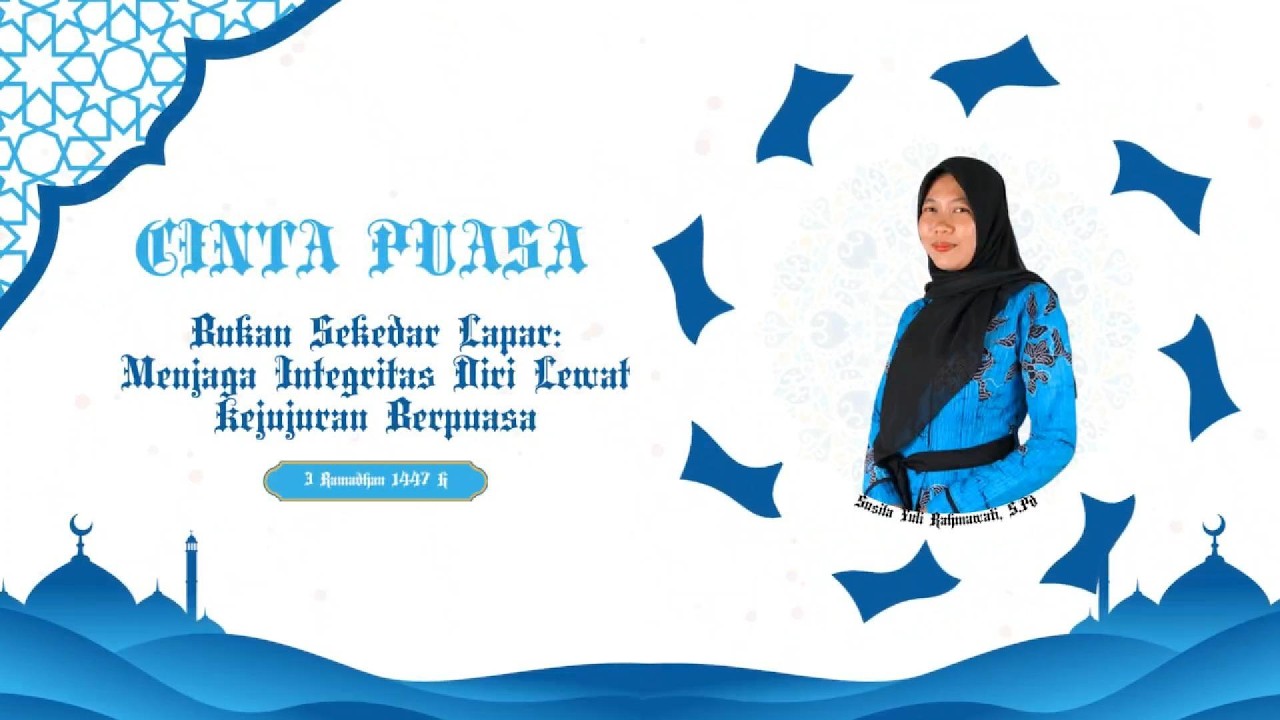
Bukan sekedar lapar: Menjaga integritas diri lewat kejujuran berpuasa

Yuk Mabar Season 2 - Stage 7: Jujur Saat Puasa Walau Tidak Ada Yang Melihat

Puasa Sekolah Sabar dan Jujur | Badar Sadat Afkarulhaq 9H – Kultum Iftar Sparkling Ramadhan

Rukun, Syarat, dan Niat yang Benar dalam Berpuasa

KULTUM | Puasa Melatih Kejujuran | EPISODE 11 | HIRA 2026
5.0 / 5 (0 votes)
