Present Simple | An Easy English Grammar Lesson!
Summary
TLDRIn this video, we focus on the three main ways to use the present simple tense in English. First, it’s used for regular actions and habits, like daily routines or scheduled activities. Second, it’s used for general facts that are universally true, such as natural laws and scientific truths. Lastly, present simple is used with stative verbs to describe states of being, emotions, perceptions, or possession. By understanding these three key uses, you can effectively incorporate the present simple tense into your daily conversations.
Takeaways
- 😀 Present simple is used in several everyday situations in English communication.
- 📚 One main use is to describe regular actions and habits that happen repeatedly over time.
- ⏰ These habits can occur daily, weekly, monthly, yearly, or at any consistent frequency.
- 🍳 Examples include routines like eating breakfast at the same time or visiting family regularly.
- 🌍 Present simple is also used to express general facts and things that are always true.
- ☀️ Natural laws and universal truths, such as the sun rising in the east, use present simple.
- 🦒 Scientific or general knowledge statements, like animals’ diets or how machines function, use this tense.
- 🧠 Another key use is with stative verbs that describe states rather than actions.
- 💭 Stative verbs often relate to thoughts, opinions, feelings, and emotions.
- 👀 They also include senses, perceptions, possession, and measurement.
- 🗣️ Questions and statements about remembering, wanting, seeing, or having commonly use present simple.
- 🎯 Mastering these three uses—habits, general facts, and stative verbs—helps improve everyday English conversations.
Q & A
What is the present simple used for?
-The present simple is used to describe regular actions or habits, general facts, and stative verbs.
Can you give an example of present simple used for regular actions or habits?
-Sure! For example: 'I have pancakes and coffee for breakfast every morning.' This shows a regular daily action or habit.
What is the key characteristic of actions described by present simple for regular actions or habits?
-The key characteristic is that the action happens regularly, whether it’s daily, weekly, or even a few times a year.
What is an example of present simple used for general facts?
-An example would be: 'The sun rises in the east and sets in the west.' This is a fact that is always true.
What are stative verbs, and how are they used with the present simple?
-Stative verbs describe how something is, rather than what it does. Examples include verbs related to thoughts, emotions, senses, and possession, such as 'I love coming to the gym!'
Give an example of a stative verb related to feelings and emotions.
-An example would be: 'He wants dinner!' This shows a feeling or desire using a stative verb in present simple.
How can present simple be used to describe possession?
-Present simple can describe possession with verbs like 'have.' For example: 'Do you have kids?' This is using present simple to ask about possession.
How does the present simple tense relate to the frequency of actions?
-The present simple tense often indicates how often something happens, such as 'We go fishing every weekend' or 'I visit my family three times a year.'
Is it correct to use present simple for actions that are happening right now?
-No, present simple is generally not used for actions happening right now. It’s used for regular or habitual actions, general facts, and stative verbs, not for ongoing events.
What is an example of present simple used for a sense or perception?
-An example would be: 'Whoa, did you see that? That was a Bigfoot!' This uses present simple to describe a perception or sensation.
Outlines

This section is available to paid users only. Please upgrade to access this part.
Upgrade NowMindmap

This section is available to paid users only. Please upgrade to access this part.
Upgrade NowKeywords

This section is available to paid users only. Please upgrade to access this part.
Upgrade NowHighlights

This section is available to paid users only. Please upgrade to access this part.
Upgrade NowTranscripts

This section is available to paid users only. Please upgrade to access this part.
Upgrade NowBrowse More Related Video
SIMPLE PRESENT TENSE - NOMINAL VERBAL LENGKAP (fungsi, formula, tobe, ciri-ciri, latihan soal)

THE PRESENT PERFECT TENSE || MATERI BAHASA INGGRIS SMP DAN SMA

Future in English - How to Talk about the Future

Simple Past Tense VS Simple Perfect Tense

English Grammar: All 4 Present Tenses
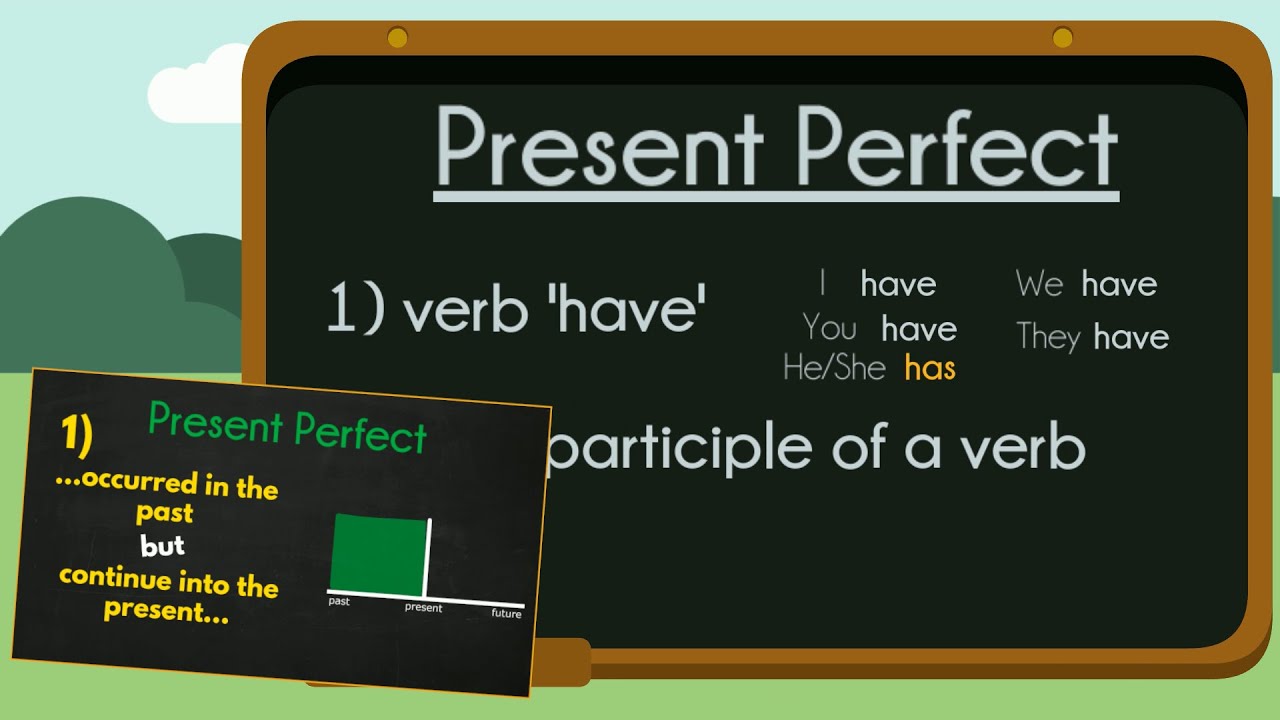
Introduction to Present Perfect Tense | EasyTeaching
5.0 / 5 (0 votes)
