Merekam Sejarah Perjanjian Linggarjati #JelajahKemerdekaan
Summary
TLDRThe script outlines the post-independence struggles of Indonesia after its declaration of independence on August 17, 1945. Despite the proclamation, Indonesia faced resistance from the Netherlands, which did not immediately recognize its sovereignty. The story focuses on the Linggarjati Agreement, a diplomatic effort that took place in November 1946. Delegates from both Indonesia and the Netherlands, with the mediation of the British, negotiated the terms of Indonesia's recognition, which led to the establishment of the Indonesian Republic and the eventual creation of the Indonesian Union. Although the agreement faced internal resistance, it sparked further diplomatic efforts to secure full international recognition of Indonesia’s independence.
Takeaways
- 😀 The declaration of Indonesia's independence on August 17, 1945 marked the beginning of a long struggle for international recognition.
- 😀 After Japan's surrender in World War II, the Netherlands sought to reclaim control over Indonesia, which was a major challenge for the newly declared Republic of Indonesia.
- 😀 One of the key diplomatic efforts was the Linggarjati Agreement, aimed at resolving the status of Indonesia’s independence through negotiation.
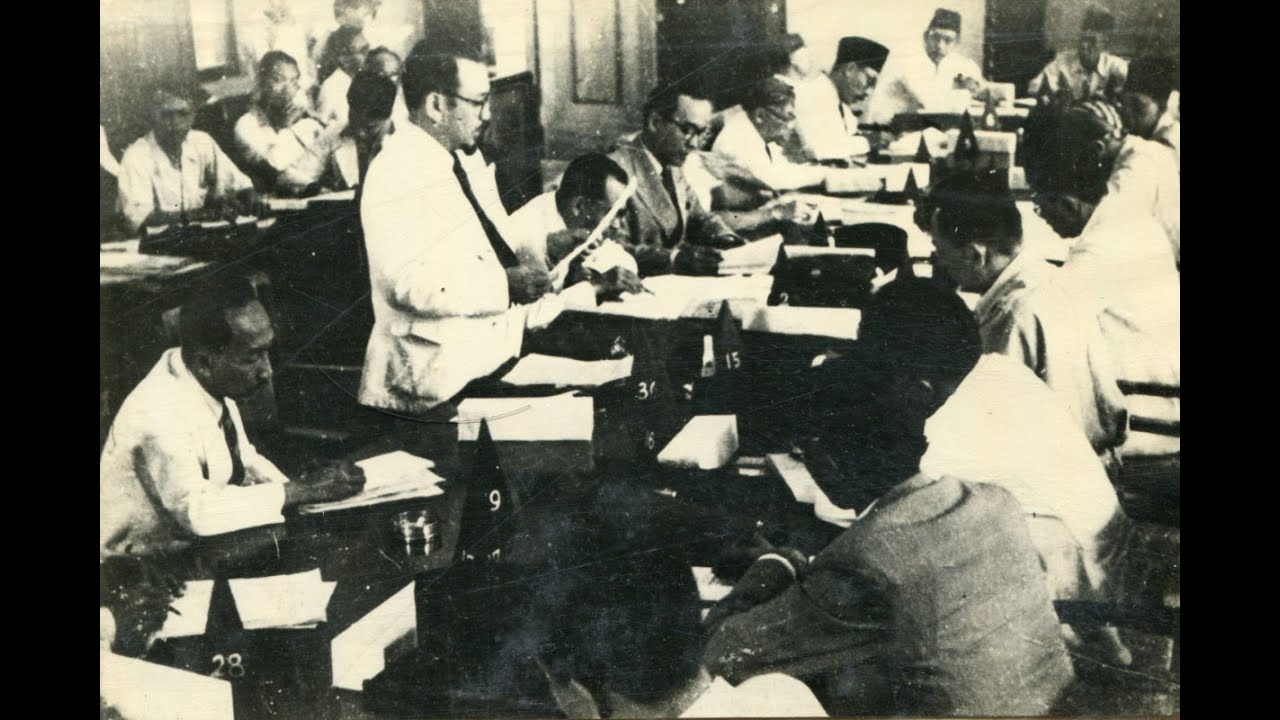
- 😀 The Linggarjati Agreement took place from November 11 to November 13, 1946, in a neutral location at Hotel Merdeka in Kuningan, West Java.
- 😀 The Indonesian delegation, led by Prime Minister Sutan Syahrir, included diplomats like Muhammad Rum and AK Gani, while the Dutch were represented by Hubertus Van Mook.
- 😀 The British representative, Lord Killearn, played a key role in mediating the negotiations between Indonesia and the Netherlands.
- 😀 The agreement resulted in the Netherlands recognizing Indonesia's de facto sovereignty over Java, Madura, and Sumatra, and required the Dutch to withdraw their troops by January 1, 1947.
- 😀 The Linggarjati Agreement also established the framework for the formation of the federal state of the Republic of Indonesia (RIS), which included the Netherlands' cooperation in creating a Union between Indonesia and the Netherlands.
- 😀 Despite the perceived shortcomings of the Linggarjati Agreement, it was a significant step in Indonesia's diplomatic efforts to assert its independence.
- 😀 The agreement’s failure to fully satisfy Indonesian fighters, due to limited territorial recognition, led to further diplomatic struggles for Indonesia's sovereignty.
Q & A
What significant event occurred on August 17, 1945, in Indonesia?
-On August 17, 1945, Indonesia declared its independence with the proclamation read by Sukarno, marking the beginning of Indonesia's fight for recognition of its sovereignty.
What was the role of diplomacy in Indonesia's struggle for independence after the declaration of independence?
-Diplomacy played a crucial role as Indonesia sought international recognition of its independence, including negotiations such as the Linggarjati Agreement, in addition to armed resistance.
What was the Linggarjati Agreement and when did it take place?
-The Linggarjati Agreement was a diplomatic agreement between Indonesia and the Netherlands, which took place from November 11 to November 13, 1946, at a location in Kuningan, West Java. It aimed to determine Indonesia's sovereignty and its relationship with the Netherlands.
Why was Linggarjati chosen as the location for the negotiations?
-Linggarjati was chosen because it was considered a neutral location, suitable for both the Indonesian and Dutch delegations to hold talks without bias or external influence.
Who were the key figures in the Indonesian delegation during the Linggarjati negotiations?
-The Indonesian delegation was led by Prime Minister Sutan Syahrir and included diplomats such as Muhammad Rum, Soesanto Tirtoprodjo, and A.K. Gani.
Who represented the Netherlands during the Linggarjati negotiations?
-The Netherlands was represented by Prime Minister Hubertus Van Mook, along with other Dutch officials such as McFall and Vega, with Lord Killearn of the UK acting as the mediator.
What were the main outcomes of the Linggarjati Agreement?
-The main outcomes included the de facto recognition of Indonesia's sovereignty over Java, Madura, and Sumatra by the Netherlands, the formation of the Indonesian Federation, and the establishment of the Dutch-Indonesian Union.
How did Sukarno participate in the Linggarjati negotiations?
-Although Sukarno did not directly partake in the negotiations, he supported the process and engaged in informal discussions with the Dutch and British representatives, including with Lord Killearn.
Why did the Linggarjati Agreement fail to fully satisfy Indonesia's leaders?
-The Linggarjati Agreement was unsatisfactory to many Indonesian leaders because it only recognized Indonesia's sovereignty over limited territories (Sumatra, Java, and Madura), and did not grant full independence or territorial integrity.
What was the broader impact of the Linggarjati Agreement on Indonesia's independence struggle?
-Despite its limitations, the Linggarjati Agreement marked a significant step in Indonesia's diplomatic efforts and served as a catalyst for further negotiations and actions aimed at securing full independence and international recognition.
Outlines

This section is available to paid users only. Please upgrade to access this part.
Upgrade NowMindmap

This section is available to paid users only. Please upgrade to access this part.
Upgrade NowKeywords

This section is available to paid users only. Please upgrade to access this part.
Upgrade NowHighlights

This section is available to paid users only. Please upgrade to access this part.
Upgrade NowTranscripts

This section is available to paid users only. Please upgrade to access this part.
Upgrade NowBrowse More Related Video




5.0 / 5 (0 votes)
