Iran, cosa sta succedendo: le proteste e la situazione geopolitica per chi ne sa poco
Summary
TLDRThe video offers a deep dive into Iran's current unrest, tracing its roots back to the 1979 Islamic Revolution. It explores the complex political system, where a Supreme Leader holds ultimate power over a nominally democratic government. The video details the country's strict social and legal restrictions, economic hardships, and dependency on China amidst international sanctions. It highlights widespread protests, fueled by inflation and corruption, calling for a total system change. The unrest is marked by new, radical demands, including a call for the return of the pre-1979 monarchy, while the regime responds with harsh repression and internet blackouts.
Takeaways
- 😀 The current situation in Iran is shaped by its complex political system, with two main power structures: the democratic facade (president and parliament) and the real power held by the Supreme Leader, Ayatollah Ali Khamenei.
- 😀 Since the 1979 Iranian Revolution, the country has transformed from a Western-allied monarchy under Shah Mohammad Reza Pahlavi to an Islamic Republic with strict religious and moral laws.
- 😀 The Iranian government operates under a unique system where the Supreme Leader, appointed for life, holds ultimate authority over the military, foreign policy, and key economic sectors.
- 😀 The Iranian economy has been significantly impacted by international sanctions, especially after the 2025 snapback of UN sanctions due to violations of the 2015 nuclear deal.
- 😀 Iran's inflation has skyrocketed, with the local currency losing significant value, making everyday life more difficult for citizens. The price of basic goods like bread has doubled.
- 😀 The country has been forced into economic dependence on China, which buys most of Iran's oil at discounted rates, but this relationship is driven by China's own interests rather than generosity.
- 😀 There are ongoing protests in Iran, fueled by economic hardships and social grievances. Unlike previous uprisings, these protests are widespread, including in poorer provinces and among merchants in bazaars.
- 😀 The slogans of the protests have shifted from calls for reforms to demands for the complete overthrow of the current regime, with some even calling for the return of the pre-1979 monarchy.
- 😀 The Iranian government has resorted to extreme measures, including widespread internet blackouts and harsh repression, to prevent organized resistance and quell the protests.
- 😀 The current unrest in Iran is a culmination of decades of dissatisfaction, rooted in the oppressive regime that has been in place since the 1979 revolution, leading to widespread calls for a total system change.
Q & A
What happened in Iran in 1979?
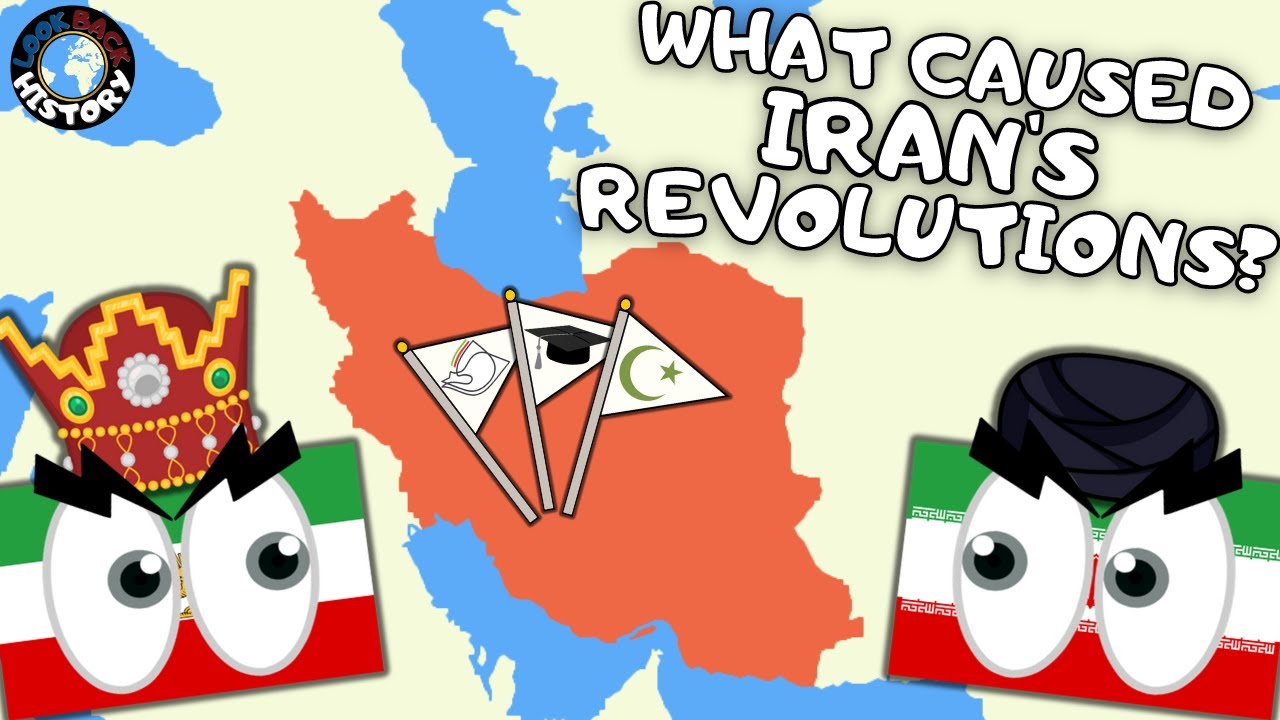
-In 1979, the Islamic Revolution occurred in Iran. It was a powerful alliance between religious figures, students, and workers that overthrew the monarchy led by Shah Mohammad Reza Pahlavi. This led to the establishment of the first Islamic Republic, replacing the pro-Western regime with an anti-American government under Ayatollah Khomeini.
What is the current political structure of Iran?
-Iran's political structure is complex. It features a democratic facade with a president and a parliament elected by the people, but the ultimate authority rests with the Supreme Leader, who is not elected. The Supreme Leader has control over the military, foreign policy, and the economy, and his word is final.
What is the role of the Supreme Leader in Iran's government?
-The Supreme Leader, currently Ayatollah Ali Khamenei, is the most powerful figure in Iran. He is not elected and serves for life. The Supreme Leader has final authority on all major state decisions, including military, foreign policy, and economic matters, and controls the powerful Revolutionary Guards (Pasdaran).
How are elections handled in Iran?
-Elections in Iran are held for positions like the president and members of parliament, but candidates must be approved by the Guardian Council, which ensures they adhere to the Islamic principles of the regime. This means that although elections take place, the system is heavily influenced by the Supreme Leader, and only candidates who align with his views can run.
What are some of the key laws and restrictions in Iran?
-Iran has a number of strict laws, including the mandatory wearing of the hijab for women in public spaces, a ban on alcohol, and severe restrictions on public gatherings, including singing and dancing. Additionally, the country enforces gender segregation in public transport and limits physical contact between non-related men and women.
What happened to the Iranian economy after the 1979 revolution?
-After the 1979 revolution, Iran's economy suffered due to the imposition of international sanctions, which isolated the country. Despite having significant oil reserves, the country has struggled with inflation, unemployment, and a devalued currency. Economic hardship has been a major source of discontent among the population.
How does the situation in Iran today compare to 1979?
-Today’s protests in Iran differ from those of 1979 in several ways. While the 1979 revolution led to the establishment of the Islamic Republic, the current unrest is driven by widespread dissatisfaction with the government, particularly regarding economic conditions. Today, protests are more widespread, including both urban and rural areas, and some people are even calling for the return of the monarchy.
What is the role of sanctions in Iran's current crisis?
-Sanctions, particularly those related to Iran's nuclear program, have played a significant role in the country’s economic downfall. In 2025, the UN's 'snapback' mechanism reimposed sanctions on Iran after it was accused of violating the 2015 nuclear deal. These sanctions have caused severe economic instability, including hyperinflation and a collapsing currency.
How has Iran's relationship with China affected its economy?
-Iran has become heavily reliant on China for financial support due to international sanctions. China buys large quantities of Iranian oil at discounted rates, which provides some economic relief to Iran. However, this relationship is more business-oriented than altruistic, with China also benefiting from cheap oil while keeping Iran dependent on its financial support.
Why are there calls for the return of the monarchy in Iran?
-Some of the protesters in Iran have started calling for the return of the monarchy, specifically the pre-1979 regime of the Shah. This reflects growing frustration with the current Islamic Republic and its inability to address economic hardship and political repression. The demand for the monarchy symbolizes a desire for a different kind of governance, one that many Iranians see as potentially more stable or prosperous.
Outlines

This section is available to paid users only. Please upgrade to access this part.
Upgrade NowMindmap

This section is available to paid users only. Please upgrade to access this part.
Upgrade NowKeywords

This section is available to paid users only. Please upgrade to access this part.
Upgrade NowHighlights

This section is available to paid users only. Please upgrade to access this part.
Upgrade NowTranscripts

This section is available to paid users only. Please upgrade to access this part.
Upgrade NowBrowse More Related Video



5.0 / 5 (0 votes)
