Perbandingan (2) | Penerapan Perbandingan pada Skala | Matematika kelas 7
Summary
TLDRIn this educational video, the instructor explains how to apply ratios and scales in mathematics, focusing on class 7 topics. Key concepts include understanding scale, calculating distances on maps, and converting units between centimeters and kilometers. The lesson also covers practical examples such as determining the real distance between cities from a map and finding the scale of various drawings. The video concludes with a demonstration on calculating actual area sizes from scaled drawings. The content is designed to help students grasp the relationship between map scales and real-world measurements.
Takeaways
- 😀 Skala is the ratio between the distance on a map or diagram and the actual distance in real life.
- 😀 To calculate the actual distance from a map using scale, use the formula: S = JP / JS, where S is the scale, JP is the distance on the map, and JS is the actual distance.
- 😀 For example, if a map scale is 1:600,000 and the distance on the map is 20 cm, the actual distance can be calculated using the formula and results in 12 kilometers.
- 😀 To convert measurements, such as from centimeters to kilometers, remember that 1 cm = 10,000 cm and 100,000 cm = 1 kilometer.
- 😀 In another example, when the actual distance between two cities is 60 km, and the scale is 1:1,200,000, the map distance is calculated as 5 cm.
- 😀 For calculating the scale of a map from real dimensions, ensure you convert all units to the same measurement (e.g., meters to centimeters).
- 😀 To find the scale for a building's floor plan, compare the actual length and width to the dimensions on the drawing and apply the formula S = JP / JS.
- 😀 A real-world example shows that for a floor plan where the actual building is 25 meters by 20 meters, and the drawn dimensions are 10 cm by 8 cm, the scale is 1:250.
- 😀 To find the area of a garden in real life from a map, you first calculate the actual dimensions using the scale, and then multiply them to find the area (e.g., length x width).
- 😀 Always simplify the units of measurement and the fraction when dealing with scale calculations to make the process easier to follow.
Q & A
What is the definition of scale in the context of the video?
-Scale is the comparison of the distance on a map, diagram, or image to the actual distance in reality.
How do you calculate the scale using the formula provided?
-The scale (S) can be calculated using the formula S = JP / JS, where JP is the distance on the map and JS is the actual distance.
In the example with two cities, how do you calculate the actual distance given the scale?
-To calculate the actual distance, you multiply the distance on the map (20 cm) by the scale factor (600,000), resulting in an actual distance of 12 kilometers.
What is the importance of converting units in scale problems?
-Converting units ensures that both the map distance and actual distance are in the same unit of measurement, which simplifies the calculation process.
How do you convert kilometers to centimeters in the examples?
-To convert kilometers to centimeters, you multiply the number of kilometers by 100,000 (since 1 km = 100,000 cm).
What does the scale of 1:600,000 mean in terms of map and actual distance?
-A scale of 1:600,000 means that 1 cm on the map corresponds to 600,000 cm in reality, or 6 kilometers.
In the second example, how do you find the distance on the map given the actual distance and scale?
-To find the distance on the map, you rearrange the scale formula to JP = JS / S, where JS is the actual distance (60 km) and S is the scale factor (1:1,200,000). After converting the actual distance to centimeters (6,000,000 cm), you calculate the map distance as 5 cm.
How is the scale calculated for the office building layout with known dimensions?
-The scale is calculated by comparing the dimensions on the map (10 cm by 8 cm) to the actual dimensions (25 m by 20 m). After converting meters to centimeters, the scale is 1:250.
Why is it necessary to use both the length and width of the building in calculating scale?
-Using both the length and width ensures that the scale accurately represents the building's proportions on the map, as different dimensions may have different scaling factors.
How do you calculate the actual area of the garden in the last example?
-First, you calculate the actual length and width of the garden using the scale formula. After finding the dimensions in meters, you multiply them (14 m by 9 m) to get the area in square meters (126 m²).
Outlines

This section is available to paid users only. Please upgrade to access this part.
Upgrade NowMindmap

This section is available to paid users only. Please upgrade to access this part.
Upgrade NowKeywords

This section is available to paid users only. Please upgrade to access this part.
Upgrade NowHighlights

This section is available to paid users only. Please upgrade to access this part.
Upgrade NowTranscripts

This section is available to paid users only. Please upgrade to access this part.
Upgrade NowBrowse More Related Video

Matematika Kelas 7: Perbandingan Senilai dan Berbalik Nilai

Perbandingan dan Skala dalam Kehidupan Sehari Hari

RAZÃO MATEMÁTICA | EXPLICAÇÃO E EXERCÍCIOS SOBRE RAZÃO | Prof. Gis/

Pembahasan Tes Kemampuan Akademik (TKA)|Kelas XII Matematika Wajib-1

Pengertian Vektor, Notasi, dan Jenis Vektor MATEMATIKA TINGKAT LANJUT kelas 11
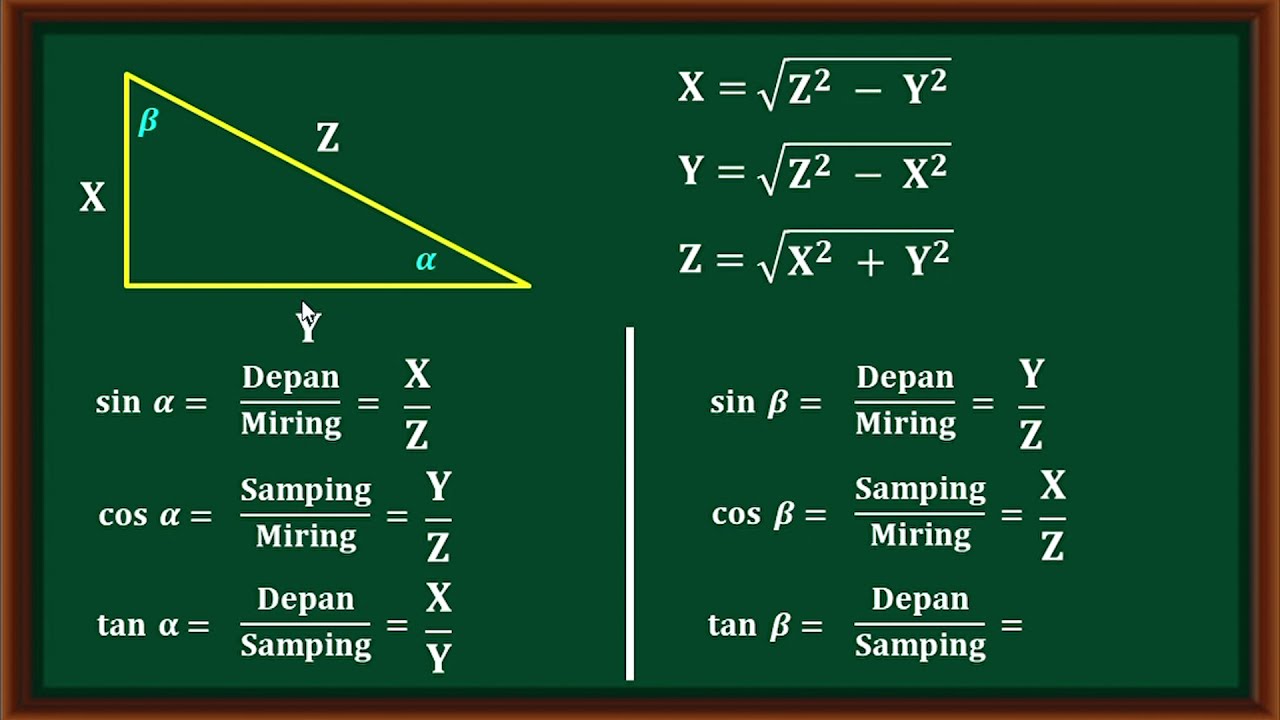
Materi dan soal pembahasan Perbandingan trigonometri dari suatu sudut pada segitiga siku-siku.
5.0 / 5 (0 votes)
