MASA PENDUDUKAN JEPANG DI INDONESIA | IPS SMP KELAS 8
Summary
TLDRIn the early 1940s, Japan sought to occupy Indonesia for economic and political gain during World War II. With the need for natural resources and a strategic military position, Japan quickly advanced through the archipelago, defeating Dutch colonial forces. Japan's occupation brought propaganda promising benefits, but it was followed by harsh repression, forced labor (romusha), and the exploitation of Indonesia's resources. Key policies included military training programs, the formation of pro-Japanese organizations, and severe economic control. The occupation caused immense suffering, triggering lasting changes in Indonesia's society and economy, laying the groundwork for future independence movements.
Takeaways
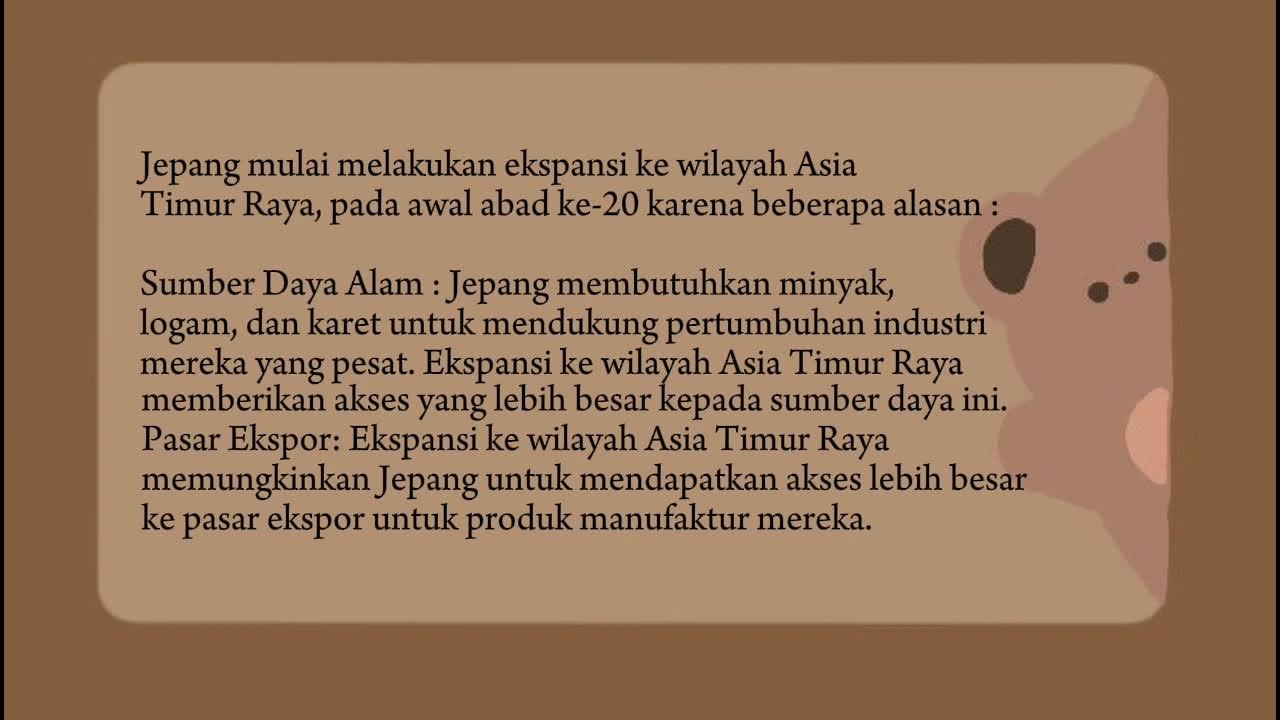
- 😀 Japan's invasion of Indonesia during World War II was driven by economic interests and political ambitions.
- 😀 Japan needed Indonesia's abundant raw materials and aimed to make it a strategic marketplace to compete with Western nations.
- 😀 Japan's military campaign in Indonesia began with the attack on Pearl Harbor on December 8, 1941, followed by landings in Tarakan and Balikpapan in January 1942.
- 😀 On March 5, 1942, Japan captured Batavia (now Jakarta), marking the end of Dutch colonial rule in Indonesia and the beginning of Japan's military administration.
- 😀 Japan's initial propaganda aimed at winning the support of the Indonesian people, with slogans like 'Jepang Pemimpin Asia' (Japan, Leader of Asia) and promises of religious freedom and the use of the Indonesian language.
- 😀 Despite the propaganda, Japan imposed harsh and exploitative policies on the Indonesian population, including forced labor and military conscription.
- 😀 Japan created social organizations like the 3A Movement to control and manipulate Indonesian society, including the 'Putra' and 'Hokokai' groups.
- 😀 Japan formed military and semi-military organizations such as the 'Seinendan' (youth soldiers), 'Fujai' (women’s auxiliary), and 'Heiho' (helpers in the Japanese army).
- 😀 'Romusha' labor camps were established where Indonesians were forced to work in harsh conditions to support Japan's war efforts, including building infrastructure like railways and bridges.
- 😀 The exploitation of Indonesia's natural resources was intensified under Japanese rule, with crops like cassava being used for the Japanese war effort, and agricultural output being heavily requisitioned, leading to widespread famine and disease.
Q & A
Why did Japan target Indonesia during World War II?
-Japan targeted Indonesia primarily for its economic and political interests. The country had abundant natural resources which Japan needed for its industrial purposes, and Japan saw Indonesia as a strategic region to counter Western powers.
What was the first major action Japan took in Southeast Asia during World War II?
-The first major action Japan took was the attack on the U.S. naval base at Pearl Harbor on December 8, 1941, which led to Japan's invasion of Southeast Asia, including Indonesia, starting with the landing in Tarakan on January 11, 1942.
What was the significance of Batavia's fall to Japan?
-The fall of Batavia (now Jakarta) on March 5, 1942, marked the collapse of Dutch colonial rule in Indonesia. After this, the Dutch officially surrendered to Japan on March 8, 1942, and Japan began its military administration of Indonesia.
What propaganda did Japan use to gain support from the Indonesian people?
-Japan used the '3A' slogan to win Indonesian support: 'Japan, Leader of Asia,' 'Japan, Protector of Asia,' and 'Japan, Light of Asia.' They also promised various freedoms, including religious freedom, use of the Indonesian language, and the joint raising of the Indonesian and Japanese flags.
How did Japan's actual rule in Indonesia compare to their promises?
-While Japan promised freedoms and cooperation, their rule was harsh and oppressive. They implemented policies that severely exploited and mistreated the Indonesian population, including forced labor and strict economic control.
What were the primary social organizations created by Japan during its occupation?
-Japan established several social organizations to control and manipulate the population, including 'Gerakan 3A', 'Putra', 'Hokokai,' and 'Masumi'. These organizations were tools for propaganda and were meant to gain the support of the people for Japan’s interests.
What military organizations did Japan form during its occupation of Indonesia?
-Japan formed several military and semi-military organizations such as 'Seinendan' (youth soldiers), 'Fujai' (a women’s organization), 'Keibodan' (auxiliary police), 'Heiho' (auxiliary soldiers), and 'Peta' (a local militia formed to support Japan’s military efforts).
What was the role of forced labor ('romusa') during Japan's occupation?
-Japan imposed 'romusa,' or forced labor, on Indonesians to support the war effort. People were forced to work in construction projects like railroads, bridges, and military fortifications under brutal conditions.
How did Japan exploit Indonesia's natural resources during its occupation?
-Japan exploited Indonesia's natural resources for its war effort. This included taking control of agricultural products, such as rice, and forcing Indonesians to surrender large portions of their harvests. Japan also used Indonesia's resources for military production, such as planting castor oil plants for machine oil.
What were the social and economic consequences of Japan's occupation on the Indonesian people?
-Japan's occupation caused widespread suffering. The forced labor, resource exploitation, and harsh economic policies led to widespread hunger, disease, and social unrest. Many Indonesians died from famine and malnutrition, particularly due to the forced confiscation of agricultural products.
Outlines

This section is available to paid users only. Please upgrade to access this part.
Upgrade NowMindmap

This section is available to paid users only. Please upgrade to access this part.
Upgrade NowKeywords

This section is available to paid users only. Please upgrade to access this part.
Upgrade NowHighlights

This section is available to paid users only. Please upgrade to access this part.
Upgrade NowTranscripts

This section is available to paid users only. Please upgrade to access this part.
Upgrade Now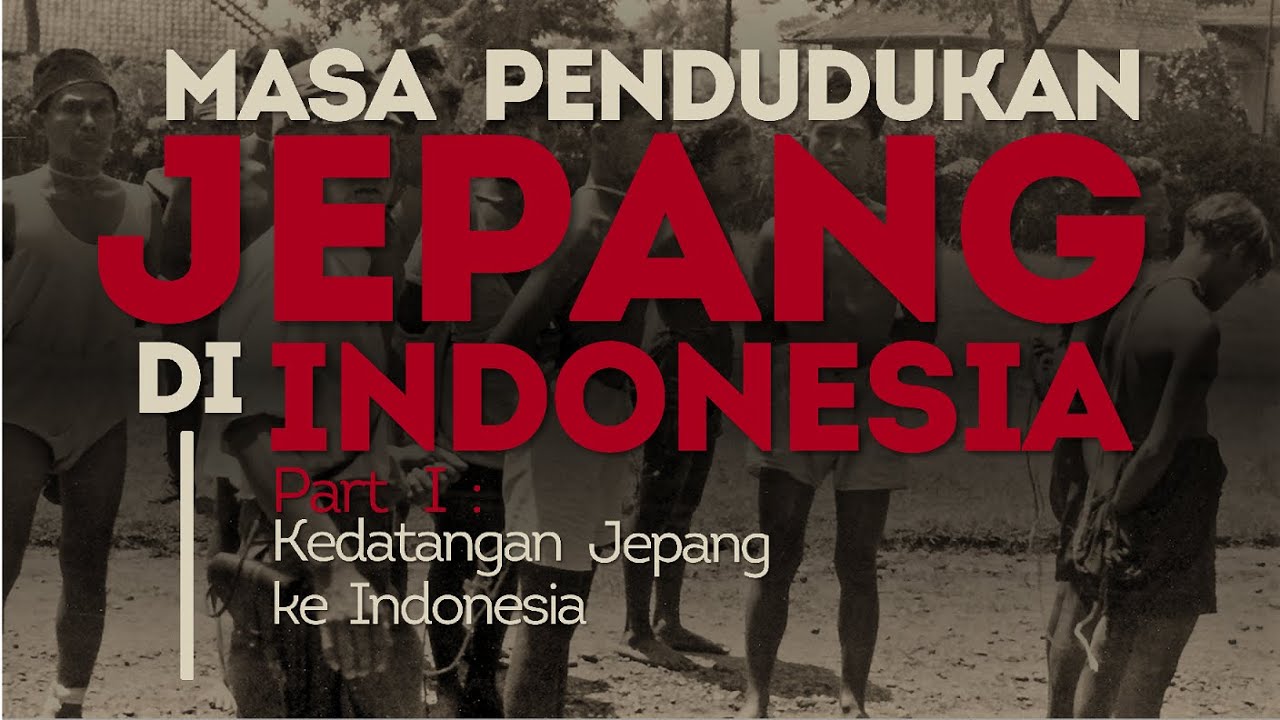

5.0 / 5 (0 votes)
