How US Venezuela Raid Just Triggered The Biggest Wealth Transfer in History
Summary
TLDRThe video explores a historical pattern that has led to the collapse of empires over the past 2,000 years, highlighting the current state of the U.S. as it enters a critical phase. It explains how empires progress through stages—from sound money and expansion to overextension, resource acquisition, and fiscal crisis. The United States, in a desperate bid for resources like Venezuela's oil, mirrors past empire behaviors. The script warns of a coming wealth transfer and advises viewers on how to protect their assets through diversification and acquiring essential skills in anticipation of the inevitable financial reset.
Takeaways
- 😀 The U.S. is currently in the later stages of a historical cycle, similar to the rise and fall of previous empires (Rome, the Dutch, and Britain).
- 😀 Stage 4 in the empire cycle is characterized by desperate resource acquisition, such as military operations to seize oil reserves, like the Venezuelan oil reserves.
- 😀 The U.S. national debt is growing at an alarming rate, with over $38 trillion in debt and $6 trillion added every year, indicating a looming fiscal crisis.
- 😀 The U.S. has reached a critical point where interest payments on national debt are consuming an unsustainable portion of the budget, pushing the country toward fiscal dominance (Stage 6).
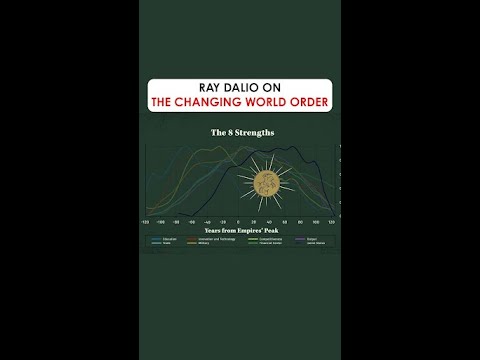
- 😀 Historical patterns show that empires typically go through seven stages: sound money, expansion, military overextension, resource acquisition, loss of confidence, fiscal dominance, and eventual collapse.
- 😀 The U.S. has transitioned from a gold-backed currency (Stage 1) to a fiat currency (Stage 3), similar to previous empires that debased their currencies to maintain power.
- 😀 Wealthy individuals are already fleeing the U.S. in record numbers (142,000 millionaires relocated in 2025), signaling a loss of confidence and early signs of Stage 5 (loss of confidence).
- 😀 The dollar’s dominance as the global reserve currency is weakening, with a growing trend of countries diversifying away from the dollar in favor of alternatives like the yuan and ruble.
- 😀 Hyperinflation or default (Stage 7) is the eventual outcome when empires reach a critical debt-to-GDP ratio, which is a real risk for the U.S. in the coming decades.
- 😀 History consistently shows that those holding hard assets (gold, land, strategic resources) survive empire collapses, while those holding currency lose wealth in the process.
- 😀 The current wealth transfer is a direct result of empire collapse, where resources and assets shift from the declining empire to those who are positioned with tangible assets and strategic foresight.
Q & A
What is the main theme of the video?
-The video discusses a historical pattern of empire cycles that have led to the fall of empires over the last 2,000 years. The pattern is used to analyze the current financial situation of the United States and its inevitable decline, which is following the same historical trajectory.
How does the script explain the decline of empires?
-The decline of empires is explained through a seven-stage cycle: sound money foundation, expansion and social programs, military overextension and debasement, desperate resource acquisition, loss of confidence, fiscal dominance, and collapse and reset. Each stage represents a predictable pattern of behavior that leads to empire collapse.
What is Stage 4 in the cycle, and how does it apply to the United States?
-Stage 4 is 'Desperate Resource Acquisition,' where empires seek to acquire hard assets and natural resources to maintain the illusion of stability. The United States' military operation in Venezuela to take control of oil reserves is presented as a textbook example of Stage 4 behavior.
What is the significance of the U.S. national debt in the context of this analysis?
-The U.S. national debt is growing exponentially, reaching $38.5 trillion. The interest payments on this debt have become unsustainable, consuming a large portion of the government's revenue. This creates a dangerous situation of fiscal dominance, where the debt drives monetary policy, exacerbating the empire's decline.
What historical examples does the video use to illustrate the pattern?
-The video highlights the Roman Empire, the Dutch Empire, and the British Empire as examples of civilizations that followed the same seven-stage cycle of decline. Each empire's collapse is shown to mirror the same stages of overextension, debasement of currency, resource acquisition, and eventual loss of power.
What is the relationship between the U.S. dollar and the concept of empire collapse?
-The U.S. dollar, which was once backed by gold and became the global reserve currency after World War II, is now in decline due to currency debasement and excessive national debt. The video suggests that the dollar's reserve currency status is weakening, similar to how previous empires lost their dominant currencies.
What role does the Venezuela raid play in the narrative?
-The Venezuela raid is portrayed as a critical event in Stage 4 of the empire cycle, where the U.S. takes military action to secure oil reserves. This action is seen as a desperate measure to acquire tangible assets to back an increasingly unstable financial system.
What warning does the video give about the future of the U.S. economy?
-The video warns that the U.S. economy is heading towards a major financial crisis, with inflation, loss of confidence in the dollar, and potential hyperinflation or default. It predicts that the wealth transfer resulting from the collapse will happen within the next 10 to 25 years.
How does the video suggest individuals should prepare for the coming collapse?
-The video advises individuals to educate themselves about monetary history, diversify their wealth into hard assets, acquire specialized skills, build networks, and position a portion of their wealth in tangible assets like gold, silver, and productive land to survive the wealth transfer.
What is the main critique of current financial policies in the U.S.?
-The video criticizes the U.S. government's financial policies of excessive spending, printing money to cover debt, and reliance on a fiat currency. It argues that these policies are unsustainable and will ultimately lead to the collapse of the dollar and a significant wealth transfer from those who hold currency to those who hold hard assets.
Outlines

This section is available to paid users only. Please upgrade to access this part.
Upgrade NowMindmap

This section is available to paid users only. Please upgrade to access this part.
Upgrade NowKeywords

This section is available to paid users only. Please upgrade to access this part.
Upgrade NowHighlights

This section is available to paid users only. Please upgrade to access this part.
Upgrade NowTranscripts

This section is available to paid users only. Please upgrade to access this part.
Upgrade NowBrowse More Related Video





5.0 / 5 (0 votes)
