Kinds of Quantitative Research Designs
Summary
TLDRThe video features Teacher Wren as she explains the different types of quantitative research designs in Practical Research 2. She introduces the distinction between experimental and non-experimental designs, emphasizing key concepts such as variables, cause-and-effect relationships, and methods of difference. The lesson covers true experimental, quasi-experimental, and pre-experimental designs, as well as non-experimental types like survey, descriptive, comparative, correlational, and evaluative research. Through clear explanations and examples, the video guides learners in understanding how each design works and when it is used. The session concludes with encouragement and appreciation for student engagement.
Takeaways
- 📘 Quantitative research designs are broadly categorized into experimental and non-experimental types.
- 🔬 Experimental research focuses on determining cause-and-effect relationships between variables.
- 📊 Variables in research can be numerical or categorical, and they are elements that can be observed or measured.
- 🧪 True experimental design includes independent and dependent variables, pre-tests and post-tests, and both experimental and control groups.
- 🎯 Quasi-experimental design involves manipulating an independent variable but without randomly assigning participants to groups.
- 🧷 Pre-experimental design is the simplest form, often involving one group or multiple groups exposed to a treatment without a control group.
- 📞 Survey research design gathers information from groups of people through methods like face-to-face interviews, phone calls, mail, or online surveys.
- 📝 Descriptive research design portrays characteristics of a population and is used to understand the extent or direction of attitudes and behaviors.
- ⚖️ Comparative research design compares representative samples from two or more groups under normal conditions.
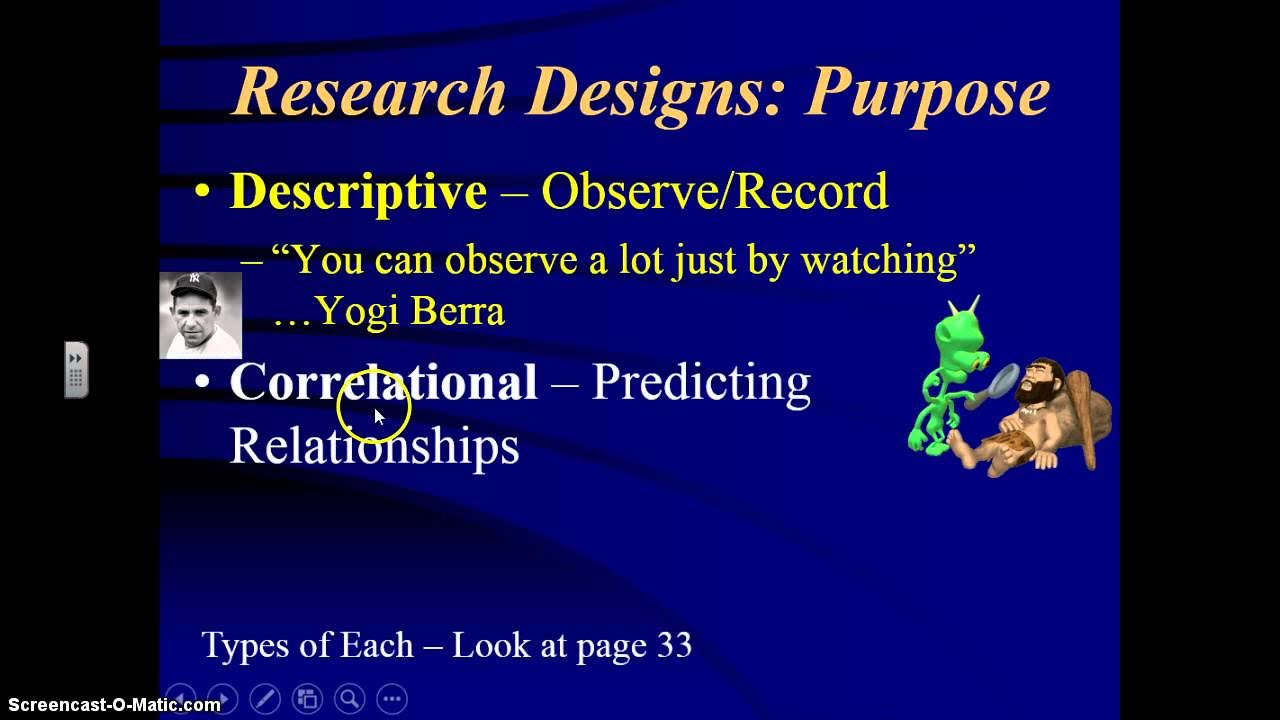
- 🔗 Correlational research design investigates the direction and strength of relationships between variables.
- ✔️ Evaluative research design involves making judgments about value or worth and is used to gather feedback to support decision-making or policy formation.
Q & A
What is the main learning competency addressed in the video?
-The main learning competency is to describe the different kinds of quantitative research designs.
How are quantitative research designs generally classified?
-Quantitative research designs are generally classified into experimental and non-experimental designs.
What is the primary focus of experimental research design?
-Experimental research focuses on determining cause-and-effect relationships by manipulating variables under controlled conditions.
What are variables in the context of research?
-Variables are elements that can assume varied numerical or categorical values and can be observed or measured in a study.
What are the key features of true experimental research design?
-True experimental design includes independent and dependent variables, pre-testing and post-testing, and the use of experimental and control groups.
How does quasi-experimental research differ from true experimental research?
-Quasi-experimental research involves manipulation of the independent variable but lacks random assignment of participants to treatment or control groups.
What characterizes pre-experimental research?
-Pre-experimental research uses one or more groups exposed to an intervention without a control group, making it the simplest form of experimental design.
What is the purpose of survey research design?
-Survey research aims to gather information from samples of a population through methods like face-to-face interviews, phone calls, mail, or online questionnaires.
When is descriptive research design used?
-Descriptive research is used to portray a population based on specific characteristics and to determine the extent or direction of attitudes and behaviors.
What is the focus of comparative research design?
-Comparative research compares two or more groups based on certain variables that occur under natural conditions.
What does correlational research design investigate?
-Correlational research examines the direction and strength of relationships between variables within a particular population.
What is evaluative research design used for?
-Evaluative research is used to assess the worth or value of programs, policies, or interventions and provide feedback for decision-making.
Outlines

This section is available to paid users only. Please upgrade to access this part.
Upgrade NowMindmap

This section is available to paid users only. Please upgrade to access this part.
Upgrade NowKeywords

This section is available to paid users only. Please upgrade to access this part.
Upgrade NowHighlights

This section is available to paid users only. Please upgrade to access this part.
Upgrade NowTranscripts

This section is available to paid users only. Please upgrade to access this part.
Upgrade Now




5.0 / 5 (0 votes)
