Electricity: Crash Course History of Science #27
Summary
TLDRThis video explores the fascinating history of electrical physics, from ancient observations of lightning to the development of modern electrical systems. Key discoveries by pioneers like Benjamin Franklin, Luigi Galvani, Alessandro Volta, and Michael Faraday are highlighted, showcasing the evolution of electricity from static charge experiments to the creation of the first batteries, motors, and generators. The video culminates with Thomas Edison’s efforts in electrifying cities and the rise of the alternating current (AC) system, revolutionizing industries and shaping the world we live in today.
Takeaways
- 😀 The study of electricity dates back to antiquity, with early observations focused on phenomena like lightning and static electricity.
- 😀 Early electrical research was limited by a lack of understanding of electrical current, electrons, and ions, as well as the connection between electricity and magnetism.
- 😀 The 18th century saw key figures like Ben Franklin and Luigi Galvani making significant contributions, such as the lightning rod and the discovery of animal electricity, respectively.
- 😀 Alessandro Volta's creation of the first battery, the voltaic pile, in 1800 marked a major breakthrough in generating steady electric current.
- 😀 Danish physicist Hans Christian Ørsted discovered that electric currents produce magnetic fields, leading to a deeper understanding of electromagnetism in 1820.
- 😀 André-Marie Ampère built on Ørsted's work, formulating Ampère's law, which explained the forces between electric currents and laid the groundwork for electrodynamics.
- 😀 In 1827, Georg Ohm introduced Ohm's law, establishing the relationship between current, voltage, and resistance, which became foundational to electrical engineering.
- 😀 Michael Faraday's work in the 19th century led to key inventions such as the first modern electrical generator and the discovery of electromagnetic induction.
- 😀 James Clerk Maxwell extended Faraday's work and connected light, electricity, and magnetism, formulating the equations that formed the basis for modern electromagnetic theory.
- 😀 Thomas Edison transformed electricity from a scientific curiosity into an industrial application, developing a practical electrical grid and playing a central role in the electrification of New York City in the late 19th century.
Q & A
What were the earliest known observations about electricity?
-Early observations of electricity came from phenomena like lightning and static electricity. People noticed that lightning was a powerful release of energy, but it was difficult to study. Static electricity, however, was more accessible and involved electrical charge produced by friction, such as when petting a cat and receiving a shock.
What was the major discovery made by Hans Christian Ørsted in 1820?
-In 1820, Hans Christian Ørsted discovered that electric currents produce magnetic fields. This was a pivotal moment in linking electricity and magnetism, showing that an electric current could cause a compass needle to change direction.
How did Alessandro Volta contribute to the study of electricity?
-Alessandro Volta created the first practical method of generating electricity—the voltaic pile, which was the first battery. This battery used pairs of copper and zinc discs separated by briny material to create a steady electric current, marking a major breakthrough in electrical science.
What was the role of Luigi Galvani in the development of electrical physics?
-Luigi Galvani is credited with discovering the concept of 'animal electricity' after observing a frog’s leg twitch when exposed to an electric spark. His work contributed to the understanding of electricity in biological systems and inspired further exploration into the electrical nature of nerve impulses.
What is Ohm’s law and who discovered it?
-Ohm's law, discovered by German physicist Georg Ohm in 1827, states that the electrical current between two points is directly proportional to the voltage and inversely proportional to the resistance. The formula is expressed as I = V/R, where I is current, V is voltage, and R is resistance.
What is the significance of James Clerk Maxwell's work in electromagnetism?
-James Clerk Maxwell's work was crucial in connecting electricity, magnetism, and light. He formulated a set of equations that described how electromagnetic waves propagate and demonstrated that light is a form of electromagnetic energy. His work laid the foundation for modern physics and influenced Einstein's theories.
How did Thomas Edison contribute to the development of electrical power systems?
-Thomas Edison revolutionized electrical power by envisioning and developing the first practical electrical grid. He worked on generating electricity, distributing it to homes and businesses, and creating useful electrical products like the incandescent light bulb. His vision helped shape modern electricity use.
What was the Current War, and why is it significant?
-The Current War was a public battle between Thomas Edison and George Westinghouse over the best method of electrical power distribution. Edison supported direct current (DC), while Westinghouse promoted alternating current (AC). This conflict was crucial in determining the future of electrical systems, with AC ultimately becoming the standard for large-scale power transmission.
What role did Michael Faraday play in the development of electromagnetism?
-Michael Faraday made significant contributions to electromagnetism, including discovering electromagnetic induction, which is the generation of electricity in one wire by the changing magnetic field of another wire. He also invented the first modern electrical generator and helped explain the link between electricity and magnetism.
How did the invention of the voltaic pile influence the Industrial Revolution?
-The voltaic pile created a stable source of electricity, which became crucial for powering various technologies during the First Industrial Revolution. However, the need for understanding and utilizing electricity practically grew, leading to the development of motors, lights, and eventually large-scale electrical systems that powered industries and cities.
Outlines

This section is available to paid users only. Please upgrade to access this part.
Upgrade NowMindmap

This section is available to paid users only. Please upgrade to access this part.
Upgrade NowKeywords

This section is available to paid users only. Please upgrade to access this part.
Upgrade NowHighlights

This section is available to paid users only. Please upgrade to access this part.
Upgrade NowTranscripts

This section is available to paid users only. Please upgrade to access this part.
Upgrade NowBrowse More Related Video
L'électricité - Qu'est ce que c'est ?
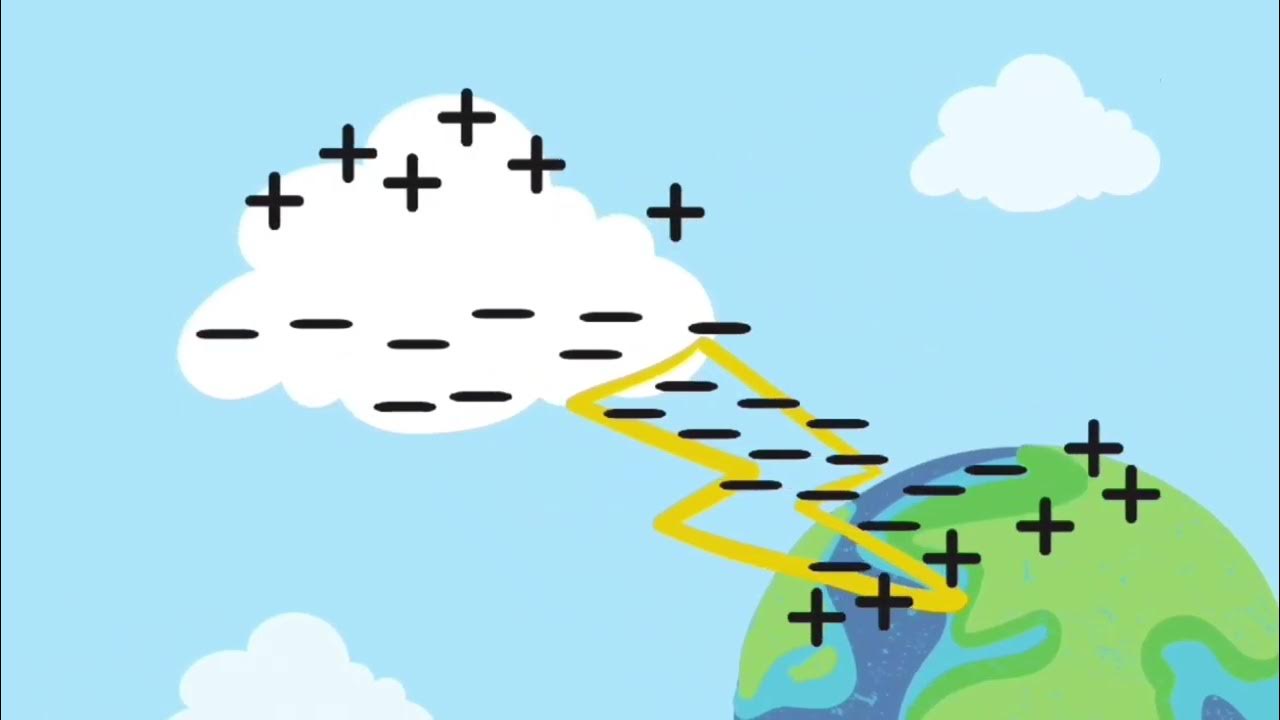
Bagaimana petir dan kilat terjadi dan apa hubungannya dengan listrik statis?

Pesquisa em Pauta - História da Engenharia Elétrica
The Science of Lightning | National Geographic

How to Stay Safe in a Lightning Storm

Solar Energy - How Do Solar Panels Work? - [Video for Kids] #education #learningjunction
5.0 / 5 (0 votes)
