Programme 11 The relationship between science and religion
Summary
TLDRThis video script explores the complex relationship between science and religion, using Galileo's persecution as a case study. It highlights the conflict between the Catholic Church and Galileo over his heliocentric theory, uncovering personal and political factors behind the controversy. The script presents four models of interaction between science and religion: conflict, independence, interaction, and integration. By referencing historical figures like Isaac Newton, it shows that science and religion have coexisted in various forms, with science often prompting religious reflection and vice versa. The video encourages viewers to consider these models in understanding the evolving relationship between the two domains.
Takeaways
- 😀 Galileo’s persecution by the church is seen as a key example of organized religion attempting to hinder scientific progress, although it was more about a personal conflict with Pope Urban VI.
- 😀 While the church's interference with Galileo's work is widely criticized, it’s important to note that the pope actually encouraged Galileo to write his book and provided some input on its content.
- 😀 The real issue arose from Galileo’s handling of the pope's argument in his book, where he pointed out that the pope’s views were unscientific and made fun of him, leading to the conflict.
- 😀 Some religious people use gaps in scientific knowledge to argue for the existence of God, pointing to phenomena like thunder and lightning as divine acts.
- 😀 Believers are often forced to adjust their views as science progresses and disproves earlier religious claims, especially when it comes to scientific discoveries that challenge traditional beliefs.
- 😀 The relationship between science and religion can be seen through different lenses, with the 'conflict model' being one of the most prominent, where the two are considered in direct opposition.
- 😀 An alternative view is the 'independence model,' which suggests that science and religion deal with separate domains—science addresses 'how' things work, while religion addresses 'why' things exist.
- 😀 The 'interaction model' proposes that science and religion, while distinct, can occasionally overlap and offer insights to each other, as seen with the idea of original sin and evolutionary theory.
- 😀 Science sometimes challenges traditional religious beliefs, such as the separation between humans and animals or the concept of extraterrestrial life fitting into religious doctrines.
- 😀 The 'integration model' advocates for science and religion working together in the pursuit of understanding, exemplified by the involvement of clergy in the Royal Society and Isaac Newton's belief that studying God’s creation was a natural extension of studying God.
Q & A
What was Galileo's major scientific contribution that led to his persecution by the church?
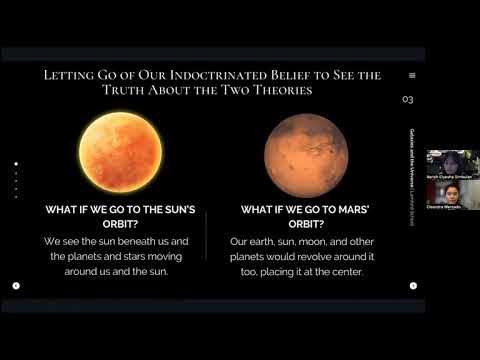
-Galileo's major contribution was his support for the heliocentric model of the universe, where the Earth revolves around the Sun, contrary to the geocentric view held by the church at the time.
Why did Galileo's book, 'Dialogue Concerning the Two Chief World Systems,' lead to his trial?
-Galileo's book was controversial because it supported the heliocentric theory. Although Pope Urban VI had initially encouraged him to write it, the book ridiculed the pope's own argument for a geocentric universe, which led to Galileo being put on trial.
How did Pope Urban VI respond to Galileo's book?
-Pope Urban VI had initially encouraged Galileo's work but became enraged when Galileo mocked his own argument for a geocentric universe in the book. The pope later sought to have Galileo condemned for heresy.
What role did religion play in the conflict between science and faith, according to the transcript?
-Religion, especially in the case of the church, often hindered scientific progress, as seen in Galileo's persecution. However, the conflict is not inherent to all religious belief, and some religious views have been compatible with scientific discovery.
What is the relationship between science and religion as described in the transcript?
-The transcript presents several models of the relationship between science and religion: conflict, independence, interaction, and integration. Each of these models represents a different way of reconciling or understanding the two fields.
What is the 'independence model' in the context of science and religion?
-The independence model suggests that science and religion deal with separate questions—science addresses 'how' the universe works, while religion addresses 'why' it exists. The two are seen as complementary rather than conflicting.
What is the 'integration model' for science and religion?
-The integration model proposes that science and religion work together in a common pursuit of understanding, with both contributing to a fuller comprehension of the world and existence, as seen in the example of the Royal Society's early members who were both scientists and clergy.
How did the example of St. Augustine anticipate some scientific ideas?
-St. Augustine anticipated the idea of evolution and the absence of a literal time before creation. His theological ideas showed a blending of religious thought with concepts that later became part of scientific understanding.
How does science challenge religious views, according to the transcript?
-Science challenges religious views by making new discoveries that contradict certain religious beliefs, such as the literal interpretation of the Genesis creation story or the relationship between humans and animals, which science shows to be more interconnected than previously thought.
What was the role of religious figures in early scientific institutions like the Royal Society?
-Many early members of the Royal Society, including its first chairman Bishop John Wilkins, were religious figures. This highlights how religion and science were often seen as compatible, with religious belief fostering an interest in the study of God's creation.
Outlines

This section is available to paid users only. Please upgrade to access this part.
Upgrade NowMindmap

This section is available to paid users only. Please upgrade to access this part.
Upgrade NowKeywords

This section is available to paid users only. Please upgrade to access this part.
Upgrade NowHighlights

This section is available to paid users only. Please upgrade to access this part.
Upgrade NowTranscripts

This section is available to paid users only. Please upgrade to access this part.
Upgrade Now


5.0 / 5 (0 votes)
