Why Don't Houses Have Walls Anymore?
Summary
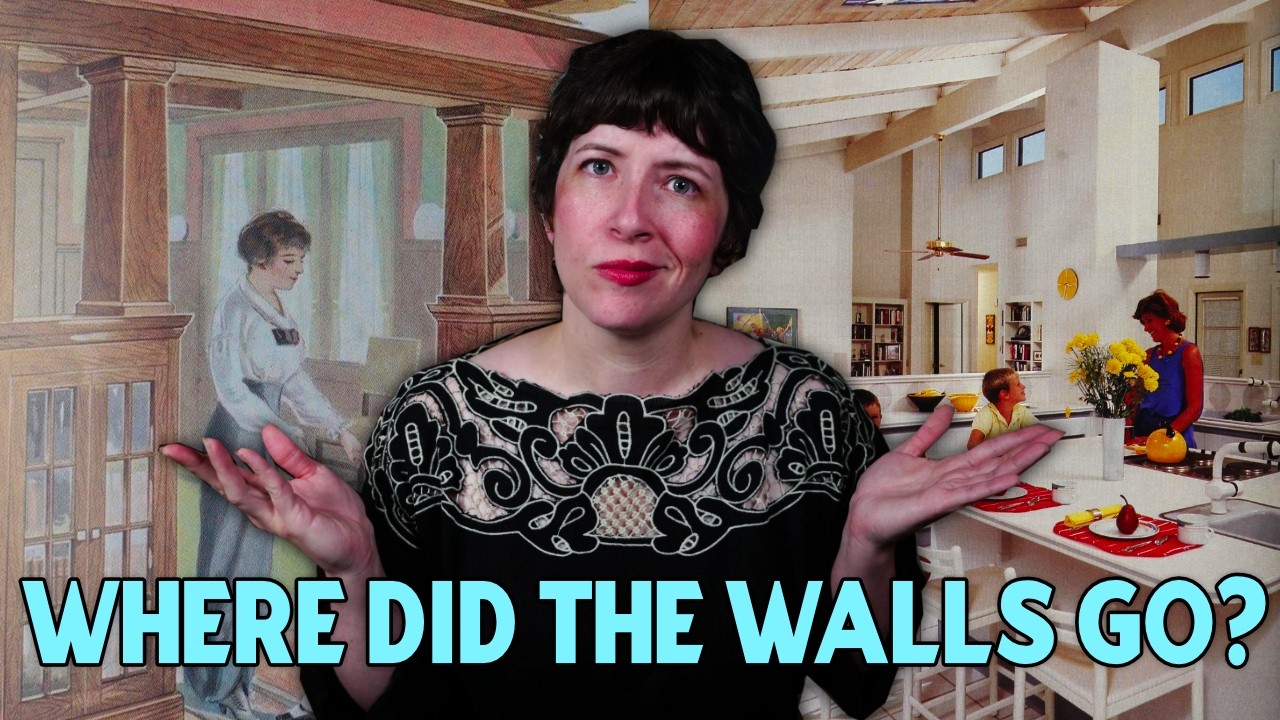
TLDRThe video explores the evolution of home design, tracing the shift from the traditional, compartmentalized Victorian-era homes to today’s popular open concept layouts. It highlights the reasons for small, separate rooms in older homes, such as privacy, heating, and structural limitations. The transition to open spaces began with pioneering architects like Frank Lloyd Wright and evolved with advancements in technology, societal changes, and the post-World War II housing boom. By the 1990s, open concept living became the norm, reflecting modern preferences for large, connected family spaces over formal, segmented rooms.
Takeaways
- 😀 Open concept floor plans, combining living, dining, and kitchen spaces into one, have become the standard in modern American homes.
- 😀 Historically, homes were divided into smaller rooms for practical reasons, such as heating, cooling, privacy, and social formality.
- 😀 Before central heating, each room typically had its own fireplace or stove to maintain warmth, making smaller, closed-off rooms necessary.
- 😀 Privacy and social etiquette in the past led to the separation of rooms like dining and kitchen areas, especially in wealthier households where the kitchen was hidden away.
- 😀 Victorian homes had distinct spaces for different functions, reinforcing class divisions and maintaining privacy between the family and servants.
- 😀 Structural limitations, like wooden framing and lack of steel beams, made it challenging to create open spaces in early homes.
- 😀 Architects like Henry Hobson Richardson experimented with more open layouts in the late 1800s, paving the way for the future of open-plan designs.
- 😀 Frank Lloyd Wright is considered the father of the open floor plan, with designs that combined spaces like living and dining rooms as early as 1901.
- 😀 Advances in heating and cooling technology in the early 20th century reduced the need for small rooms, allowing for more open layouts.
- 😀 Post-WWII, American families embraced open floor plans as a way to prioritize family connection over formality, with kitchens becoming central to home life.
- 😀 By the 1990s, open-concept living became the default in new homes, with the kitchen, dining, and living areas blending into one shared space.
Q & A
Why did older homes have many small, separate rooms instead of open layouts?
-Small rooms helped retain heat in the winter, allowed better airflow control in summer, reinforced social formality, kept kitchens hidden, and were structurally necessary before modern materials enabled larger spans.
How did heating technology influence the shift toward open floor plans?
-Central heating—first radiators, then forced-air systems—made it possible to warm larger spaces evenly, reducing the need for numerous enclosed rooms to contain heat.
Why were kitchens historically hidden or isolated from other rooms?
-Kitchens were noisy, messy, and hot, and often operated by servants. Social norms dictated that food preparation be hidden from guests, so kitchens were placed in the back or in separate wings.
What early architectural changes signaled a move toward openness before the modern open concept?
-Architects like H.H. Richardson and designers of Shingle-style or Arts & Crafts homes introduced wider openings, double parlors, and more flowing layouts that connected rooms visually and physically.
How did Frank Lloyd Wright influence the development of the open floor plan?
-Wright designed early 1900s homes with unified living and dining spaces, minimized unnecessary rooms, and emphasized free-flowing interiors, making him a pioneer of modern open concepts.
What role did new construction materials play in enabling more open designs?
-Materials like steel and reinforced concrete allowed architects to remove load-bearing interior walls, making it possible to create large, unobstructed spaces.
Why didn’t open floor plans become mainstream immediately in the early 20th century?
-Traditional floor plans were deeply ingrained, many homeowners preferred formal spaces, and Wright’s designs mostly served wealthy clients. Wider acceptance required cultural and technological changes.
How did World War II and the postwar housing boom contribute to open concept living?
-Postwar families favored informal living and togetherness. Mass-produced suburban homes incorporated modern ideas, making open kitchens, den connections, and multipurpose great rooms widely accessible.
What mid-century developments helped popularize open layouts in everyday homes?
-Ranch houses, split-levels, Eichler homes, and the rise of the family room all showcased more openness, integrating kitchens, dining, and living spaces into flexible, shared areas.
Why did the kitchen evolve into the social center of the home?
-Changing lifestyle norms, smaller average house sizes, more casual family dynamics, and the desire for connection during daily activities encouraged bringing the kitchen into shared living space.
By the 1990s, why had the open concept become the default in new construction?
-Homebuyers overwhelmingly preferred large, multi-functional great rooms, and builders standardized open layouts in response, while renovation trends knocked down walls in older homes.
What social values are reflected in today’s open concept homes?
-Modern layouts emphasize informality, family togetherness, visibility, flexibility of space use, and the idea that cooking and living should be shared, integrated experiences.
Outlines

This section is available to paid users only. Please upgrade to access this part.
Upgrade NowMindmap

This section is available to paid users only. Please upgrade to access this part.
Upgrade NowKeywords

This section is available to paid users only. Please upgrade to access this part.
Upgrade NowHighlights

This section is available to paid users only. Please upgrade to access this part.
Upgrade NowTranscripts

This section is available to paid users only. Please upgrade to access this part.
Upgrade NowBrowse More Related Video

Sitting Through History: The Evolution of the Wingback Chair

Open Concept Layout vs. Traditional Closed Floor Plan: Pros & Cons (Watch this before you renovate!)

Why the Victorian mansion is a horror icon

Why Japanese People Stopped Living in Traditional Japanese Houses
The History of Open Concept is Sexism

I watched 151 celebrity house tours and they’re full of lies
5.0 / 5 (0 votes)
