"Age of the Sea Floor" Pangea Plate Tectonics (english version)
Summary
TLDRThis video explores the relationship between the age of the seafloor and plate tectonics. The seafloor, which is continuously created at divergent boundaries like the Mid-Atlantic Ridge, plays a critical role in the movement of continents. As new seafloor forms, it pushes older crust outward, allowing scientists to track plate movements and identify divergent boundaries. The video compares the East and West coasts of North America, examining how different seafloor ages and rates of formation contribute to our understanding of plate tectonics, refining current models and highlighting key geological differences.
Takeaways
- 🌍 The age of the seafloor provides strong evidence supporting the theory of plate tectonics.
- 🧓 Continents are geologically old, while the seafloor is comparatively young.
- 🌋 New seafloor is created continuously at divergent boundaries, such as mid-ocean ridges.
- ➡️ As new seafloor forms, it pushes older seafloor outward, causing continental movement.
- 🌊 The Mid-Atlantic Ridge is a major divergent boundary responsible for splitting Pangaea apart.
- 📈 Seafloor age increases as you move away from mid-ocean ridges toward continental shelves.
- 🗺️ Age-mapping of the seafloor helps scientists identify divergent boundaries around the world.
- 🔍 Comparing coasts (e.g., East vs. West of North America) reveals differences tied to plate boundary types.
- ⚖️ Divergent boundaries do not all produce seafloor at the same rate, which affects plate motion.
- 🧭 Patterns in young versus old seafloor help refine and improve models of plate tectonics.
Q & A
How does the age of the seafloor support the theory of plate tectonics?
-The age of the seafloor supports plate tectonics by showing how new seafloor is created at divergent boundaries, moving away from these boundaries over time and pushing the continents with it. This continuous process of seafloor creation and movement provides evidence for tectonic plate movement.
Why is the seafloor much younger than the continents?
-The seafloor is much younger than the continents because it is constantly being created at divergent boundaries, such as mid-ocean ridges. As new crust forms, the older seafloor is pushed away, making it younger than the continents, which are more stable and older.
What role does the Mid-Atlantic Ridge play in plate tectonics?
-The Mid-Atlantic Ridge is a divergent boundary where new seafloor is created. It played a key role in breaking apart Pangaea and continues to push the seafloor outward, contributing to the movement of tectonic plates.
How does the age of the seafloor change as you move away from the Mid-Atlantic Ridge?
-As you move away from the Mid-Atlantic Ridge, the age of the seafloor increases. The seafloor is youngest at the ridge and becomes progressively older as you move farther away toward the continental shelf.
What can we learn by examining the age of the seafloor?
-By examining the age of the seafloor, we can identify divergent boundaries, understand the process of seafloor spreading, and refine our models of plate tectonics, gaining a better understanding of how tectonic plates move and interact.
Why are the East and West coasts of North America different?
-The East and West coasts of North America are different due to their distinct tectonic settings. The East coast is located along a passive margin, with older, stable crust, while the West coast is more tectonically active, with tectonic plate interactions along the Pacific Plate boundary.
How does the comparison between the Mid-Atlantic Ridge and the eastern edge of the Pacific Plate help us understand tectonic activity?
-By comparing the Mid-Atlantic Ridge with the eastern edge of the Pacific Plate, we can observe differences in seafloor age, tectonic activity, and the rate of seafloor spreading, providing insights into how different divergent boundaries function and how they affect their surrounding regions.
Do all divergent boundaries produce seafloor at the same rate?
-No, not all divergent boundaries produce seafloor at the same rate. The rate of seafloor creation can vary depending on factors such as the location, tectonic activity, and the specific characteristics of the divergent boundary.
What does the presence of young red seafloor indicate?
-The presence of young red seafloor indicates active seafloor spreading at divergent boundaries. This fresh, newly-formed seafloor is typically found near mid-ocean ridges and is evidence of tectonic activity.
How does the age of the seafloor help refine models of plate tectonics?
-The age of the seafloor provides important data that helps refine models of plate tectonics by offering insights into the rates of seafloor spreading, the dynamics of divergent boundaries, and the overall movement of tectonic plates over time.
Outlines

This section is available to paid users only. Please upgrade to access this part.
Upgrade NowMindmap

This section is available to paid users only. Please upgrade to access this part.
Upgrade NowKeywords

This section is available to paid users only. Please upgrade to access this part.
Upgrade NowHighlights

This section is available to paid users only. Please upgrade to access this part.
Upgrade NowTranscripts

This section is available to paid users only. Please upgrade to access this part.
Upgrade Now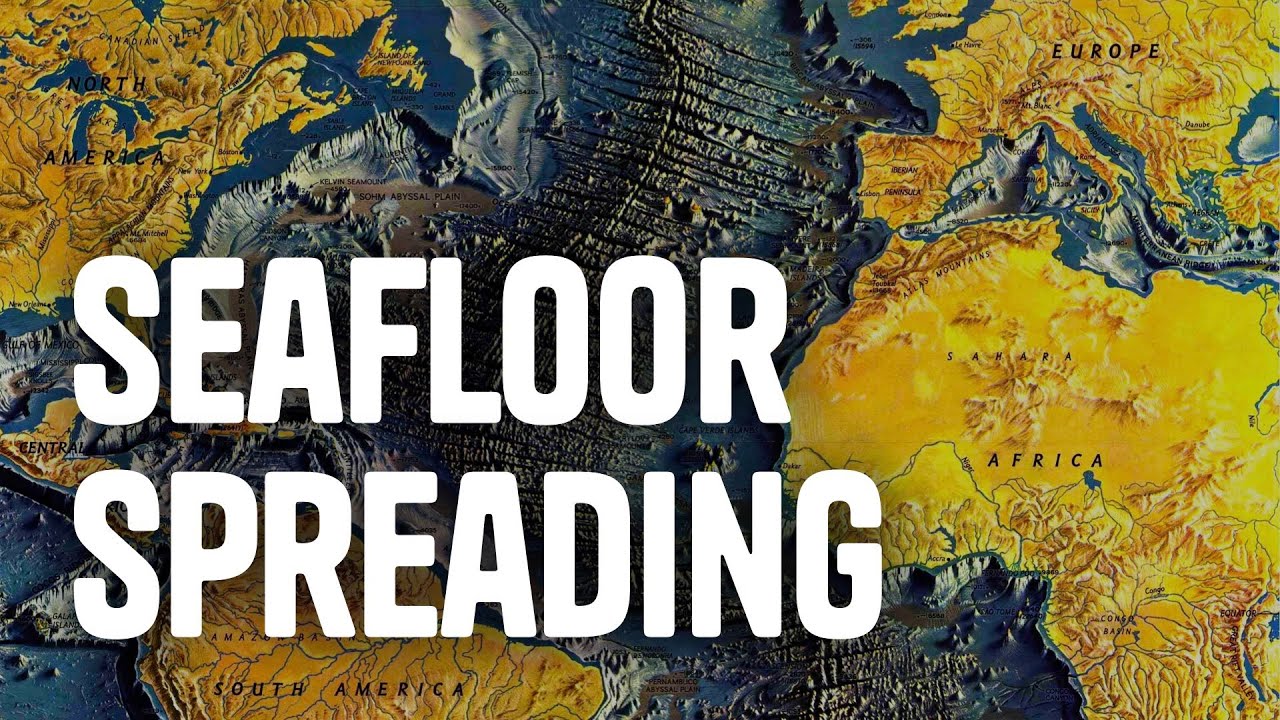




5.0 / 5 (0 votes)
