Quantum Computers: Explained VISUALLY
Summary
TLDRThis video explores the fascinating world of quantum mechanics and its practical applications, focusing on key quantum systems like electron spin, hydrogen atoms, and superconducting circuits. It delves into the concepts of superposition, entanglement, and quantum bits (qubits), explaining how quantum states can be manipulated to perform tasks like quantum computing. The video also touches on quantum properties like superconductivity and the creation of artificial atoms in superconducting circuits. By defying classical limitations, these quantum systems are paving the way for revolutionary advancements in technology, from atomic clocks to quantum computers.
Takeaways
- 😀 Quantum mechanics is the foundation of our understanding of the universe, and quantum computing builds on this strange foundation by directly controlling quantum states.
- 😀 Richard Feynman’s famous quote, 'If you think you understand quantum mechanics, you don’t understand quantum mechanics,' is challenged by modern technologies like quantum computers which harness quantum weirdness for practical use.
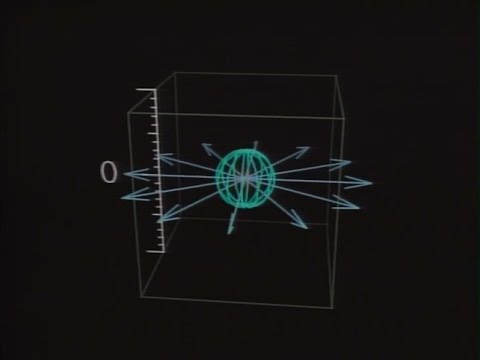
- 😀 In quantum mechanics, electrons have a property called spin, which behaves like a tiny magnet, with only two possible states: spin up or spin down.
- 😀 Quantum systems allow for superposition, where an electron can be in a combination of both spin up and spin down at the same time, a state not possible in classical systems.
- 😀 The Block Sphere is a visual representation of superposition, where quantum states like spin up and spin down can be combined in various ways, with two key angles, theta and phi, that define the state.
- 😀 Superposition allows quantum systems to exist in multiple states at once, unlike classical systems which can only be in one state at a time.
- 😀 In atoms like hydrogen, electrons can occupy multiple discrete energy levels, and lasers of specific frequencies can transition electrons between these levels, forming the basis for quantum bits or qubits.
- 😀 A laser pulse of the right duration can create superpositions of atomic states, much like superposition in electron spins, where quantum states are manipulated using precise energy pulses.
- 😀 Entanglement occurs when two quantum systems (like atoms) are in a state where the measurement of one affects the state of the other, even at a distance, and is crucial for quantum computing.
- 😀 Superconducting qubits, currently leading the quantum computing field, are created using superconducting circuits that exhibit quantum properties, and their behavior is controlled using radio waves instead of lasers.
- 😀 To create entanglement in superconducting qubits, two qubits are placed close together on a chip, where their interactions lead to entanglement, which is essential for quantum computation.
Q & A
What is the main reason quantum mechanics feels counterintuitive compared to classical physics?
-Quantum mechanics allows systems to exist in superposition and exhibit probabilistic outcomes upon measurement, unlike classical systems that always have definite states.
Why is electron spin considered a useful model for a qubit?
-Electron spin has two discrete measurable states—spin up and spin down—which can form superpositions, making it a natural two-level quantum system suitable for qubits.
What does the Bloch sphere represent in the context of qubits?
-The Bloch sphere is a geometric representation of all possible pure states of a two-level quantum system, with angles that encode probabilities and phase information for superpositions.
What role does the phase angle φ (phi) play in a qubit’s state?
-The phase angle φ determines how qubits interfere with one another during quantum operations, influencing multi-qubit algorithmic behavior even though it doesn’t affect single-qubit measurement probabilities.
How do lasers enable transitions between energy levels in a hydrogen atom?
-Lasers provide photons with specific energies. If the photon energy matches the difference between two atomic energy levels, the electron can absorb or emit photons to transition between those states.
What is a π (pi) pulse and why is it important?
-A π pulse is a laser or microwave pulse long enough to fully transfer a system from one state to another on the Bloch sphere, corresponding to a 180° rotation. It is essential for controlling quantum state transitions.
How is an equal superposition between two atomic states created?
-By applying a π/2 pulse—half the duration of a π pulse—so the system is rotated only halfway on the Bloch sphere, producing a balanced superposition of the two states.
What makes an entangled state different from a regular superposition?
-In an entangled state, measuring one particle provides information about the other, even when they are spatially separated. Regular superpositions do not exhibit such correlated outcomes.
How do superconducting qubits mimic the behavior of atoms?
-Superconducting circuits have quantized energy levels due to Cooper-pair dynamics, effectively creating artificial atoms whose state transitions can be controlled using microwave signals.
What is the function of a Josephson junction in a superconducting qubit?
-The Josephson junction provides the necessary nonlinearity that gives the circuit distinct energy levels, enabling it to function as a controllable qubit rather than a simple harmonic oscillator.
How is entanglement generated in superconducting circuits?
-By placing two qubits close together on the chip so that they interact electromagnetically, allowing controlled coupling operations that produce entangled states.
Why do superconductors allow current to flow without resistance?
-At low temperatures, electrons form Cooper pairs—bosonic quasiparticles that can all occupy the same quantum ground state—resulting in dissipation-free electrical flow.
Outlines

This section is available to paid users only. Please upgrade to access this part.
Upgrade NowMindmap

This section is available to paid users only. Please upgrade to access this part.
Upgrade NowKeywords

This section is available to paid users only. Please upgrade to access this part.
Upgrade NowHighlights

This section is available to paid users only. Please upgrade to access this part.
Upgrade NowTranscripts

This section is available to paid users only. Please upgrade to access this part.
Upgrade Now



5.0 / 5 (0 votes)
