What is AGROFORESTRY..? An overview, Benefits & Examples
Summary
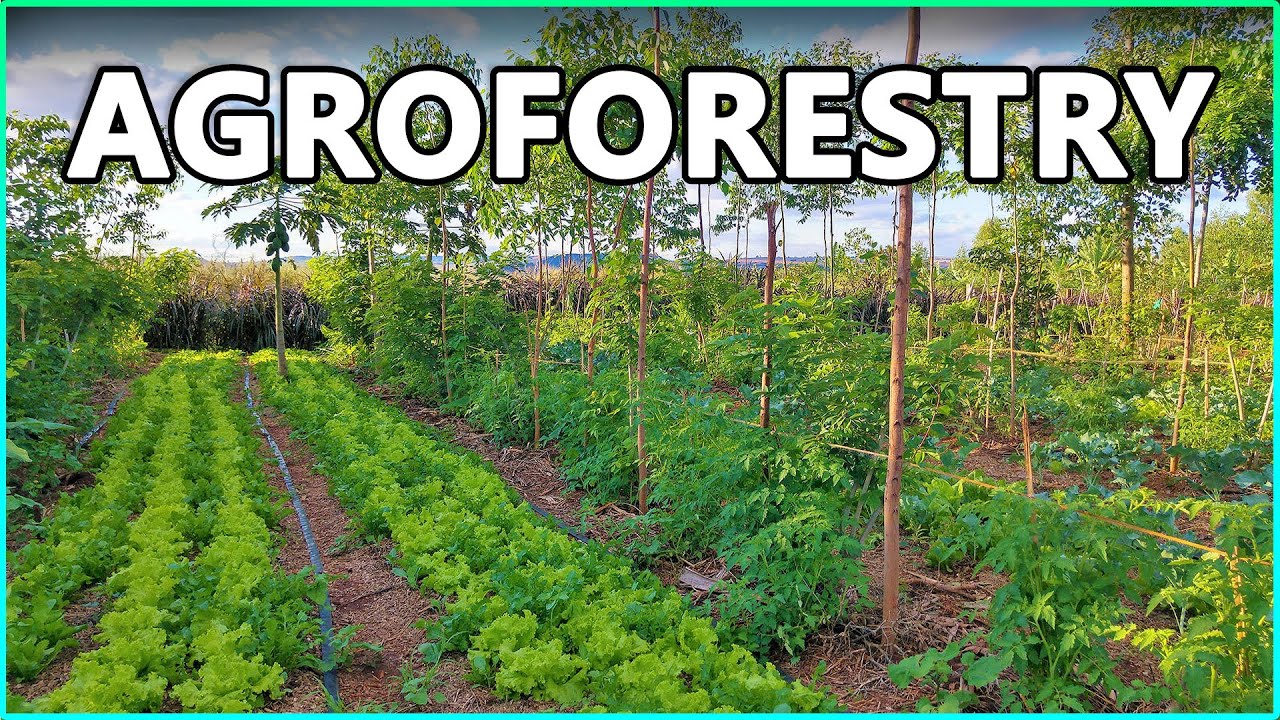
TLDRAgroforestry, practiced on 16% of the world’s crop and grasslands, offers significant climate change benefits, from carbon sequestration to enhancing smallholder incomes. By integrating trees with agriculture, agroforestry reduces heat stress, mitigates droughts, prevents erosion, and lowers pesticide use. Carbon storage in woody perennials and sustainable agricultural practices play a key role in reaching net-zero targets. The approach, blending traditional knowledge with modern food systems, is a crucial strategy for climate change adaptation and landscape restoration, providing long-term benefits for both the environment and farmers.
Takeaways
- 😀 16% of the world's crop and grasslands are under agroforestry management, contributing to climate change mitigation and adaptation.
- 😀 Agroforestry plays a significant role in sequestering carbon, helping to combat climate change by capturing carbon dioxide.
- 😀 Trees on farmlands help to reduce heat stress for crops, diversify incomes for smallholders, and support climate adaptation.
- 😀 Agroforestry is a key component of landscape restoration initiatives aimed at fighting climate change.
- 😀 Small plants in agroforestry systems sequester carbon, with woody perennials capturing more carbon per unit area and storing it for longer.
- 😀 A 160-year-old beech tree with a 70 cm diameter can store up to 60 tons of carbon dioxide in its trunk and roots.
- 😀 When trees are cut, carbon can be retained in wood used for construction or biochar for soil enhancement.
- 😀 Carbon sinks, like agroforestry, are crucial for achieving the net-zero carbon emissions target, as not all emissions can be avoided in the near future.
- 😀 Good agricultural practices, such as planting leguminous trees, mulching, and optimizing fertilizer use, enhance soil fertility and moisture retention.
- 😀 Agroforestry has been used for millennia by farmers as a sustainable land use practice, and integrating traditional knowledge into modern systems is essential for resilient food production.
Q & A
What is the current global percentage of crop lands and grasslands under agroforestry management?
-Approximately 16% of the world's crop lands and grasslands are under some form of agroforestry management.
How do trees contribute to climate change mitigation in agroforestry systems?
-Trees in agroforestry systems sequester carbon dioxide from the atmosphere, helping to mitigate climate change by storing carbon in their biomass, particularly in woody perennials, and reducing the need for chemical inputs.
What role does agroforestry play in landscape restoration initiatives?
-Agroforestry is a key component of landscape restoration initiatives, helping restore ecosystems, sequester carbon, and adapt to climate change, all while promoting biodiversity and supporting smallholder farmers' livelihoods.
What is the relationship between tree diameter and carbon storage?
-The larger the diameter of a tree, the more carbon it can store in its trunk and roots. For example, a 160-year-old beech tree with a diameter of 70 cm can store up to 60 tons of carbon dioxide.
Why are carbon sinks important for achieving the net zero target?
-Carbon sinks, such as those found in agroforestry systems, are crucial for absorbing carbon dioxide from the atmosphere, especially as not all anthropogenic greenhouse gas emissions can be avoided in the near future. They play a vital role in reaching the net zero target.
What are some practical examples of good agricultural practices in agroforestry systems?
-Some good agricultural practices include planting leguminous trees, using green manure, mulching, optimizing fertilizer use, and planting trees on slopes to prevent erosion, improve soil fertility, and reduce the need for irrigation.
How do trees improve microclimates in agroforestry systems?
-Trees in agroforestry systems help improve microclimates by providing shade, reducing heat stress for crops and livestock, and mitigating the impacts of droughts.
What is the role of biodiversity in agroforestry systems?
-Agroforestry systems benefit from biodiversity by combining species that are susceptible to different types of pests and diseases, which can naturally help control pests and reduce the need for pesticides.
How has agroforestry been used historically by farmers?
-Agroforestry has been a sustainable and productive land use practice by farmers for millennia. Farmers have long integrated trees and other plants into their farming systems for soil fertility, climate resilience, and economic benefits.
How does agroforestry contribute to more resilient food systems?
-Agroforestry contributes to more resilient food systems by diversifying incomes, enhancing soil health, reducing the need for chemical inputs, and providing natural protection against climate change impacts such as drought and heat stress.
Outlines

This section is available to paid users only. Please upgrade to access this part.
Upgrade NowMindmap

This section is available to paid users only. Please upgrade to access this part.
Upgrade NowKeywords

This section is available to paid users only. Please upgrade to access this part.
Upgrade NowHighlights

This section is available to paid users only. Please upgrade to access this part.
Upgrade NowTranscripts

This section is available to paid users only. Please upgrade to access this part.
Upgrade NowBrowse More Related Video




5.0 / 5 (0 votes)
