Laboratory Glassware and their Uses. #chemistry
Summary
TLDRThis video explores common laboratory glassware and their specific uses, providing a clear guide for students and professionals alike. It covers essential items such as beakers, Erlenmeyer flasks, volumetric flasks, graduated cylinders, pipettes, burettes, test tubes, watch glasses, funnels, and reagent bottles. Each piece of glassware is described in terms of its design, function, and typical applications in laboratory experiments, emphasizing accuracy, safety, and efficiency. By understanding the purpose of each tool, viewers can enhance their practical laboratory skills and ensure proper handling, measurement, and storage of chemicals during experiments.
Takeaways
- 🧪 Beakers are primarily used for holding, mixing, and heating liquids but are not suitable for precise measurements.
- ⚗️ Erlenmeyer flasks are ideal for mixing by swirling without spilling, while volumetric flasks are used for preparing solutions with precise volumes.
- 🔬 Round-bottom flasks are designed for even heating of liquids, often in distillation processes.
- 🧫 Test tubes are used for small-scale reactions, heating, and holding samples, usually placed in a rack for stability.
- 📏 Pipettes transfer precise volumes of liquids, with volumetric pipettes for exact volumes and graduated pipettes for variable volumes.
- 💧 Burettes deliver precise liquid volumes, making them essential for titrations due to their graduated scale.
- 🥛 Graduated cylinders provide accurate measurement of liquid volumes, more precise than beakers but less precise than volumetric flasks.
- 🔹 Watch glasses are used for evaporating small amounts of liquid, covering beakers, or holding solid samples.
- ⛓️ Funnels facilitate the transfer of liquids or powders into containers with narrow openings, with filter funnels used for separation with filter paper.
- 🔥 Crucibles are designed to heat substances to very high temperatures safely.
- 🌡️ Condensers are used to cool hot vapors into liquids, commonly in distillation setups.
- 💡 Choosing the correct glassware is crucial for experimental accuracy, safety, and efficiency, and the type of glass should be suitable for heat and chemical resistance.
Q & A
What is the primary function of a beaker in a laboratory?
-A beaker is primarily used for mixing, heating, and holding liquids. It can also be used for rough measurements of volume.
How does an Erlenmeyer flask differ from a beaker?
-An Erlenmeyer flask has a narrow neck and a conical shape, which makes it ideal for mixing solutions without spilling and for use in titrations, unlike a beaker which has straight sides.
Why is a volumetric flask important in preparing solutions?
-A volumetric flask is designed for precise volume measurements, making it essential for preparing standard solutions and accurate dilutions.
When should a graduated cylinder be used instead of a beaker?
-A graduated cylinder should be used when precise measurement of liquid volume is required, as it provides more accurate readings than a beaker.
What are common uses for a test tube in experiments?
-Test tubes are used for small-scale chemical reactions, heating samples, and observing reactions in a controlled, contained environment.
What role does a burette play in a titration?
-A burette allows precise dispensing of liquids, making it ideal for measuring the exact volume needed in titrations to reach the endpoint.
How does a pipette ensure accuracy in transferring liquids?
-A pipette is designed to measure and transfer small, precise volumes of liquid, minimizing errors compared to pouring or using other containers.
In what ways can a watch glass be used in the laboratory?
-A watch glass can hold small samples, evaporate liquids, or cover beakers to prevent contamination or splashing.
What is the purpose of using a funnel in laboratory procedures?
-A funnel is used to transfer liquids or powders into containers easily, and it can also support filter paper for separating solids from liquids.
Why are reagent bottles important in a laboratory?
-Reagent bottles safely store chemicals, such as acids and bases, preventing contamination and exposure while ensuring easy access during experiments.
Outlines

This section is available to paid users only. Please upgrade to access this part.
Upgrade NowMindmap

This section is available to paid users only. Please upgrade to access this part.
Upgrade NowKeywords

This section is available to paid users only. Please upgrade to access this part.
Upgrade NowHighlights

This section is available to paid users only. Please upgrade to access this part.
Upgrade NowTranscripts

This section is available to paid users only. Please upgrade to access this part.
Upgrade NowBrowse More Related Video

Cocktail Glasses - essentials and favorites
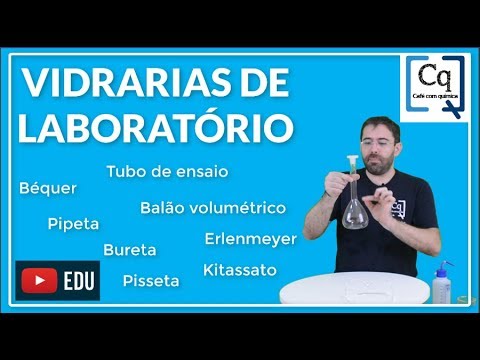
VIDRARIAS DE LABORATÓRIO

Glaswerk en Practicum Benodigdheden
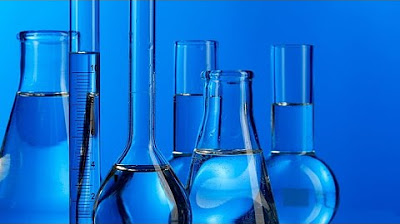
Common Scientific Glassware and the Undergraduate Chemistry Laboratory

Basic Laboratory Techniques - MeitY OLabs

Penentuan Kadar Miconazole dalam salep dengan menggunakan metode Spektrofotometri Uv-Vis
5.0 / 5 (0 votes)
