Past Simple | An Easy English Grammar Lesson
Summary
TLDRIn this engaging lesson, the English Panda channel teaches the past simple tense, covering regular and irregular verbs, negative sentences, and question formation. Through fun examples, viewers learn to use the tense to describe past actions. Regular verbs simply add '-ed' (e.g., 'watched'), while irregular verbs change form entirely (e.g., 'go' becomes 'went'). The video also addresses making negative sentences using 'didn't' and keeping verbs in their base form. Viewers are encouraged to practice and subscribe for more lessons, fostering both learning and engagement.
Takeaways
- 😀 The past simple tense helps us talk about actions that happened in the past and are already finished.
- 😀 Regular verbs in past simple are formed by adding '-ed' to the base form (e.g., 'watched', 'played').
- 😀 When a regular verb ends with a consonant, vowel, consonant, the last letter is doubled before adding '-ed' (e.g., 'stopped').
- 😀 Irregular verbs don't follow the '-ed' rule and change in different ways (e.g., 'go' becomes 'went', 'eat' becomes 'ate').
- 😀 It’s important to memorize the forms of irregular verbs, as they don’t follow a single rule.
- 😀 Negative sentences in the past simple are formed using 'didn't' + the base verb (e.g., 'I didn't go').
- 😀 Even in negative sentences, the base form of the verb is used after 'didn't'.
- 😀 Questions in past simple are formed by using 'Did' + subject + base verb (e.g., 'Did you watch the movie?').
- 😀 A call-to-action is included, encouraging viewers to subscribe to the channel and give a thumbs up if they enjoy the content.
- 😀 The video encourages learners to practice past simple by using both regular and irregular verbs and to ask questions in conversations.
Q & A
What is the main focus of the video?
-The video focuses on teaching the past simple tense in English, including how to use regular and irregular verbs, as well as how to form negative sentences and questions.
How do we form regular verbs in the past simple tense?
-Regular verbs are formed in the past simple tense by adding '-ed' to the base verb. For example, 'watch' becomes 'watched' and 'work' becomes 'worked.'
What is an exception when adding '-ed' to regular verbs?
-If the last three letters of a regular verb are consonant, vowel, consonant (CVC), we double the final consonant before adding '-ed.' For example, 'stop' becomes 'stopped.'
Can you give some examples of irregular verbs in the past simple tense?
-Yes! Some examples include: 'go' becomes 'went,' 'eat' becomes 'ate,' and 'take' becomes 'took.' These verbs do not follow the '-ed' rule.
What should you do if you want to make a negative sentence in the past simple?
-To make a negative sentence in the past simple, use 'didn't' followed by the base form of the verb. For example: 'I didn’t go to the party.'
How do we form questions in the past simple tense?
-To form questions in the past simple, start with 'Did' followed by the subject and the base verb. For example: 'Did you see the movie?' or 'Did they run in the race?'
What is the role of 'did' in the past simple tense?
-'Did' is used as an auxiliary verb to form both negative sentences and questions in the past simple tense. It is followed by the base form of the verb.
What is the significance of the special request about subscriptions?
-The special request encourages viewers to subscribe to the channel and give a thumbs up if they find the content helpful, as this helps the channel grow and reach more learners.
What should viewers do after watching the video?
-Viewers are encouraged to practice using past simple by talking about their past experiences with both regular and irregular verbs, and to ask questions in future conversations.
What is the benefit of understanding the past simple tense?
-Understanding the past simple tense helps English learners talk about past events and actions. It's essential for forming sentences that describe completed actions or experiences.
Outlines

This section is available to paid users only. Please upgrade to access this part.
Upgrade NowMindmap

This section is available to paid users only. Please upgrade to access this part.
Upgrade NowKeywords

This section is available to paid users only. Please upgrade to access this part.
Upgrade NowHighlights

This section is available to paid users only. Please upgrade to access this part.
Upgrade NowTranscripts

This section is available to paid users only. Please upgrade to access this part.
Upgrade NowBrowse More Related Video
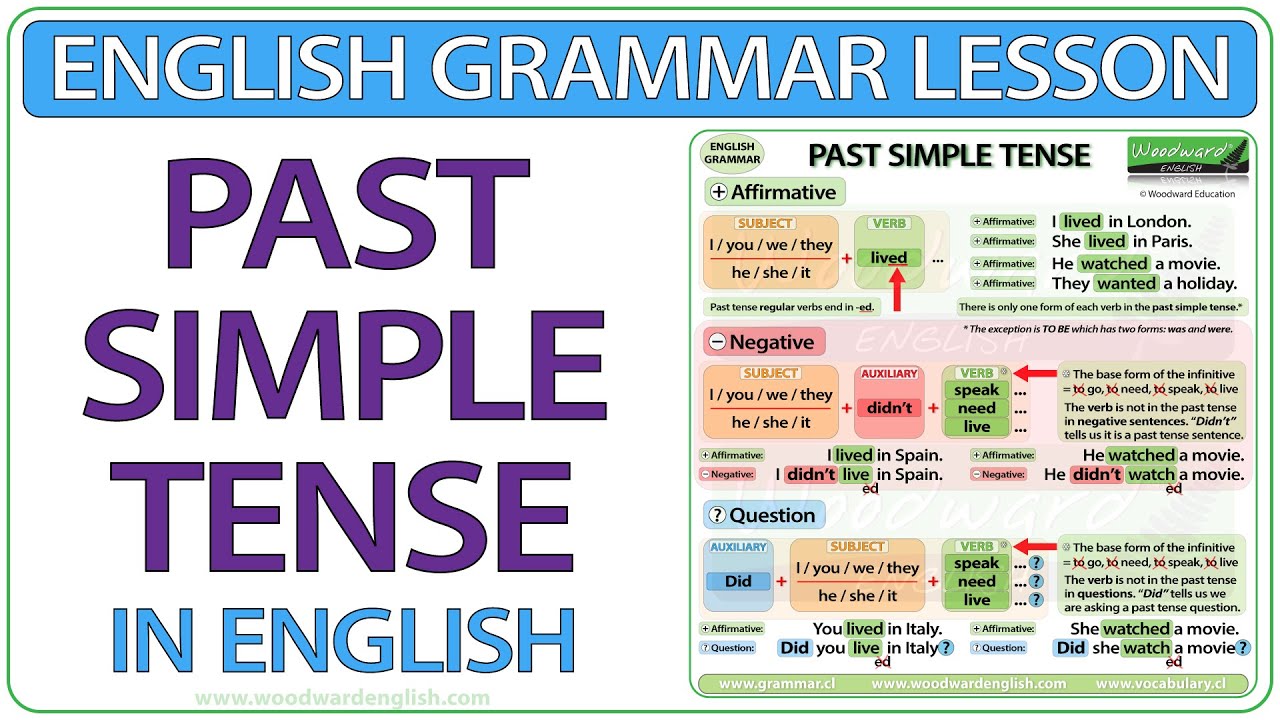
Past Simple Tense in English - Regular and Irregular Verbs Grammar lesson

Cara Mudah Belajar Simple Past Tense - Kampung Inggris LC

SIMPLE PAST: aprenda a falar sobre o PASSADO em inglês (DID) | Aula 06 - English in Brazil
The Present Perfect Tense | English Grammar Lesson
Belajar Simple Past Tense Mudah - Bahasa Inggris kelas 8

Present simple (all verbs) | Learn English | Canguro English
5.0 / 5 (0 votes)
