Motivational Interviewing for Registered Dietitians
Summary
TLDRIn this video, dietitian and personal trainer Katie introduces motivational interviewing (MI) as a valuable tool for dietitians across various practices, including clinical, community, and private practice settings. Katie highlights key MI strategies such as open-ended questions, affirmations, reflective listening, and summaries to guide clients towards positive behavior change. She emphasizes the importance of empathy, authentic affirmations, and focusing on the client's motivations. With practical examples, Katie encourages dietitians to integrate MI techniques to empower clients, improve communication, and foster lasting changes in health and nutrition habits.
Takeaways
- 😀 Motivational interviewing (MI) is a counseling style that guides clients toward positive behavior change through a client-centered approach.
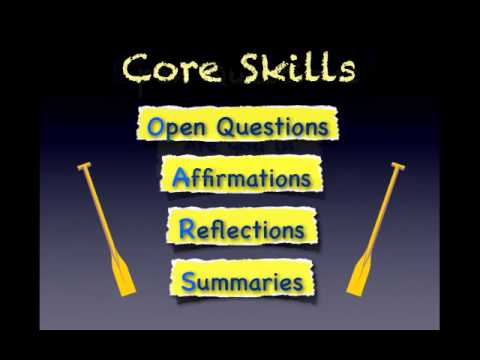
- 😀 MI uses strategies like open-ended questions, affirmations, reflective listening, and summaries to help clients feel heard and empowered.
- 😀 Open-ended questions give clients the autonomy to elaborate, fostering deeper conversations and uncovering underlying barriers to change.
- 😀 Close-ended questions tend to limit the conversation and may prevent clients from sharing important details about their goals and challenges.
- 😀 Affirmations should be genuine and focused on highlighting the client’s positive attributes and efforts, helping to build self-efficacy.
- 😀 It’s important to empathize with clients' challenges without crossing the line into therapy, keeping the focus on health and nutrition.
- 😀 Reflective listening involves paraphrasing what the client says to ensure understanding and to validate their feelings and experiences.
- 😀 When practicing reflective listening, avoid simply repeating the client's words; aim to reflect the meaning and emotions behind their words.
- 😀 Summaries are useful when clients provide a lot of information, helping to focus on key points and clarify any confusion in the conversation.
- 😀 Always validate the client's feelings and concerns, and be cautious about implying emotions that were not explicitly stated by the client.
Q & A
What is motivational interviewing (MI)?
-Motivational interviewing is a counseling style aimed at guiding clients toward positive behavior change by focusing on their autonomy and using techniques like open-ended questions, affirmations, reflections, and summaries. It is client-centered and encourages self-directed change.
How does MI differ from other counseling methods?
-MI is distinct in that it is client-guided rather than clinician-driven. Unlike authoritarian approaches, MI emphasizes collaboration and empowers the client to explore their own motivations and barriers to change.
What does the acronym OARS stand for in MI?
-OARS stands for Open-ended questions, Affirmations, Reflective listening, and Summaries. These are the core strategies used in motivational interviewing to facilitate positive behavior change.
Why are open-ended questions important in MI?
-Open-ended questions allow clients to provide more detailed, thoughtful responses, fostering deeper conversations. They help uncover the reasons behind a client’s hesitation to change and allow for exploration of personal barriers.
Can you provide an example of an open-ended question?
-An example of an open-ended question would be: 'It sounds like you want to work out five days per week, but you’re struggling to follow through. How realistic would it be for you to reduce that goal to three times per week?' This invites the client to elaborate on their feelings and reasoning.
How can affirmations be used in motivational interviewing?
-Affirmations are used to recognize and highlight a client's positive attributes and efforts. They build the client's self-efficacy by acknowledging their strengths, which encourages continued progress. It's important that affirmations are genuine and not overdone.
What is the difference between affirmations and being a cheerleader?
-Affirmations should be sincere and reflect the client’s positive qualities or behaviors, while being a cheerleader might involve excessive or insincere praise. The goal of affirmations is to build the client's confidence without overpraising or sounding patronizing.
What role does reflective listening play in MI?
-Reflective listening is a technique where the clinician paraphrases or mirrors the client’s statements to show understanding and ensure accurate interpretation. It also helps the client feel heard and validates their emotions, which is essential for building rapport and trust.
How should a dietitian reflect back what a client says during a conversation?
-A dietitian should reframe the client's words to ensure clarity and avoid misunderstandings. For example, if a client says they’re struggling to work out regularly due to a busy schedule, the dietitian might reflect: 'You’re committed to exercising, but with your busy schedule, working out five times a week feels unrealistic. What would feel more achievable for you?'
What is the purpose of summaries in MI?
-Summaries are used to consolidate and clarify what the client has shared, especially when there is a lot of information or the client is unfocused. Summarizing helps ensure the clinician has understood the client's goals and challenges and guides the conversation toward actionable next steps.
Can you give an example of a summary in MI?
-A summary could be: 'Let me see if I have this right so far: You want to eat more meals at home to improve your nutrition and save money, but you’re unsure because it feels time-consuming. How would you feel about starting small, like preparing fruits and veggies on Sundays to make the process easier?' This helps clarify the client’s goals and encourages actionable steps.
Outlines

This section is available to paid users only. Please upgrade to access this part.
Upgrade NowMindmap

This section is available to paid users only. Please upgrade to access this part.
Upgrade NowKeywords

This section is available to paid users only. Please upgrade to access this part.
Upgrade NowHighlights

This section is available to paid users only. Please upgrade to access this part.
Upgrade NowTranscripts

This section is available to paid users only. Please upgrade to access this part.
Upgrade NowBrowse More Related Video
Introduction to Motivational Interviewing

5 Nutrition Care Process Overview for Clinical NDs

Machteld Huber lange versie - uitleg Positieve Gezondheid

Moving work items around using the Azure DevOps Migration Tools

How do you have patient-centered conversations? Motivational Interviewing Basics

Clinical Interviewing Role Play Part 2
5.0 / 5 (0 votes)
