A Beginner's Guide to Designing a Relational Database (Databases 101)
Summary
TLDRThis video provides a comprehensive guide to designing relational databases, emphasizing the importance of normalization to eliminate redundancy and maintain data integrity. It outlines key steps in the design process, including requirement analysis, conceptual and logical design, and practical implementation considerations like data types and indexing. The video also highlights security measures, such as strong password policies and role-based access control, along with the significance of documentation for ongoing maintenance. Overall, it serves as a valuable resource for developers looking to build efficient and secure databases.
Takeaways
- 😀 Relational databases are ideal for structured data, complex queries, and strong integrity.
- 😀 Requirement analysis is crucial to understand who will use the database and what data it will store.
- 😀 Conceptual design involves brainstorming entities and attributes before finalizing the schema.
- 😀 Logical design focuses on adding constraints to ensure data integrity, including entity and referential integrity.
- 😀 Normalization helps eliminate redundancy and ensures that data is structured efficiently.
- 😀 Keys and constraints are vital; primary keys should be unique and not null, while foreign keys maintain relationships between tables.
- 😀 Use surrogate keys for better performance and stability, as they are less likely to change than natural keys.
- 😀 Data types should be chosen carefully for efficiency, and constraints should be enforced to prevent invalid data entry.
- 😀 Physical design includes considerations for indexing to enhance query performance without degrading write operations.
- 😀 Security measures like strong password enforcement, role-based access control, and regular backups are essential for database integrity.
Q & A
What are the main steps in the database design process?
-The main steps include requirement analysis, conceptual design, logical design, normalization, and physical design.
What is normalization in database design?
-Normalization is the process of organizing data in a database to reduce redundancy and improve data integrity by ensuring that non-key attributes depend only on primary keys.
What are the types of integrity mentioned in the script?
-The types of integrity include entity integrity, referential integrity, and domain integrity.
How does the First Normal Form (1NF) differ from the Second Normal Form (2NF)?
-1NF requires that all fields contain atomic values with no repeating groups, while 2NF requires that all non-key attributes depend on the entire primary key.
Why is it important to choose appropriate data types in physical design?
-Choosing appropriate data types enhances storage efficiency, ensures data integrity, and can improve performance.
What are some security measures recommended for database design?
-Recommended security measures include enforcing strong passwords, using encryption, implementing role-based access control, logging access to sensitive data, and conducting regular backups.
What role do indexes play in database performance?
-Indexes improve query performance by allowing faster data retrieval, but excessive indexing can degrade write performance and increase storage requirements.
What is the purpose of using surrogate keys?
-Surrogate keys simplify database design by providing a unique identifier for each record, which helps maintain consistency and can enhance performance.
What is the significance of documentation in database design?
-Documentation helps maintain clarity and understanding of the database structure and functionality, making it easier for developers and users to work with the database.
How can AI tools assist in database management?
-AI tools can generate reports, visualize database structures, and automate routine management tasks, saving time and improving efficiency.
Outlines

This section is available to paid users only. Please upgrade to access this part.
Upgrade NowMindmap

This section is available to paid users only. Please upgrade to access this part.
Upgrade NowKeywords

This section is available to paid users only. Please upgrade to access this part.
Upgrade NowHighlights

This section is available to paid users only. Please upgrade to access this part.
Upgrade NowTranscripts

This section is available to paid users only. Please upgrade to access this part.
Upgrade NowBrowse More Related Video
RELATIONAL DATABASE | Sistem Basis Data
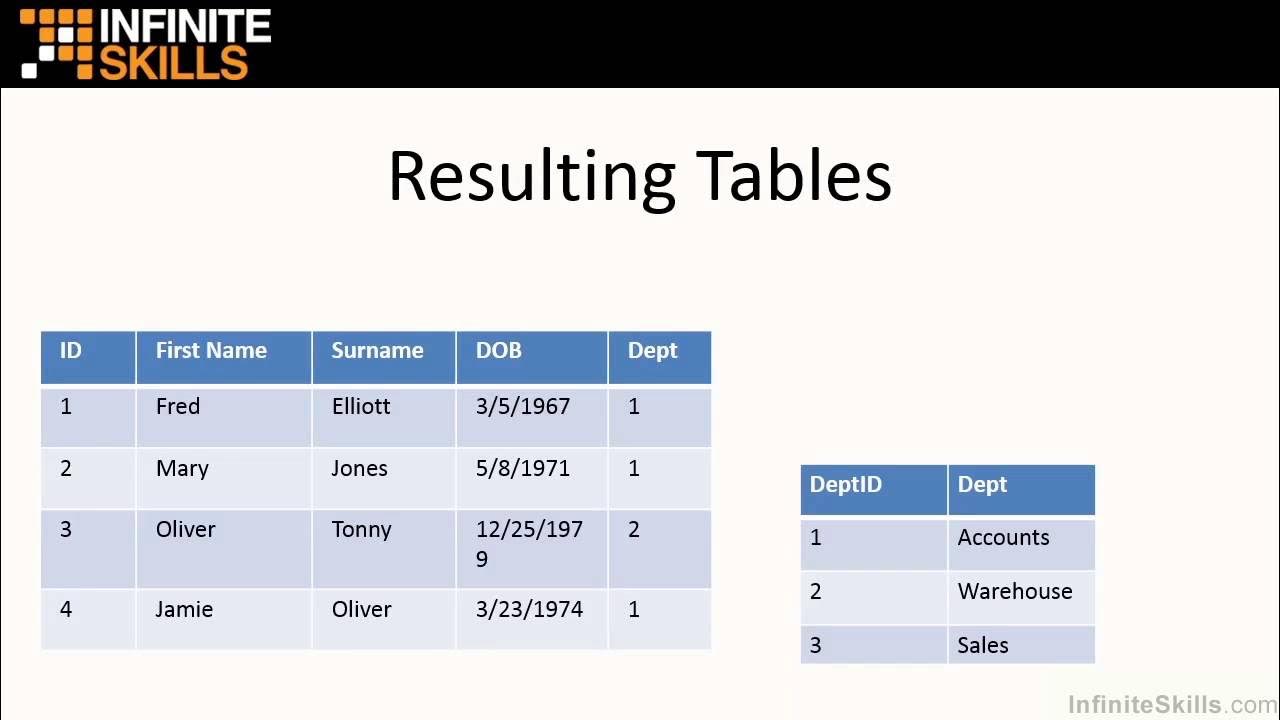
SQL Tutorial | Relational Databases and Key Terms Explained

Lec-20: Introduction to Normalization | Insertion, Deletion & Updation Anomaly

Database Normalization In DBMS | Boyce Codd Normal Form ( BCNF ) And 1NF 2NF 3NF Explained

Normalization In SQL | SQL Normalization Tutorial | Database Normalization Forms | Simplilearn

DS-09: Normalisasi Database 1NF 2NF hingga 3NF
5.0 / 5 (0 votes)
