What is Metabolism?
Summary
TLDRThis video explains metabolism as the sum of all controlled chemical reactions in a cell. It highlights the distinction between anabolic reactions, which build molecules, and catabolic reactions, which break them down. At the core of metabolism is the citric acid cycle, a vital process that powers cellular activities. Interestingly, some bacteria run this cycle in reverse, using simple molecules like water and CO2 to create complex ones. This insight into metabolism's role could deepen our understanding of life's origins and guide the search for life beyond Earth.
Takeaways
- 🔬 Cellular metabolism is the sum total of all controlled chemical reactions inside a cell.
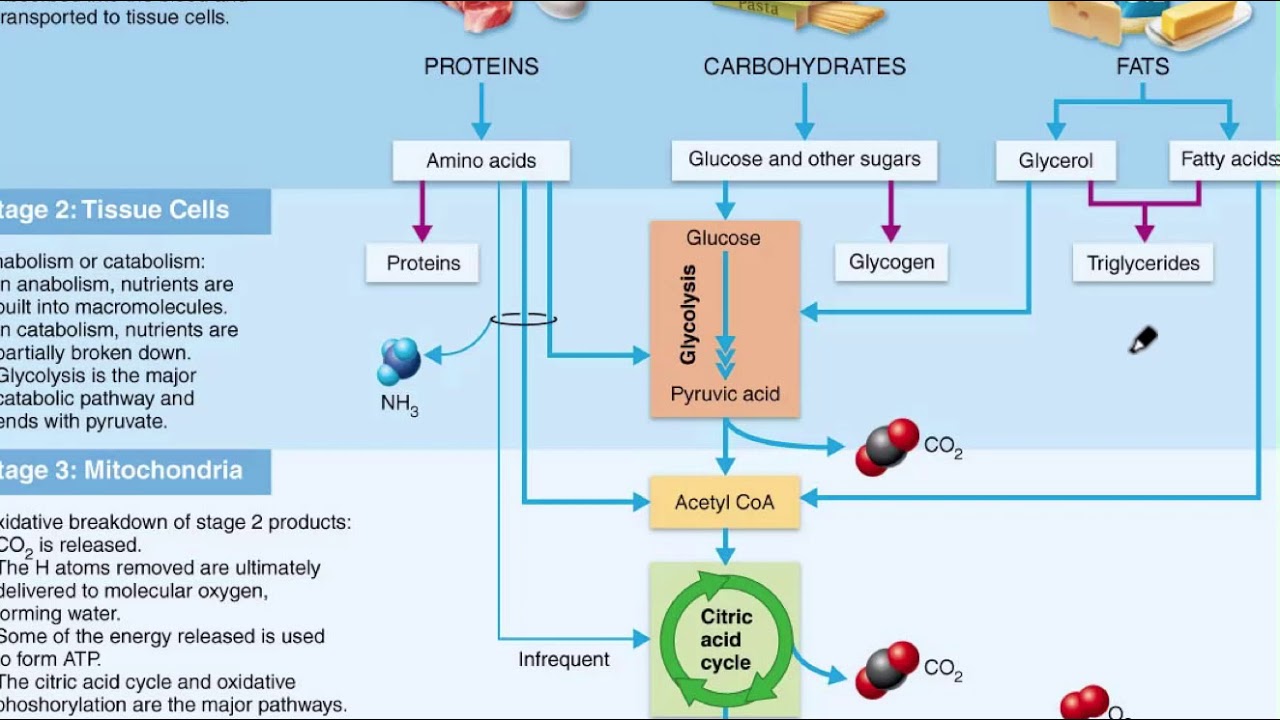
- ⚖️ Metabolism includes both anabolic reactions (building molecules) and catabolic reactions (breaking molecules).
- 🍏 Food is broken down into sugars, fats, and amino acids, which cells use to create new molecules and energy.
- ♻️ Cells are constantly renewing themselves, such as skin cells every 48 days and bones every 10 years.
- 🔄 The citric acid cycle, or Krebs cycle, is a universal and essential metabolic pathway for breaking down food into energy.
- 🚀 Understanding metabolism may provide clues about the origins of life and where to search for life in the universe.
- 🌍 The citric acid cycle exists in almost all species, suggesting it’s ancient and central to life.
- 🔄 In some bacteria, the reverse citric acid cycle produces fats, sugars, and amino acids using water and CO2 as a food source.
- 🧬 The reverse citric acid cycle could predate the 'normal' cycle and may have played a role in the origin of life.
- 🌊 Cells and bodies are like whirlpools, continuously flowing and transforming matter and energy.
Q & A
What is the general definition of cellular metabolism?
-Cellular metabolism is the sum total of all controlled chemical reactions that occur inside a living cell.
Why is metabolism often associated with weight loss, and how is that understanding incomplete?
-Metabolism is associated with weight loss because it includes processes of how cells build, store, and break down fat. However, this is only a small part of metabolism, which involves all the chemical reactions needed to maintain life.
How do scientists believe metabolism could help in understanding the origin of life?
-Scientists believe that understanding metabolism, particularly how cells manage chemical reactions, could help reveal how life originated and where to search for life in the cosmos.
What analogy is used to describe the human body in terms of metabolism, and why?
-The human body is compared to a whirlpool because it is in a constant flow of matter and energy, with food, water, and oxygen continuously consumed, and waste products continuously expelled.
What is the difference between anabolic and catabolic reactions in metabolism?
-Anabolic reactions join molecules together to build new ones, while catabolic reactions break molecules apart. 'Catabolic' can be remembered with 'catastrophe,' as these reactions destroy molecules.
How does the citric acid cycle (Krebs cycle) function in cellular metabolism?
-The citric acid cycle breaks down food particles like sugars, fats, and amino acids into citric acid, which is then transformed into other molecules before being converted back to citric acid. This process produces the building blocks for cell repair, growth, reproduction, and energy.
What is the significance of the citric acid cycle in the study of the origin of life?
-The citric acid cycle, found in nearly all species, is believed to be extremely old and important. Some researchers suggest that its reverse form, which turns CO2 and water into large carbon molecules, could have predated life and played a role in the first living cells.
How does the reverse citric acid cycle differ from the normal cycle?
-In the reverse citric acid cycle, water and carbon dioxide are used as food sources, producing fats, sugars, and amino acids. This is different from the normal cycle, where food is broken down to produce energy and CO2 as waste.
What is one reason why species differ in their metabolic pathways?
-Different species have evolved distinct metabolic pathways, allowing them to use different substances as food. For instance, while hydrogen sulfide is toxic to humans, some bacteria can metabolize it as a food source.
Why do some scientists believe the reverse citric acid cycle might predate life?
-The reverse citric acid cycle uses simple molecules like water and CO2, which were abundant on early Earth. This suggests it could have existed before life itself and potentially contributed to the development of the first living cells.
Outlines

This section is available to paid users only. Please upgrade to access this part.
Upgrade NowMindmap

This section is available to paid users only. Please upgrade to access this part.
Upgrade NowKeywords

This section is available to paid users only. Please upgrade to access this part.
Upgrade NowHighlights

This section is available to paid users only. Please upgrade to access this part.
Upgrade NowTranscripts

This section is available to paid users only. Please upgrade to access this part.
Upgrade NowBrowse More Related Video

Metabolism, Anabolism, & Catabolism - Anabolic vs Catabolic Reactions
Metabolism Video 1

Metabolisme (pengertian dan perbedaan Katabolisme dan Anabolisme)

Introduction To Anatomy Physiology : Characteristics of Living Things (01:01)

Bioquímica - Aula 10 - O sentido das reações metabólicas

Kimia Kelas 12 semester 1- SEL VOLTA
5.0 / 5 (0 votes)
