TED - O perigo de uma história única - Chimamanda Adichie - Dublado em português
Summary
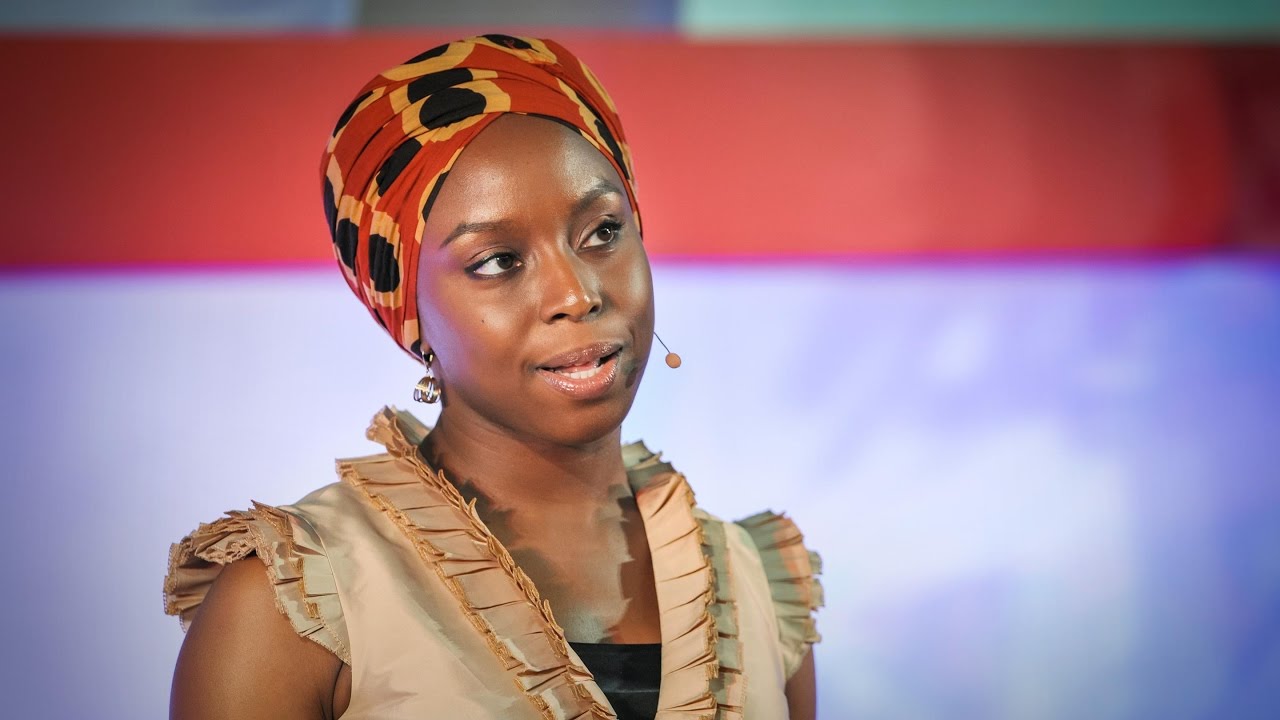
TLDRIn her TED Talk, Chimamanda Ngozi Adichie reflects on the dangers of a single story, using her own experiences to explore how limiting narratives shape perceptions. She shares her childhood in Nigeria, where she read British and American children's books, leading to a narrow understanding of the world. Through personal stories, she illustrates how single stories create stereotypes and diminish the complexity of cultures and individuals. Adichie emphasizes theimportanceofembracingmultipleperspectivestotrulyunderstandtherichnessofpeople'slivesandhistories,challengingthemonolithicportrayalofAfricaandbeyond.
Takeaways
- 😀 The danger of a single story is that it oversimplifies complex identities and cultures, often leading to stereotypes.
- 😀 Chimamanda Adichie grew up in Nigeria and was initially exposed to Western literature, which shaped her understanding of the world.
- 😀 Early on, Adichie wrote stories with foreign characters, reflecting the influence of British and American children's books, despite living in a completely different environment.
- 😀 She realized the importance of African literature when she discovered books that reflected her own identity, showing that people like her could exist in literature.
- 😀 Stereotypes are not necessarily lies, but they are incomplete and can shape limited perceptions of people or cultures.
- 😀 The media, historical narratives, and Western literature have often portrayed Africa through a single, negative lens, focusing on poverty, conflict, and disaster.
- 😀 Adichie recounts how her first experience in the U.S. revealed how many people viewed Africans through the lens of a single, tragic story.
- 😀 Power plays a critical role in shaping the stories we hear, with those in power defining the narratives that become dominant.
- 😀 A 'single story' about a place or people erases their humanity, focusing on differences rather than similarities, making it harder to form connections.
- 😀 Rejecting a single story allows people to regain their dignity, see the complexity of others, and ultimately understand that there is always more than one perspective.
- 😀 Adichie emphasizes the importance of hearing multiple stories to truly understand a people or culture, and she calls for a balance of narratives to represent the full reality.
Q & A
What is the central theme of the speaker's story?
-The central theme is the danger of a single story and how limited or one-dimensional narratives can shape perceptions and understanding, particularly about cultures, people, and places.
How did the speaker's early reading experiences shape her perception of literature?
-The speaker initially read British and American children's books, which featured white characters and unfamiliar experiences like snow. This led her to believe that literature was only about foreign cultures, and she struggled to see characters like herself in books.
How did discovering African literature change the speaker's perspective?
-Discovering African literature opened the speaker's eyes to the possibility of seeing characters that resembled her—African girls with brown skin and kinky hair. It broadened her understanding of what literature could represent, leading her to write about things she recognized.
What does the speaker mean by 'the danger of a single story'?
-The 'danger of a single story' refers to the problem that arises when only one narrative is told about a person, group, or place, leading to stereotypes and a narrow understanding. The speaker warns against the harm of reducing complex identities to a single, limiting perspective.
What was the impact of the speaker's early interactions with 'Fidel's family'?
-The speaker was initially taught to pity Fidel's family because they were poor, and she only knew them through this single story of poverty. However, when visiting their village and seeing their creative crafts, it challenged her perception and demonstrated how limited her understanding of them had been.
How does the speaker illustrate the concept of the 'single story' through her own experiences in the U.S.?
-When the speaker went to the U.S., her roommate assumed that she didn't speak English well and expected her to display 'tribal music,' reflecting a stereotypical, pity-driven narrative of Africa. The roommate's perception was shaped by a single story of Africa as a place of poverty and savagery.
How does the speaker critique the concept of 'authenticity' in African literature?
-The speaker recounts a professor who criticized her novel for not being 'authentically African,' as her characters were educated and not starving. This critique highlights the narrow view of what African literature should be, assuming it can only represent poverty and struggle.
What does the speaker mean by 'power' in the context of storytelling?
-The speaker explains that power shapes who gets to tell a story and how those stories are framed. The ability to define the narrative of others is a form of power, as it determines how a group or individual is viewed and understood by the world.
How does the speaker reflect on her personal journey of understanding identity?
-The speaker acknowledges that before leaving Nigeria, she didn't consciously identify as African. However, in the U.S., she came to embrace her identity as an African, although she still found it frustrating when Africa was referred to as a single, homogenous entity.
What does the speaker suggest could prevent the formation of a single story about a place or people?
-The speaker suggests that exposure to a variety of stories, media, and perspectives can prevent the formation of a single, reductive narrative. By presenting diverse stories from people’s lives, we can avoid the harmful simplifications of complex cultures and histories.
Outlines

This section is available to paid users only. Please upgrade to access this part.
Upgrade NowMindmap

This section is available to paid users only. Please upgrade to access this part.
Upgrade NowKeywords

This section is available to paid users only. Please upgrade to access this part.
Upgrade NowHighlights

This section is available to paid users only. Please upgrade to access this part.
Upgrade NowTranscripts

This section is available to paid users only. Please upgrade to access this part.
Upgrade NowBrowse More Related Video

Chimamanda Adichie: O perigo da história única

'The Danger Of A Single Story' by Chimamanda Ngozi Adichie Analysis | Edexcel IGCSE English Revision

Why We Need Ethnic Studies in High School | Hannah Gedion | TEDxManhattanBeach

3 Best TED Talks for Learning English
Chimamanda Ngozi Adichie: The danger of a single story | TED

Looks aren't everything. Believe me, I'm a model - Cameron Russell
5.0 / 5 (0 votes)
