Pangeran Diponegoro Full Version - Tokoh Pertempuran | Panglima Perang Channel
Summary
TLDRThe video details the life and legacy of Prince Diponegoro, a prominent Indonesian national hero who led the Java War (1825–1830) against Dutch colonial forces. Born into Yogyakarta royalty in 1785, Diponegoro initially focused on religious studies but later opposed Dutch interference and high taxation, sparking widespread rebellion. The video highlights his strategic guerrilla tactics, key allies like Kiai Mojo and Sentot Prawirodirjo, and the massive human toll of the conflict. Despite eventual capture and exile, Diponegoro's enduring resistance and leadership earned him posthumous recognition as a national hero, commemorated through currency, street names, and Universitas Diponegoro.
Takeaways
- ⚔️ Prince Diponegoro was a major Indonesian national hero who led the Java War, also known as the Diponegoro War, against Dutch colonial rule from 1825 to 1830.
- 👑 Prince Diponegoro was born in Yogyakarta on November 11, 1785, as the son of Sultan Hamengkubuwono III and Raden Ayu Mangkarawati.
- 📖 Although he came from royal blood, Diponegoro preferred studying Islam and living closely with ordinary people rather than participating in palace politics.
- 🔥 His anti-colonial spirit grew after witnessing Dutch interference in the Yogyakarta palace and their disrespect toward local traditions and governance.
- 🚧 One of the main triggers of the war was the Dutch construction of road markers on Diponegoro’s land in Tegalrejo without his permission.
- 💰 Heavy taxation and unfair treatment of the Javanese people by the Dutch further fueled Diponegoro’s determination to start a rebellion.
- 🕌 Diponegoro gained massive public support by declaring a holy struggle, attracting religious leaders, villagers, and fighters from many regions across Java.
- 🛡️ Key allies in the war included Kyai Mojo, an influential Islamic scholar, and Sentot Prawirodirjo, a talented young military commander.
- 🌧️ Diponegoro successfully used guerrilla warfare tactics, constantly moving his troops and launching surprise attacks that troubled Dutch forces.
- 🏰 The Dutch eventually introduced the Benteng Stelsel strategy, building many forts and barriers to limit the movement of Diponegoro’s forces.
- 📉 The prolonged war caused enormous casualties, including thousands of Dutch soldiers and around 200,000 Javanese deaths, making it one of the deadliest conflicts in Indonesian history.
- 🤝 Some of Diponegoro’s key supporters, including Sentot Prawirodirjo and Kyai Mojo, were eventually captured or surrendered as Dutch pressure increased.
- 🎭 In 1830, the Dutch deceived Diponegoro during peace negotiations in Magelang and arrested him despite the promise of talks.
- 🚢 After his capture, Diponegoro was exiled first to Semarang, then Batavia, and finally to Makassar, where he lived until his death in 1855.
- 🏅 Prince Diponegoro was later honored as a National Hero of Indonesia, and his legacy lives on through monuments, currency, roads, and Universitas Diponegoro in Semarang.
Q & A
Who was Pangeran Diponegoro and why is he significant in Indonesian history?
-Pangeran Diponegoro was a Javanese prince and national hero of Indonesia who led the Java War (1825–1830) against Dutch colonial rule. He is significant for his leadership in resisting colonialism and defending Javanese sovereignty and culture.
When and where was Pangeran Diponegoro born?
-Pangeran Diponegoro was born on November 11, 1785, in Yogyakarta, into a noble family of the Yogyakarta Sultanate.
What influenced Diponegoro's early interest in religion?
-During his youth, Diponegoro was deeply interested in Islam. He studied Islamic books and learned from ulama (religious scholars), preferring religious and social matters over politics initially.
What triggered Diponegoro's opposition to Dutch colonial rule?
-His opposition began when he was appointed as a guardian of the young Sultan Hamengkubuwono V, disagreeing with Dutch intervention in the Keraton. The installation of boundary markers on his land without permission and disrespect for local customs further fueled his anti-colonial sentiment.
What was the Java War (Perang Diponegoro) and its impact?
-The Java War (1825–1830) was a major uprising led by Diponegoro against the Dutch, resulting in enormous casualties: around 8,000 Dutch soldiers, 7,000 indigenous soldiers, and 200,000 Javanese civilians. It is considered one of the bloodiest conflicts in Indonesian history.
Who were some key allies of Diponegoro during the war?
-Key allies included Kiai Mojo, an influential Islamic scholar with family ties to Diponegoro, and Sentot Prawirodirdjo, a young military commander known for his successful engagements against Dutch forces.
What military tactics did Diponegoro use during the Java War?
-Diponegoro employed guerrilla warfare tactics, frequently moving his forces to avoid direct confrontation with the Dutch, making use of local knowledge and support from villagers to maintain strategic advantage.
How did the Dutch respond to Diponegoro's guerrilla strategies?
-The Dutch sent multiple generals to suppress the war, eventually implementing the 'Benteng Stelsel' (Fort System), placing barbed wire and fortifications to restrict Diponegoro’s movements, which ultimately weakened his forces.
How did the war eventually end for Diponegoro?
-After Dutch tactics and increasing civilian suffering, Diponegoro’s forces were cornered. He agreed to negotiations but was ultimately captured on March 28, 1830, during a meeting arranged by the Dutch and was exiled to Semarang and later to Makassar, where he remained until his death in 1855.
What honors were posthumously given to Diponegoro by the Indonesian government?
-Pangeran Diponegoro was honored as a National Hero of Indonesia on November 6, 1900. His image appeared on Indonesian banknotes in 1952 and 1975, and his name is used for streets and Universitas Diponegoro in Semarang.
What role did the local population play in supporting Diponegoro’s campaign?
-The local population provided logistical support, joined his forces, and offered protection, inspired by Diponegoro's call for 'perang Sabilillah' and the promise of defending Javanese customs and independence.
How did internal and external pressures influence Diponegoro’s eventual surrender?
-Diponegoro faced military pressure from Dutch tactics, loss of allied leaders, capture of family members, and the deteriorating welfare of civilians. These combined factors ultimately led him to accept negotiation proposals, resulting in his capture and exile.
Outlines

Этот раздел доступен только подписчикам платных тарифов. Пожалуйста, перейдите на платный тариф для доступа.
Перейти на платный тарифMindmap

Этот раздел доступен только подписчикам платных тарифов. Пожалуйста, перейдите на платный тариф для доступа.
Перейти на платный тарифKeywords

Этот раздел доступен только подписчикам платных тарифов. Пожалуйста, перейдите на платный тариф для доступа.
Перейти на платный тарифHighlights

Этот раздел доступен только подписчикам платных тарифов. Пожалуйста, перейдите на платный тариф для доступа.
Перейти на платный тарифTranscripts

Этот раздел доступен только подписчикам платных тарифов. Пожалуйста, перейдите на платный тариф для доступа.
Перейти на платный тарифПосмотреть больше похожих видео

Biografi Pangeran Diponegoro dan Perjuangannya, Profil Pangeran Diponegoro Lengkap dan Singkat
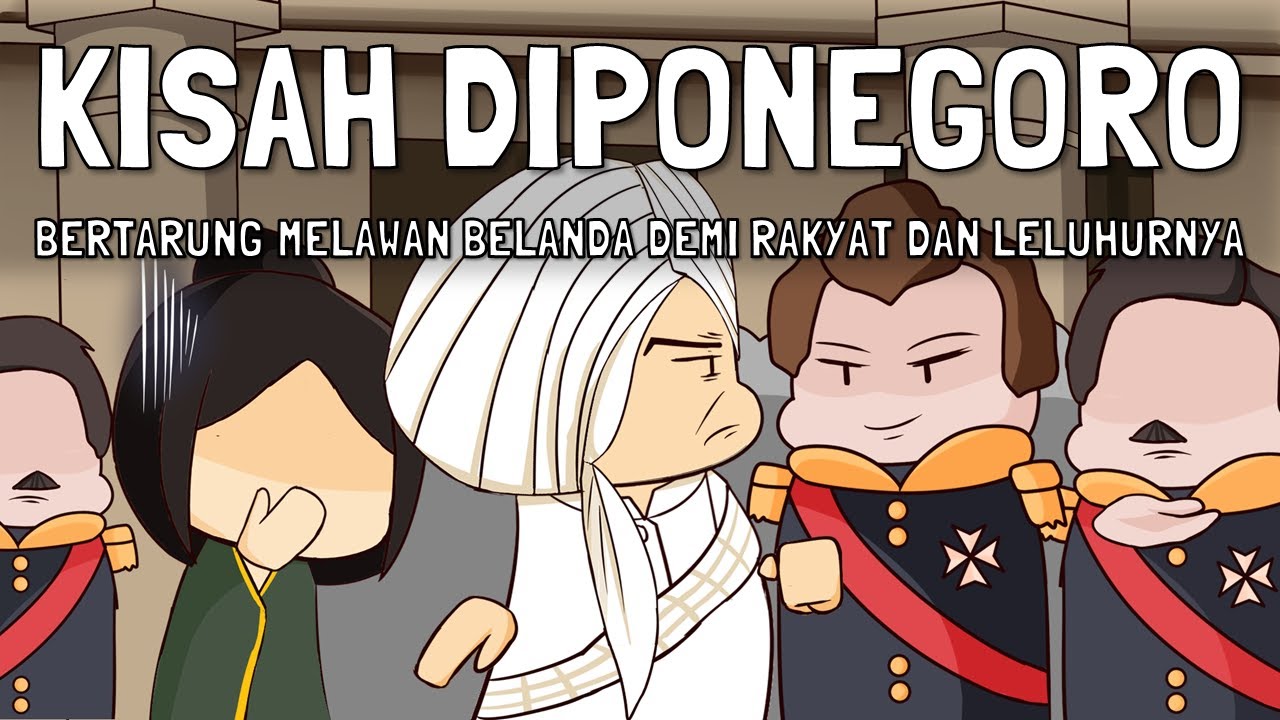
Kisah Heroik Pangeran Diponegoro Melawan Belanda dalam Perang Jawa!

Kisah Pangeran Diponegoro Melawan Belanda - Sejarah Indonesia

Sejarah Singkat || Perang Diponegoro

TOKOH - NOYO GIMBAL: GERILYA PEJUANG GIMBAL MELAWAN PENJAJAH BELANDA

Sejarah Perang Diponegoro
5.0 / 5 (0 votes)

